
Waterproof mattress protector: guide to choosing the best one
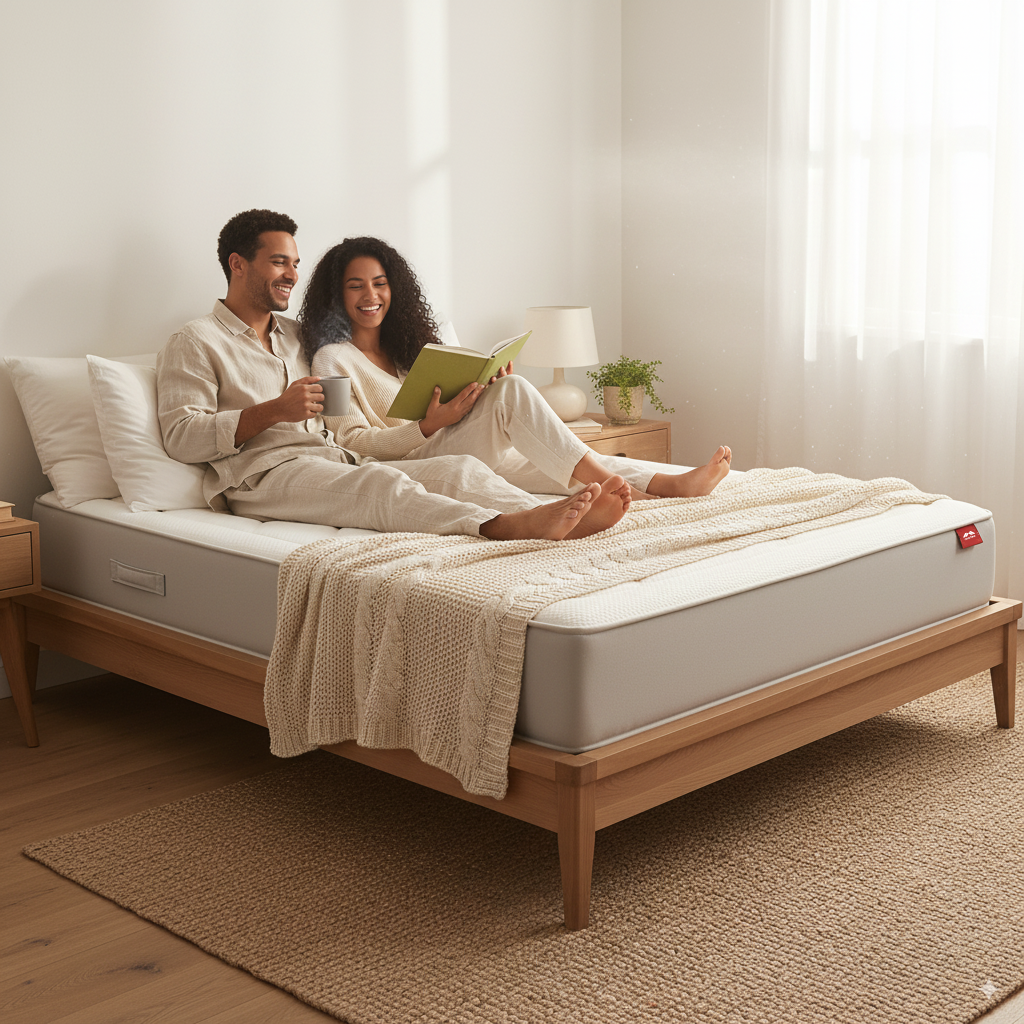
It could have happened to you this very week. You’re having breakfast in bed on a Sunday, you hold the mug a second too long, and a drop of coffee escapes onto the sheet. Or your child sneaks in at dawn, or you sweat more than usual in summer, or you simply want a new mattress to look new for years. In all those cases, the problem isn’t the sheet. The problem is what gets underneath.
A mattress isn’t designed to be washed like a towel. When it absorbs moisture, stains, or organic residue, cleaning it thoroughly is no longer so simple. That’s why a waterproof mattress protector isn’t a luxury. It’s a layer of defense that prevents a minor accident from becoming costly and permanent damage.
Your Mattress Safe: What Is a Waterproof Protector?
A waterproof protector is a textile piece placed over the mattress, usually as a fitted sheet or a top layer with fasteners. Its job seems simple, but it’s crucial: stop liquids, sweat, dirt, and some allergens before they enter the mattress.

The practical reason is very clear. If you buy a good mattress and leave it exposed, it’s like getting a new car and not getting full coverage insurance.
What It Really Protects Against
We’re not just talking about a glass of wine or a coffee. A waterproof protector also helps against:
- Night sweats. Daily moisture, even if you can’t see it, gradually penetrates.
- One-off accidents. Children, pets, or a drink left in the wrong place.
- Dust and daily use. What settles in night after night.
- General hygiene. It’s much easier to wash a protector than to clean a mattress.
A good protector works like a bulletproof vest for the mattress. It doesn’t change its essence, but it absorbs the impact you don’t want it to receive.
Protector and Cover Are Not the Same
This is where many people get confused. A cover usually wraps the mattress more. A protector, on the other hand, is designed for the daily protection of the sleeping surface, focusing on comfort, frequent washing, and a barrier against liquids.
The important idea is this. If the mattress is the core of your rest, the protector is its invisible shield. You don’t buy it out of fear. You buy it to sleep peacefully.
Anatomy of a Protector: Key Types and Materials
When you read “waterproof and breathable,” it may sound like a contradiction. But not all protectors are the same, nor do they all use the same technology. The difference between one that makes you hot and one you barely notice is in its construction.

The Layers That Usually Make It Up
Most well-designed waterproof protectors combine three functions:
-
Contact surface
This is the part that touches the sheet or lies beneath it. It usually aims for softness, absorbency, and a pleasant textile feel. -
Waterproof membrane
This is the heart of the system. Here is the barrier that blocks liquid. -
Base or fit
It serves to secure the protector to the mattress and keep it stable during the night and through washing.
A cheap model may fulfill point two but fail on one and three. That’s why there are protectors that do protect, yes, but crinkle, move, or give a rather unpleasant plastic feel.
The Most Common Types
Four main types are found on the Spanish market: classic protectors, silent waterproof protectors, 3D padded protectors, and anti-mite hypoallergenic protectors.
The easiest way to distinguish them is to think about their dominant function:
- Classic. Prioritizes a basic barrier against dust and daily use.
- Silent waterproof. Aims to stop liquids without that typical plastic noise.
- 3D padded. Adds a layer of comfort and some volume.
- Hypoallergenic. It is aimed at hygiene and reducing irritating agents.
Why Polyurethane Changes the Experience So Much
The most interesting technology is in the microporous polyurethane membranes.
The most useful analogy is a good mountain jacket. In the rain, you don’t get wet, but you also don’t get trapped in your own sweat like happened with old raincoats. Something similar happens with the mattress.
Practical rule: if a waterproof protector looks like a sheet of plastic, it has probably solved the water barrier, but not the ventilation.
Materials and Real Sensations
There’s no need to memorize technical terms. Just associate each material with what you feel when using it:
| Material or approach | What it usually provides |
|---|---|
| Cotton with membrane | Natural feel and a good bed feel |
| Microporous polyurethane | Silent waterproofing and better breathability |
| PVC or vinyl | Strong barrier, but less thermal comfort |
| Soft-touch natural fabrics | More comfort in contact with the skin |
Just as you choose a technical coat according to the weather, it’s also advisable to choose a barrier adapted to the type of use for your bed, and not just any generic layer.
Waterproof vs. Breathable: The Perfect Balance
The most common question is direct. Will I get hot? And the honest answer is: it depends on the protector, not on the concept of waterproofing itself.

A cheap protector solves the problem in a very basic way. It places an almost airtight barrier and that’s it. The liquid doesn’t enter, but body vapor doesn’t get out well either. The result is that warmer, more closed-in, and in some cases, sticky bed feel.
What Happens During the Night
While you sleep, your body releases heat and moisture. If that moisture cannot dissipate, it gets trapped between your body, the sheet, and the mattress. That’s where the discomfort appears.
The key is the balance between waterproofing and water vapor permeability.
That completely changes the way you buy. It’s not enough to read “waterproof” on the label. You have to ask how it achieves it.
The Error of Confusing Plastic with Protection
A very sealed material may seem safer because it “doesn’t let anything through.” But in rest, “not letting anything through” is not always an advantage. If the mattress doesn’t breathe, the bed’s microclimate worsens.
Well-designed models look for something else:
- Block spills and stains
- Allow vapor to escape
- Make no noise when moving
- Not alter the feel of the mattress too much
If your bed feels like a greenhouse, the problem isn’t that the protector is waterproof. The problem is that it doesn’t breathe enough.
To understand it visually, this video helps show how a waterproof surface works without giving up ventilation:
How to Spot a Protector That Will Probably Fail
You don’t need to be technical to avoid a bad purchase. There are fairly clear signs:
- Obvious plastic feel. It usually indicates less thermal comfort.
- Noise when folding it or sitting down. A bad sign if you’re looking for discretion and softness.
- Promise of waterproofing without explaining the material. If it doesn’t clarify anything, it’s best to be suspicious.
- Rigid finish. It normally accompanies less pleasant materials.
The key is not to choose between protection or comfort. It’s to demand both at the same time.
The Ideal Protector for Your Morfeo Mattress
A glass of water that spills in the middle of the night, a very sweaty night, or a small childhood accident can change the story of a mattress in seconds. That’s when you notice if the protector complements the mattress or if it just adds an uncomfortable layer that gives off heat and ends up in the closet.

On a Morfeo mattress, the choice of protector should be made with the same logic you use to choose a good pillow or a suitable base. The mattress provides the foundation of comfort. The protector acts like a bulletproof vest against daily use. If it’s well designed, it protects without ruining the feeling of rest. If it’s cheap or rigid, it alters the feel, accumulates heat, and makes the bed feel worse than it really is.
The most common doubt is usually this: if a barrier doesn’t let liquid through, how can it let air through? The answer is in the membrane. The highest quality models use very thin layers with a structure that blocks drops and splashes, but allows body vapor to escape. It’s the difference between sleeping on a technical surface or on a sheet of plastic. That’s why two “waterproof” protectors can behave very differently during the night.
Morfeo Protectors
Protect the mattress without sleeping on plastic
The Tencel one stops liquids and sweat without a plastic feel, the balance explained in this article. If your main concern is heat, the FreshCool regulates the temperature.
 Tencel Protector
Waterproof and breathable: stops spills and sweat without a plastic feel. It is washed at 30 °C maximum.
View the Tencel Protector FreshCool Protector
If your main concern is heat: PCM thermoregulating fabric for sleeping cooler. It is washed at 30 °C maximum.
View the FreshCoolMade in Spain · free shipping on the mainland · delivery in 3-4 business days
If you sleep as a couple or with children
Here, intensive use is what matters. There’s more movement, more washing, and more chances of spills or accumulated moisture. It’s best to look for a protector that stays stable even if one person moves more than the other, that makes no noise when turning over, and that maintains a pleasant textile surface.
In this case, a fitted sheet-style fit usually works well because it hugs the entire mattress and prevents raised corners. It’s also worth looking at the top side. If it has a soft and absorbent fabric to the touch, the bed feels more natural in everyday life.
If you notice the heat right away
This is where many purchases fail. Not for lack of waterproofing, but due to excessive sealing.
A protector suitable for hot sleepers must evacuate the vapor generated by the body during the night. If that vapor gets trapped, the heat increases and a feeling of moisture appears. Cheap models usually fail right there. They use thicker, less flexible materials or a plastic finish, and that combination makes real ventilation difficult.
In a well-balanced bed, the protector should not become the weak point of the whole. If you want to better understand how each layer affects rest, this Morfeo guide on why good sleep starts with a good mattress helps to see it clearly.
If you wake up feeling more stuffy since you put the protector on, the problem is usually in the barrier material, not in the idea of protecting the mattress.
If you have allergies or sensitive skin
For this profile, it’s important to keep the sleeping surface cleaner and easier to wash. A waterproof protector helps because it prevents some of the daily moisture and dirt from penetrating the mattress, which is much harder to sanitize.
It’s also advisable to choose soft fabrics, without a rough feel or stiffness, so that daily use is comfortable. This seems like a minor detail, but it isn’t. If a cover is uncomfortable, it gets removed. And a stored protector protects nothing.
If you manage a tourist apartment or a hotel
In tourist apartments, hotels, guest rooms, or rental homes, the protector is the piece that extends the life of the mattress the most. It reduces the risk of deep stains and makes it easier to keep it in good condition between one guest and the next.
Here, it’s important to prioritize three things. Firm fit, uncomplicated frequent washing, and a membrane that does not deteriorate the rest experience. Protecting should not mean that the bed makes noise, gives off heat, or loses comfort.
- Have at least one spare protector per bed to change it during each cleaning while the other is being washed.
- Unify sizes: if all your beds are 90x190 or 150x190, you buy identical protectors and sheets, and replacement is immediate.
- Check the mattress height: hospitality mattresses usually measure 25 cm, and the fitted-sheet-style protector must cover them well on the sides.
- Check the mattress when changing it: it’s the best time to detect stains or deformations before they lead to a review.
If you are equipping accommodation, you may be interested in our guide on what mattress to put in a tourist apartment and our range of mattresses for hotels.
What to check before buying
Before deciding, it’s worth checking some details that change the final result a lot:
| What to look for | Why it matters |
|---|---|
| Exact size | Avoid folds, shifting, and poorly covered areas |
| Compatible height | Helps the protector hug tall mattresses or those with more volume well |
| Top fabric | Influences the feel, thermal sensation, and daily comfort |
| Membrane type | Makes the difference between a breathable barrier and a surface that accumulates heat |
| Fit system | Keeps the protector in place throughout the night |
| Easy washing | Promotes constant use and better hygiene |
As a practical reference, a protector for a Morfeo mattress, like our waterproof and breathable Tencel Protector, makes sense when it adds a daily barrier without changing too much the coziness, breathability, or original feel of the mattress. That is the combination that usually gives the best result in the long term.
Essential Care for a Protector That Always Looks New
A good protector lasts longer when washed properly. It seems obvious, but many people damage the membrane by using excessive heat, bleach, or fabric softener. Then they think that “they all pill” or “they all stop being waterproof,” when in fact the problem has been maintenance.
How to wash it without damaging the barrier
Quality membranes are designed to withstand use, but it is best to treat them with some common sense:
- Read the label. It seems basic, but every composition has its own rules. Morfeo protectors (Tencel and FreshCool), for example, should be washed at a maximum of 30°C.
- Prioritize mild detergent. Clean without leaving heavy residues.
- Avoid bleach. It can damage fabrics and finishes.
- Be careful with fabric softener. It can leave a film that impairs the fabric's performance.
- Dry with moderation. Excess heat is usually worse than the washing itself.
A simple habit that extends its life
Wash it as often as makes sense for your actual use. In a child's bed, a holiday home, or for someone who sweats a lot, the frequency will be higher. In other cases, periodic and proper maintenance will be enough.
Wash the protector like a technical garment, not just any rag. It will protect better and last longer.
If you also want to fine-tune the care of the entire bed, this Morfeo mattress maintenance guide will guide you on ventilation, hygiene, and habits that help preserve a better night's sleep.
Frequently Asked Questions about Waterproof Protectors
In the end, almost all questions are repeated. The key is to separate myths from real product issues.
Common questions
| Question | Answer |
|---|---|
| Do all waterproof protectors make you feel hot? | No. Those that breathe the worst are usually the most plastic or rigid. Models with better-designed membranes are more balanced. |
| Do they all make noise when you move? | Not necessarily. Noise usually occurs with more basic materials that feel stiffer. |
| Does a protector change the firmness of the mattress? | Usually very little. It is only more noticeable in padded models or those with considerable volume. |
| Are a protector and a mattress cover the same thing? | No. The protector prioritizes the daily barrier, while the mattress cover is usually focused on wrapping the mattress or adding a layer of padding. |
| Can they be used together? | Yes, as long as the combination does not overly affect the fit of the sheet or breathability. |
| When should it be replaced? | When it loses its fit, shows visible wear, allows moisture through, or its feel has clearly changed after many washes. |
The most important question
Many people buy based on price alone. But the useful criterion is different: if it protects well while allowing you to sleep comfortably, it does its job. If it protects but makes the bed worse, you haven't made a good purchase.
The best waterproof mattress protector is not the most eye-catching. It is the one that does its job without you having to think about it every night.
If you are considering how to better protect your bed without complicating things, at Morfeo you can find mattresses and sleep accessories designed to work together, with a clear idea: maintaining hygiene, comfort, and durability without sacrificing the feeling of a good night's sleep.