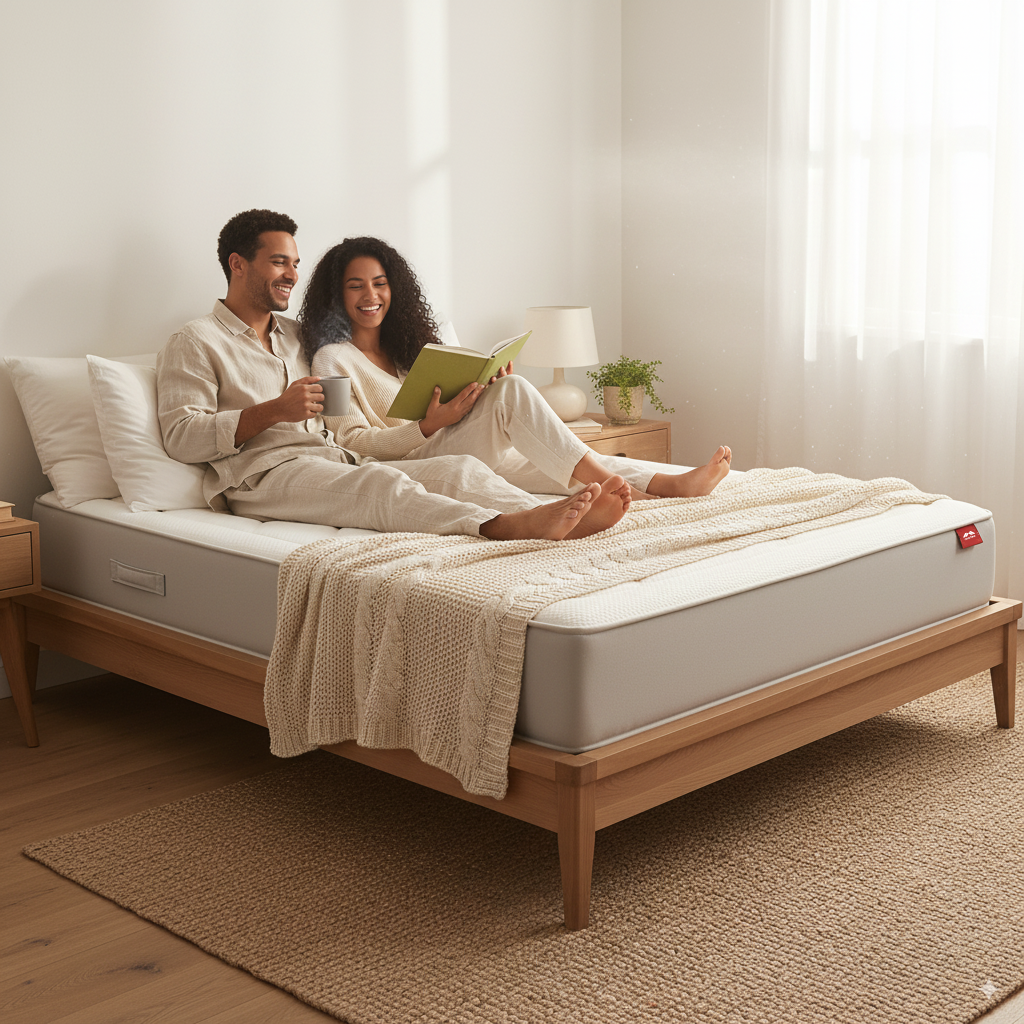

How to improve sleep quality and transform your nightly rest
Improving your sleep quality is much more than following a couple of random tips. It's about adopting a routine that works for you, optimizing your bedroom so it becomes a sanctuary of rest, and, above all, taking care of your habits during the day. The key is to create an evening ritual that truly relaxes you and make sure your environment invites you to a deep and uninterrupted sleep.
Why your sleep needs urgent attention

We often think of sleep as a simple pause, the "off" button at the end of a long day. But it is much more than that. Nighttime rest is the pillar that supports your physical health, your mental clarity, and your emotional balance. However, for millions of people, a restorative night's sleep has become an almost unattainable goal.
And this nightly struggle is no joke. The lack of quality sleep has very real consequences in your daily life. It directly affects your ability to concentrate, diminishes your productivity, and unbalances your mood, leaving you more irritable and at the mercy of stress.
The sleep landscape in Spain
The figures speak for themselves and paint a true silent crisis. According to data from the Spanish Society of Neurology (SEN), almost half of the adult population, 48%, does not enjoy quality sleep. As if that weren't enough, more than half of adults sleep less than the recommended seven hours.
The situation becomes even more complicated if we take into account that more than four million Spaniards suffer from a chronic and serious sleep disorder. This is not an individual problem, it is a public health issue that affects us all.
This lack of rest goes beyond feeling tired. In the long term, it becomes a risk factor for much more serious health problems. Understanding the negative effects of sleep deprivation on the body and health is the first step to becoming aware and taking action.
A good rest is not a luxury, it is a biological necessity. Ignoring it is like trying to drive a car without fuel: sooner or later, you will come to a stop.
Identifying the barriers to a good rest
To know how to improve sleep quality, you first have to understand what is preventing us. The obstacles are very varied and, often, they intertwine, creating a vicious circle that is difficult to break out of.
Before looking for solutions, it is crucial to identify the origin of the problem. Below, we show you a table with the most frequent obstacles that stand between you and a full night of rest.
Main barriers to quality sleep
| Common Obstacle | Area for Improvement | Direct Impact on Sleep |
|---|---|---|
| Stress and anxiety | Emotional management and relaxation routines | Difficulty falling asleep and waking up at night with a racing mind. |
| Bad habits | Sleep hygiene (schedules, screens, caffeine) | Alters the internal biological clock, delaying or fragmenting sleep. |
| Inadequate environment | Bedroom optimization (light, noise, temperature) | Prevents reaching the deep and restorative sleep phases. |
| Lack of physical comfort | Rest ergonomics (mattress, pillow) | Causes pain, discomfort, and constant changes in posture that interrupt rest. |
Recognizing these barriers in your own routine is the first big step. Throughout this guide, we will give you the practical tools to break them down one by one and regain control of your nights. The goal is clear: transform your rest and, with it, your quality of life.
Turn your bedroom into a sanctuary for rest
Your bedroom should be much more than the place where you keep your clothes and collapse at the end of the day. Think of it as the operations center of your rest, a space designed with a single purpose: to send your brain a clear and unequivocal signal that it is time to disconnect and recharge energies.
Transforming a simple room into a true sleep sanctuary does not require large investments, but strategy. The key is to control three fundamental elements of the environment that directly influence the quality of your rest: light, noise, and temperature. If you manage to master these three pillars, your nights will change completely.
Darkness: your most powerful ally
Any source of light, no matter how small it may seem, can sabotage the production of melatonin, the hormone that regulates our sleep and wakefulness cycles. The goal is to achieve as absolute darkness as possible, basically tricking your brain into understanding that it is pitch black outside and it can lower its guard to rest.
- Blackout curtains: They are your first line of defense against light pollution from the street, especially if you live in a city. Make sure they cover the entire window well and that no light leaks through the edges.
- Sleep mask: An affordable and surprisingly effective solution. A good sleep mask blocks any residual light and is a lifesaver when you travel or if your partner has different schedules than yours.
- Cover the small pilot lights: That tiny little light from the television, the phone charger, or the router may seem insignificant, but your brain perceives it. A piece of black electrical tape or using power strips with a switch to turn everything off at once is a simple and effective solution.
Exposure to light during the night not only interrupts sleep, but it can also reduce the production of melatonin. Creating a dark environment is one of the actions with the greatest impact you can take to improve your rest.
Silence or, failing that, the right sound
Absolute silence would be ideal, but let's be realistic, it is not always possible. Unexpected noises like traffic, neighbors, or even the refrigerator motor can pull you out of the deep sleep phases without you even realizing it, fragmenting your rest and leaving you tired in the morning.
The strategy here is to mask those annoying sounds with a constant and monotonous background noise. The famous white noise or nature sounds (like rain or waves) work wonderfully. They create a kind of auditory barrier that makes sudden noises much less noticeable to your brain.
The perfect temperature to sleep soundly
Have you ever woken up sweating in the middle of the night or shivering with cold? The temperature of your room is a critical factor. To initiate and maintain sleep, your body needs to slightly lower its internal temperature.
For most people, the ideal temperature for sleeping is between 18 and 21°C. Keeping your bedroom in this cool range helps your body complete its natural thermoregulation cycle, which translates into a deeper and uninterrupted sleep.
- In summer: Use bedding made of breathable fabrics like cotton. If the heat gets intense, do not hesitate to use a fan or program the air conditioning to maintain a stable temperature.
- In winter: It is much better to bundle up with more layers of clothing or blankets than to turn the heating up to the max. An overly warm and dry environment can dry out the airways and disturb rest.
By optimizing these three elements, you not only improve the conditions for sleeping, but you also build a very powerful mental association: your bedroom becomes synonymous with peace, tranquility, and rest. If you want to delve deeper into this topic, you can take a look at our guide on how to create a restorative sleep environment and discover more practical tricks.
The equipment that works for you while you sleep
You already have control over darkness, silence, and temperature. You have laid the foundations for a true rest. But all that effort can fall on deaf ears if the surface where you spend a third of your life is not up to par. Investing in your rest equipment is one of the most direct and high-impact decisions you can take for your health.
And no, it is not a luxury. It is a fundamental tool that actively works for you every night. An inadequate mattress, a pillow that does not provide support, or bedding that does not breathe well can be the silent cause of your interrupted nights, that morning back pain, and the fatigue that drags you down during the day.
Your mattress is not an expense, it is an investment in health
The mattress is, without a doubt, the centerpiece of everything. A good mattress does much more than being comfortable; it must offer ergonomic support that keeps your spine aligned throughout the night, regardless of what posture you like to sleep in.
This alignment is absolutely crucial. When the spine is not in a neutral position, the muscles and ligaments surrounding it have to work overtime to compensate. The result? Tension, contractures, and the classic back pain upon waking up.
In addition, a quality mattress distributes the weight of your body evenly. This relieves pressure points in key areas like the shoulders, hips, and knees, reducing the need to toss and turn in bed, one of the main culprits of micro-awakenings that sabotage your sleep and prevent you from reaching the most restorative phases.
How to choose the perfect mattress for you
Choosing a mattress is something very personal, there is no single answer. Forget about looking for "the best mattress in the world", because what you need is the ideal mattress for you.
- How do you sleep? If you sleep on your side, look for a medium firmness that allows your shoulders and hips to sink in a little to keep the spine straight. If you are one to sleep on your back, a medium-high firmness will give you the lumbar support you need. For those who sleep on their stomach, the best is a firmer surface that prevents the lumbar area from arching too much.
- Your weight and build matter: People with higher body weight need a firmer mattress so they do not sink in excessively and have good support. On the contrary, lighter people usually find more comfort in medium-firmness mattresses.
- Materials and technology: Rest technology has advanced tremendously. For example, the Nature Mattress by Morfeo (medium firmness) combines natural latex and organic cotton on pocket springs, while the Altus Mattress (medium-high firmness) combines more than 2,000 pocket micro-springs with an outer linen fabric that helps with breathability.
A good example is viscoelastic mattresses, famous for their adaptability. If you are curious, we have a guide that explains in detail what a viscoelastic mattress is and how it can change your nights.
Do not forget: a mattress has an expiration date. As an orientation reference, its useful life usually hovers around 8-10 years. Over time, the materials lose their properties and, in addition, become a paradise for dust mites and allergens.
The pillow: the vital support for your neck
It is often the great forgotten one, but the pillow is as important as the mattress. Its mission is to maintain the correct alignment between the head, neck, and spine. A pillow that is not yours, whether by being too high or too low, will force an unnatural posture on your cervical spine for hours.
This translates into neck stiffness, tension headaches, and that feeling of not having rested at all. The choice, again, depends on your posture:
- On your side: You need a medium-high firmness and height pillow, that fills the gap between your ear and shoulder well.
- On your back: The ideal is a medium-low height and firmness pillow, so that your head does not rise too much.
- On your stomach: Here a very thin and soft pillow is recommended, or even sleeping without it, so as not to force the rotation of the neck.

Bedding: the microclimate that envelops you
To finish, bedding. It is the layer that is in direct contact with your skin all night and plays a key role in body temperature regulation, something fundamental for deep sleep.
Synthetic materials, like polyester, tend to trap heat and moisture, making you wake up sweating at midnight. Natural fibers, on the other hand, are your best allies.
- Cotton: Breathable, soft, and absorbent. If you can, look for high-quality cottons like Egyptian or Pima.
- Linen: Exceptionally breathable and cool, it is perfect for the hot months or if you are a hot person.
- Silk: It is a natural thermoregulator that keeps you cool in summer and warm in winter. In addition, it is hypoallergenic and very soft on the skin.
Choosing your rest equipment well is one of the smartest decisions you can take. It is a direct investment in your daily energy, your well-being, and your long-term health.
Build an evening routine that truly works
Thinking that sleep starts the moment you get into bed is one of the biggest mistakes you can make. A day full of stress and stimuli cannot end abruptly by turning off the light. Your brain needs a transition, a clear signal that the day has ended and it is time to prepare to rest.
A restorative night's sleep, in reality, starts to be built hours before.
That is where the evening routine comes into play, a personal ritual that works as a deceleration ramp for your mind and your body. Its goal is simple but incredibly powerful: reduce cortisol levels (the famous stress hormone) and increase the production of melatonin, preparing you for a deep and quality rest.
The power of digital disconnection: the 90-minute rule
We live surrounded by screens, and their blue light is the number one enemy of melatonin. This light tricks your brain, making it believe that it is still daytime and suppressing the natural signal that tells it that it is time to sleep.
That is why, one of the golden rules for how to improve sleep quality is to establish a screen-free zone at least 90 minutes before going to bed.
This does not mean being bored, far from it. It means replacing the infinite scroll on social media or the last chapter of that thrilling series with activities that truly relax you. The key is to lower the revolutions, not turn them off abruptly.
30-minute rituals you can start tonight
You do not need two hours to build an effective routine. In fact, with just 30 minutes you can make a huge difference. What really matters is consistency.
Here you have three examples of half-hour routines adapted to different needs, so you can see how easy it is to start:
Example 1: For the hyperactive mind
- Minutes 0-10: Write in a journal. Pour on paper all the worries, pending tasks, or ideas that are going around your head. This simple act of "emptying the brain" prevents those thoughts from assaulting you just when you try to sleep.
- Minutes 10-25: Read a paper book. Choose something that is not excessively stimulating. Reading on paper, under a warm and dim light, is one of the best ways to disconnect.
- Minutes 25-30: Practice the 4-7-8 breathing. Sit comfortably, close your eyes, and concentrate on breathing from the diaphragm. Inhale through the nose for 4 seconds, hold the air 7 seconds and exhale slowly through the mouth for 8 seconds.
Example 2: To release physical tension
- Minutes 0-10: Take a hot shower or bath. The body temperature change when getting out of the water (from hot to a cooler environment) is a physiological signal that helps induce sleep.
- Minutes 10-25: Do gentle stretches or very light yoga. Focus on relaxing the muscles of the neck, shoulders, and back, which is where we accumulate almost all the tension of the day.
- Minutes 25-30: Drink a relaxing infusion. Chamomile, linden, or valerian are excellent options. Watch out! Avoid tea, which contains caffeine.
Example 3: For lovers of planning
- Minutes 0-15: Prepare everything for the next day. Choose the clothes you're going to wear, get the coffee maker ready, prepare your lunch... Having everything organized reduces morning anxiety and allows you to go to bed with a sense of complete control.
- Minutes 15-25: Listen to calm music or a relaxing podcast. Look for instrumental music playlists, nature sounds, or podcasts with a calming theme.
- Minutes 25-30: Do a short guided meditation. There are hundreds of apps and videos that can guide you through a meditation of just 5 minutes focused on relaxation and sleep.
Consistency is more important than duration. It is much more effective to do a 20-minute routine every night than a two-hour one only on weekends. Your biological clock loves predictability.
Ultimately, it's about creating a habit that sends the same signal to your body every night: the day is over, the work is done, and now it's time to rest. This routine will not only help you fall asleep faster, but will also drastically improve its quality, allowing you to wake up with more energy and mental clarity.
Master nighttime stress and anxiety

Does it sound familiar? It's three in the morning, your eyes are wide open, and your mind won't stop replaying that conversation at work or that endless list of tasks for tomorrow. If so, you already know the most stealthy sleep thieves: stress and anxiety.
When the mind races, the bed stops being a refuge and becomes a battlefield against worries. And it's not just something mental. Stress triggers the production of cortisol, the hormone that keeps us alert. Great for escaping danger, but an absolute disaster when all you want to do is sleep.
And don't let anyone fool you, this is incredibly common. Everyday worries are among the most common causes of sleepless nights, and almost all of us have lost hours of sleep because of them at some point.
The "brain dump" technique: journaling
One of the most powerful, yet simple, tools to quiet that hyperactive mind is journaling. Don't imagine that you have to write a diary worthy of a literary award. The idea is much simpler: do a "brain dump" right before turning off the light.
Dedicate five or ten minutes to pouring into a notebook everything that is going through your head. No filters, no censorship. Simply, empty your thoughts onto paper.
The effect is almost immediate. By taking worries out of your head and putting them in writing, you take away their power. They stop being ghosts that haunt you in an infinite loop.
- Worry list: Write down everything that worries you, no matter how silly it may seem.
- To-do list: Write down what you have to do the next day. Once it's on paper, your brain knows it doesn't have to keep reminding you.
- Gratitude: Finish by writing three things you are grateful for that day. This small gesture helps shift the focus from anxiety to a more positive perspective.
Your bed should be a sanctuary dedicated exclusively to sleep and intimacy. If you turn it into your meeting room for worries, your brain will start to associate it with stress, creating a vicious cycle of insomnia.
Give your worries a schedule
Sometimes, the key is not to eliminate anxiety, but to learn how to manage it. Cognitive-behavioral techniques teach us very practical strategies so that worries don't sneak into bed with you.
One of the most effective is the "worry time".
It's very simple: choose a 15-20 minute slot during the day, always at the same time and, very importantly, away from your bedtime. During that time, give yourself permission to think, analyze, and dwell on everything that worries you. If a worry pops up outside of that time, simply write it down and tell it: "I'll deal with you later, at my worry appointment".
With this technique, you train your brain to contain anxiety in a specific time and place, preventing it from overflowing just when you need to disconnect.
Progressive muscle relaxation: an exercise to do in bed
Even if you manage to calm your mind, it is very likely that your body still holds all the accumulated tension of the day. Progressive muscle relaxation is a fantastic exercise that you can do directly in bed to release that physical load.
The idea is simple: consciously tense and relax different muscle groups.
- Start with your feet: Squeeze your toes tightly for 5 seconds. Then, release them and relax for 10 seconds, noticing the difference.
- Move up your legs: Do the same with your calves, thighs, and glutes, always following the same pattern of tensing and relaxing.
- Move through your torso: Continue with your abdomen and chest.
- Finish with your arms and face: Move to your hands (clenching your fists), your arms, your shoulders (raising them toward your ears), and finally, your face (furrowing your brow).
This exercise not only releases tension, but also makes you more aware of where you accumulate it. It is a very physical way to prepare the body for rest and pave the way for sleep to come naturally. Mastering these techniques is key if you are wondering how to improve sleep quality when anxiety is your main problem.
When it's time to seek professional help
You have tried everything: optimized your bedroom, created a bulletproof nighttime routine, and learned to manage stress, but you still can't get that restorative rest you need so badly. Although habit changes are incredibly powerful, sometimes, they simply are not enough.
There comes a point when you have to know how to recognize when a sleep problem stops being a bad patch and becomes a warning sign that requires professional attention.
Ignoring these symptoms not only robs you of your daily energy, but can also have serious consequences for your long-term health. It's not that you have failed in your attempts to sleep better; it's about understanding that some problems need a specific diagnosis and treatment that goes beyond sleep hygiene.
Signs you should not ignore
There are certain clues that tell you that you might be dealing with something more than a simple bad night, perhaps an underlying sleep disorder. Pay special attention if you recurrently experience any of these situations:
- Very loud snoring and breathing pauses: If your partner tells you that you stop breathing for moments or you suddenly wake up with a feeling of choking, you could have sleep apnea.
- Irresistible need to move your legs: That very uncomfortable feeling in your legs, especially in the afternoon or night, that only calms down if you move them, is the main symptom of restless legs syndrome.
- Extreme daytime sleepiness: Falling asleep in completely inappropriate situations (at work, in a conversation, or worse, driving) despite having spent enough hours in bed, is a very important warning sign.
- Chronic insomnia: If it takes you more than 30 minutes to fall asleep, you wake up several times, or you stay awake too early more than three nights a week for more than three months... it's time to consult.
Seeking help is not a sign of weakness. It is an act of responsibility toward your own health. A specialist can get to the root of the problem and offer you a treatment that will give you back your quality of life.
If you have decided to take the step, go prepared to the appointment. Try to keep a small sleep diary: write down your patterns, symptoms, and anything you think is relevant. This information is gold for the professional. The process could include a sleep study (a polysomnography) to have a clear and precise diagnosis.
Sometimes, the underlying problem is anxiety or chronic stress, and in those cases, a psychologist can be of great help. Understanding that an adequate treatment can be the key to regaining control is fundamental to knowing how to improve sleep quality once and for all.
We answer your last questions about sleep
Having come to this point, it is normal that you still have some questions left. We are going to address those common doubts that almost all of us have wondered about at some point when trying to sleep better, with clear and direct answers so that you are not left with any concerns.
Are naps good or bad?
Here the key is not the "if", but the "how" and the "when". A short nap, of about 20-30 minutes in the early afternoon, can be wonderful for recharging your batteries without sabotaging your night.
The problem comes with long or too late naps. If you take a one-hour nap at six in the evening, most likely you will have a world of difficulty falling asleep at night. It's like having an appetizer right before dinner: it takes away your hunger for the main course.
What time should I have dinner?
This point is crucial and we often overlook it. Eating a lot or right before going to bed is a recipe for disaster: it can cause indigestion, heartburn, and make it extremely difficult for you to fall asleep.
Ideally, you should leave a margin of at least 2-3 hours between dinner and bedtime. And, of course, opt for something light. Forget about heavy meals, very spicy foods, or alcohol at night if you want to sleep through the night.
Do not underestimate the impact of bad digestion on your rest. Giving your body time to process dinner is one of the keys to knowing how to improve sleep quality.
What do I do if I wake up in the middle of the night?
First: do not panic and, above all, do not stay in bed tossing and turning looking at the ceiling. Frustration is the worst enemy of sleep.
If you see that in 15-20 minutes you haven't fallen back asleep, get up. Go to another room, keep a dim light, and do something quiet that does not activate you. Reading a paper book (no screens!) is a fantastic option. Only when you start to feel sleepiness again, go back to bed. This way you avoid your brain starting to associate your bedroom with the anxiety of not being able to sleep.
At Morfeo we are clear that a good day always starts the night before. If your mattress no longer lets you rest, discover our mattresses made in Spain, with 100 nights of trial.