
Tips for falling asleep fast: the military method, 4-7-8 breathing, and more
No one falls asleep in 10 seconds at will if they aren't sleepy, but there are techniques that significantly shorten the time you spend tossing and turning. The ones that work best are relaxing your body from head to toe (the so-called military method), breathing slowly with a longer exhale than inhale, occupying your mind with neutral images and, if sleep doesn't come, getting up for a while instead of fighting with your pillow. It is normal to take between 10 and 20 minutes to fall asleep.
Table of Contents
- How long is normal to take to fall asleep?
- Falling asleep in 10 seconds: the military method
- Falling asleep in 60 seconds: the 4-7-8 breathing technique
- Falling asleep in 120 seconds: imagining instead of thinking
- Other tricks to fall asleep quickly
- What keeps you awake
- When a trick is not what you need
How long is normal to take to fall asleep?
For a well-rested adult, it is normal to take between 10 and 20 minutes from the time they turn off the light. Falling asleep in less than 5 minutes every night is not a virtue: it usually indicates that you are carrying a sleep deficit. And taking more than 30 minutes several nights a week, for weeks, is one of the signs of insomnia.
That is why "tricks" are not about switching off like a light switch, but about removing what keeps you activated: muscle tension, rapid breathing, and a mind that won't stop.
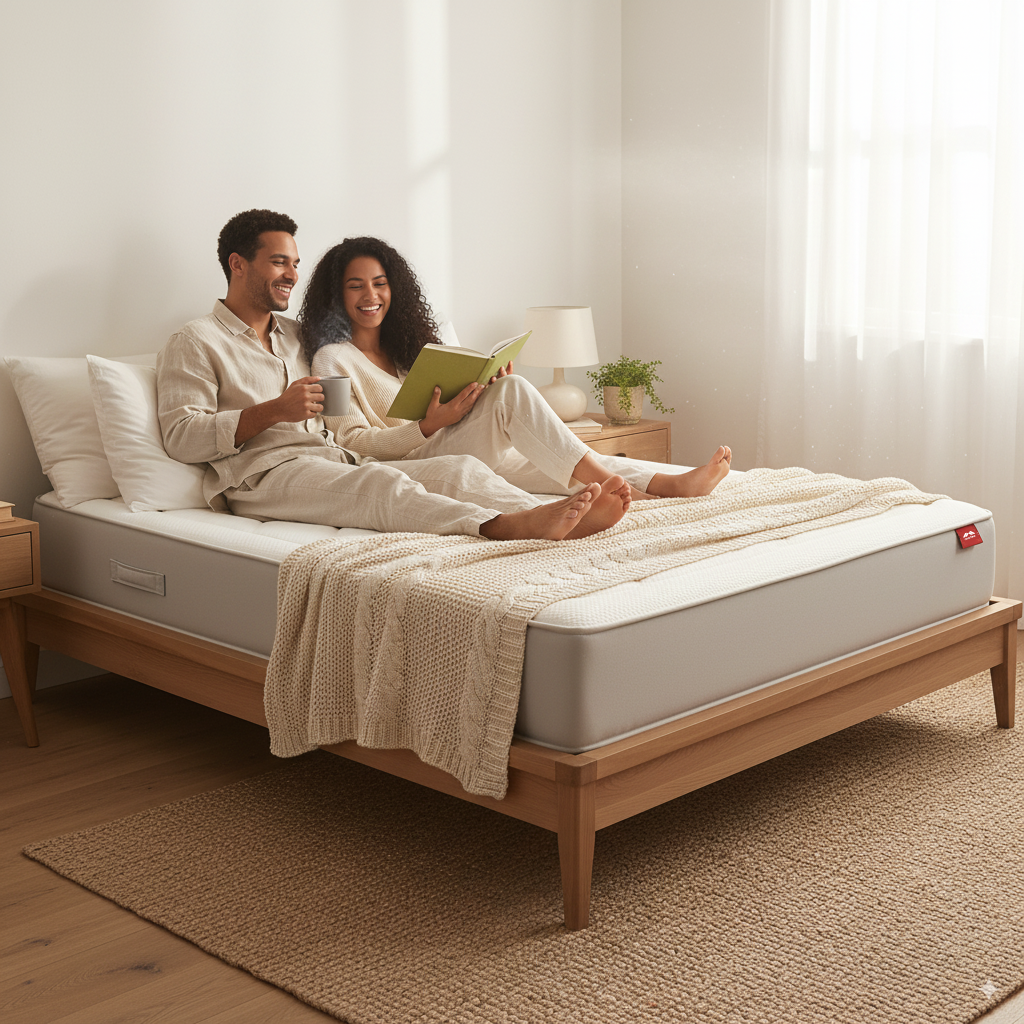
Try the Original Hybrid mattress for 100 nights
Falling asleep in 10 seconds: the military method
It became popular from the book Relax and Win (1981), which attributes it to the United States Navy flight school. According to the book, after a few weeks of practice, most pilots managed it; there are no modern studies measuring it, but it is an orderly form of muscle relaxation that does have support. The full method takes one or two minutes, and the "10 seconds" are the end:
- Relax your face: forehead, jaw, tongue, and the muscles around your eyes.
- Let your shoulders drop as much as possible and release your arms, one first and then the other.
- Exhale slowly and relax your chest.
- Relax your legs: thighs, calves, ankles, and feet.
- For 10 seconds, clear your mind by imagining a peaceful scene, for example, lying in a boat on a calm lake. If you can't do it, mentally repeat "don't think, don't think".
Falling asleep in 60 seconds: the 4-7-8 breathing technique
It is a breathing technique popularized by American doctor Andrew Weil. Its effect comes from lengthening the exhale, which slows the pulse and relaxes.
- Rest the tip of your tongue behind your upper teeth.
- Exhale all the air through your mouth.
- Inhale through your nose while counting to 4.
- Hold your breath while counting to 7.
- Exhale through your mouth while counting to 8.
- Repeat the cycle four times.
If you get dizzy holding your breath, skip that part and stick to the important thing: inhale in 4 and exhale in 6 or 8, slowly.
Falling asleep in 120 seconds: imagining instead of thinking
What delays sleep the most is reviewing problems. The solution is to give your mind something neutral to entertain itself with:
- Imagine a peaceful scene in detail: a beach, a walk through the countryside, your childhood home. A study by the University of Oxford with people with insomnia (Harvey and Payne, 2002) found that imagining a relaxing scene helped them fall asleep sooner than other forms of distraction.
- Mental alphabetizing: choose a word at random, for example "bed", and with each letter imagine objects that start with it (c: spoon, castle, snail...). They are unrelated images that do not hook like a worry.
- Review something good from the day instead of what is pending for tomorrow. If a task comes to mind, write it down on a piece of paper next to the bed and let it go.
Other tricks to fall asleep quickly
- Progressive muscle relaxation: tense and release each muscle group, from your feet to your face. You can find it step by step in our relaxation exercises.
- Paradoxical intention: instead of trying to fall asleep, try to stay awake with your eyes closed. Removing the pressure of "I have to fall asleep" helps sleep come; it is a technique used in therapy for insomnia.
- The 20-minute rule: if you have been awake for a long time, get up, do something quiet in low light, and go back to bed when you are sleepy. The bed must be associated with sleeping, not with tossing and turning.
- A cool and dark bedroom: between 18 and 21 °C and without lights. We tell you about it in the ideal temperature for sleeping.
- Same time every day, also on weekends: that is what makes sleep come on time.
What keeps you awake
- Looking at the clock or your phone every so often: the light and the calculation of how many hours you have left activate you.
- Coffee, tea, or caffeinated soft drinks from mid-afternoon onwards.
- Alcohol: helps you fall asleep, but fragments sleep in the second half of the night.
- Heavy dinners and intense exercise in the 2 or 3 hours before going to bed.
- An uncomfortable bed: if you change positions over and over because something bothers you, no technique works.
More ideas in 6 things you should not do before sleeping.
When a trick is not what you need
If you take more than 30 minutes to fall asleep or you wake up and do not fall back asleep for at least three nights a week, for more than a month, talk to your doctor. Persistent insomnia has treatment, and the first choice is cognitive-behavioral therapy, not sleeping pills.
Morfeo's recommendation
No breathing technique makes up for a mattress that does not let you stay still
Relaxation tricks work when the body can settle and stop looking for a position. If every few minutes you have to change sides because something bothers you, no counting or breathing is worth it.


100 nights of trial · 10-year warranty · Delivery in 3-7 business days