
Why we wake up in the middle of the night
Compartir
Why do we wake up in the middle of the night? If you are one of those who wakes up in the middle of the night for no apparent reason, today I am going to talk to you about nighttime awakenings.
We have dedicated the previous two episodes of the podcast Sueña con Morfeo to relaxing to sleep better, to avoid insomnia before going to bed, but what do we do if we wake up in the middle of the night?
The relaxation exercises we have seen previously will help you sleep better and have fewer awakenings, but even so, sleep disorders are very varied and it is not the same to have difficulty falling asleep, to rest poorly, than to wake up in the middle of the night. Let's see if we can solve it.
Table of Contents
-
Analyze the causes of nighttime awakenings
-
How to know the reason why one wakes up at night?
-
Other reasons why we wake up at night
-
Do you wake up at night to go to the bathroom?
-
Analyze the causes of nighttime awakenings
The first thing we have to do is try to analyze the causes of those awakenings in the middle of the night.
There may be medical disorders related to hormonal activity, restless legs syndrome (tingling in the legs at rest), sleep apnea, etc.
In these cases I am not going to assess anything, since these are medical issues that you should consult with doctors.
But there are other cases such as stress, pain or recurring discomfort, the urge to go to the bathroom, which are things we can easily act on.
How to know the reason why one wakes up at night?
When it is due to nervousness or stress, it is more complicated to be aware of what is causing it. However, we can follow the rule that if you wake up at midnight without being able to fall back asleep and you keep thinking about something that causes you anxiety related to any area of your life, that looks like the reason for your awakenings.
The solution can be simple or complex, but I am going to try to help you. Of course, what you can and I would tell you to do in these cases is to do relaxation exercises before going to sleep. If you haven't done it yet, listen to the previous two episodes of this podcast and you will see how good relaxation feels to sleep better.
As for the specific case of something that worries you, for example, if it is a task you have to perform the next day and forgetting about it causes you stress, it is a good idea to start writing down the tasks you have to perform the next day in a notebook.
Before going to bed, review what you have pending or what you have to do the next day and make a list. This way you know it is written down and you will not forget anything, you can sleep peacefully.
If what you have to do the next day is a special activity that requires several things to go well, write down in the notebook each of the things you have to do so that the activity as a whole goes well.
Expressing those concerns will be liberating for you and will allow you to worry a little less by being aware of them and having them clear and written down.
Whatever it is that worries you, write it down before going to bed. That will give you your own view, but an external one, of the circumstances that make you nervous and you will be able to control them better and having them clear and verbalized will calm you down.
Other reasons why we wake up at night
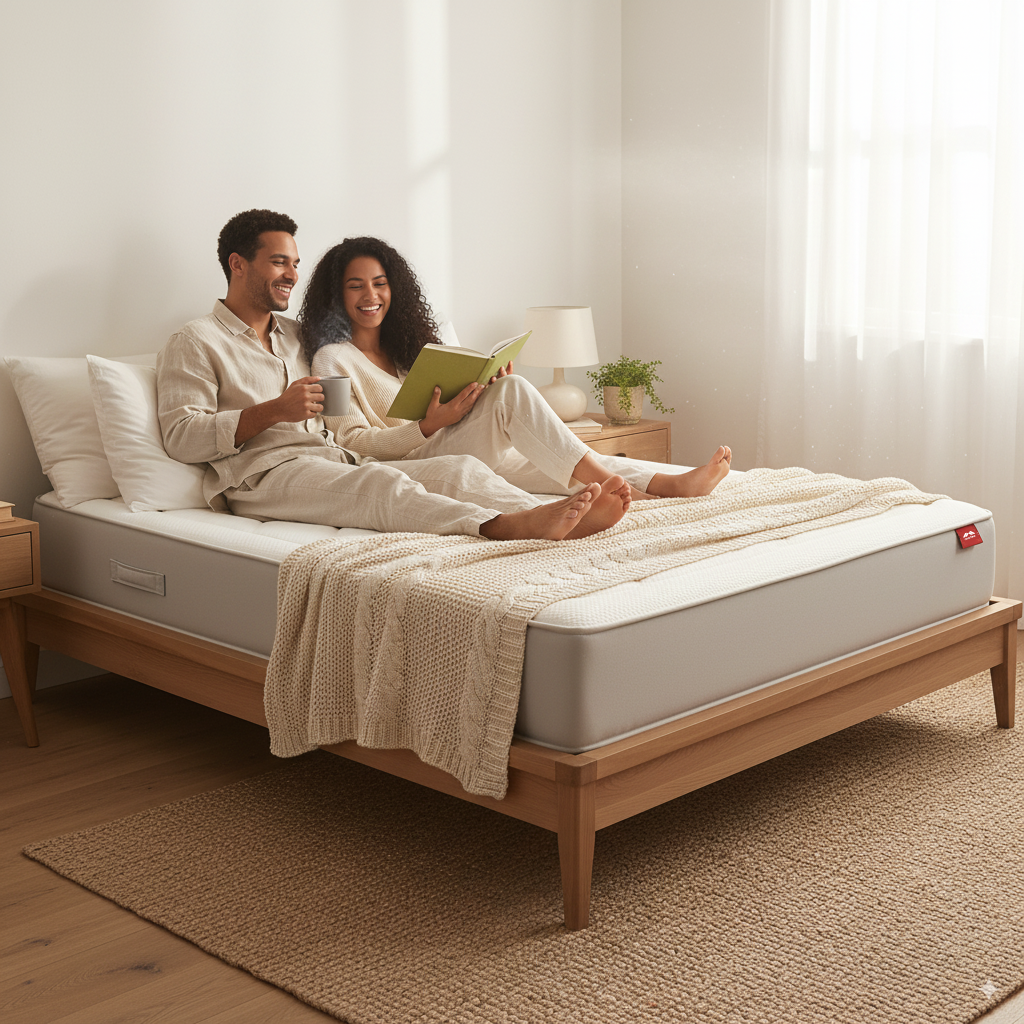
If the reason for your awakenings in the middle of the night is a pain that appears or simply that you are uncomfortable, it is time to reconsider if your pillow and your mattress are suitable. What am I going to tell you about my recommendation of quality mattresses, in this Morfeo podcast, but I am not here to sell you a mattress, but to help you sleep better.
Start with the pillow. Many times the back hurts, for postural reasons, but it is not the mattress's fault, but the pillow's. Try sleeping with a higher, lower, harder, softer pillow... That will depend on your tastes, your posture and how you feel most comfortable in bed. As guidance, if you sleep on your side a higher pillow usually suits you better, and if you sleep on your stomach, a lower one.
I have a particular suggestion about this, and it has to do with the way the pillow is placed. Some people do well having the pillow fitted into the nape of the neck, which makes the head not rise much relative to the horizontal. But other people do well using a wide pillow and supporting the beginning of the shoulders on the edge of the pillow, in addition to the head.
You will have to try it to see what suits you best. If you don't improve with pillow changes, it may be time to change mattresses. Careful, as long as you don't have any hidden, undiscovered ailment that causes you discomfort or pain.
View the Original Hybrid mattress
Do you wake up at night to go to the bathroom?
Are you one of those who wakes up because you feel like going to the bathroom? Here the solution can be easier. Try not to drink too many liquids before going to bed, and of course avoid coffee and alcohol in the afternoon.
But now I have already woken up, what do I do? Tossing and turning in bed does not improve things. In fact, one of the most common recommendations from specialists is to get out of bed. Bed should always be associated with good sleep, not with tossing and turning or staring at the ceiling.
The alternatives are to start doing some quiet activity like reading (be careful with screen brightnesses that are not good at all for sleep), playing cards, yes, a game of solitaire! But simple, so you don't have to activate the neurons too much. You can start looking at photographs, or perform some quiet task, both physically and emotionally.
After a while, about 20 or 30 minutes, we should go back to bed to try to sleep.
If you have woken up and there is only one or two hours left until the alarm goes off, the best thing you can do is call it a day. That night you will be more tired and you can take advantage to keep your schedule and go to sleep all night through.
What is not good at all is changing the sleep routine. That is, if we don't have to get up at a certain time, it is not a good idea to extend the usual wake-up time. It is also not a good idea to take a very long nap to compensate. If you are very tired after lunch and you can afford it, a short nap will do you good, but nothing in excess, because if you break the sleep routine, nighttime rest is not going to improve.
If we have any type of insomnia or difficulty falling asleep, we can also help with our diet. A balanced diet, with foods rich in B group vitamins, helps to better cope with tiredness.
Foods rich in Vitamin B are, for example, sardines, legumes, eggs, salmon, or nuts.
Some people also include a mild infusion, such as ginger, in their routine to relax before sleeping.
In general, protein intake activates our body, and carbohydrate intake leads us to calmer digestions. So at night avoid dinners based exclusively on proteins.
Follow us on our podcast Sueña con Morfeo