
Colchones muelles ensacados o viscoelastica para tu espalda
Decidir entre un colchón de muelles ensacados o uno de viscoelástica se reduce, en el fondo, a una sensación muy personal: ¿prefieres un soporte que responda a tus movimientos o una acogida que te abrace y alivie la presión? Los muelles ensacados ofrecen una firmeza dinámica, casi como si flotaras, ideal para quienes se mueven mucho. La viscoelástica, en cambio, envuelve el cuerpo para un confort milimétrico.
No hay una respuesta única ni un ganador claro. Pero entender de verdad cómo funciona cada tecnología es el primer paso para transformar por completo tu descanso.
Decodificando las tecnologías: ¿qué pasa debajo de las sábanas?
Cuando te sumerges en el universo del descanso, dos materiales se llevan casi todo el protagonismo: los muelles ensacados y la espuma viscoelástica. Cada uno plantea una filosofía distinta para alcanzar un sueño reparador, y la elección correcta depende de tus hábitos, tu forma de dormir e incluso si compartes la cama. Comprender sus mecanismos es clave para invertir de verdad en tu salud postural y tu bienestar.
Un vistazo a las diferencias clave
La gran diferencia está en cómo gestionan el peso y se adaptan a ti. Los colchones de muelles ensacados funcionan como un ejército de pequeños pistones independientes. Cada uno reacciona solo donde se ejerce presión, lo que garantiza una alineación de la columna muy natural y una independencia de lechos fantástica.
Por otro lado, la viscoelástica juega con la temperatura y el peso de tu cuerpo para moldearse a tu silueta. Su misión es eliminar los puntos de presión, creando esa famosa sensación de "abrazo" que distribuye el peso de manera uniforme. Es una gozada, sobre todo para quienes sufren de dolores articulares.
El punto de partida: Piensa en los muelles como un soporte activo, que te impulsa suavemente y facilita el movimiento. La viscoelástica es un confort pasivo que te acoge y se amolda a ti. Esta diferencia define por completo cómo te sientes al acostarte y moverte durante la noche.
Para que veas estas diferencias de un solo vistazo, hemos preparado una tabla que resume los conceptos clave. Te ayudará a hacerte una idea clara desde el principio antes de que entremos en detalle.
Comparativa rápida entre muelles ensacados y viscoelástica
Esta tabla resume las diferencias fundamentales para darte una visión clara desde el principio y ayudarte a entender los conceptos clave que analizaremos.
| Criterio de decisión | Colchones de muelles ensacados | Colchones viscoelásticos |
|---|---|---|
| Soporte y firmeza | Firmeza reactiva y soporte punto por punto. Mantiene la columna alineada de forma activa. | Adaptabilidad progresiva. Alivia la presión y se amolda al contorno del cuerpo. |
| Transpirabilidad | Excelente. El espacio entre los muelles permite una circulación de aire constante. Ideal para calurosos. | Variable. Depende de la densidad y tecnología (célula abierta). Puede retener calor. |
| Independencia de lechos | Muy alta. Cada muelle absorbe el movimiento de forma individual, minimizando la transferencia. | Excelente. La espuma absorbe el movimiento, evitando que se transmita al otro lado de la cama. |
| Sensación al dormir | Sensación de flotabilidad y facilidad de movimiento. No te sientes "atrapado". | Efecto "abrazo" o envolvente. El colchón se adapta a ti lentamente. |
| Durabilidad | Alta, especialmente con acero de alta calidad. Menos propenso a la deformación permanente. | Depende de la densidad de la espuma. Las espumas de baja calidad pueden perder propiedades. |
Esta tabla es solo el comienzo. Ahora vamos a profundizar en el funcionamiento real de cada tecnología para que entiendas no solo qué hacen, sino cómo lo hacen y qué significa eso para tu descanso de cada día.
Cómo funciona el soporte de los muelles ensacados
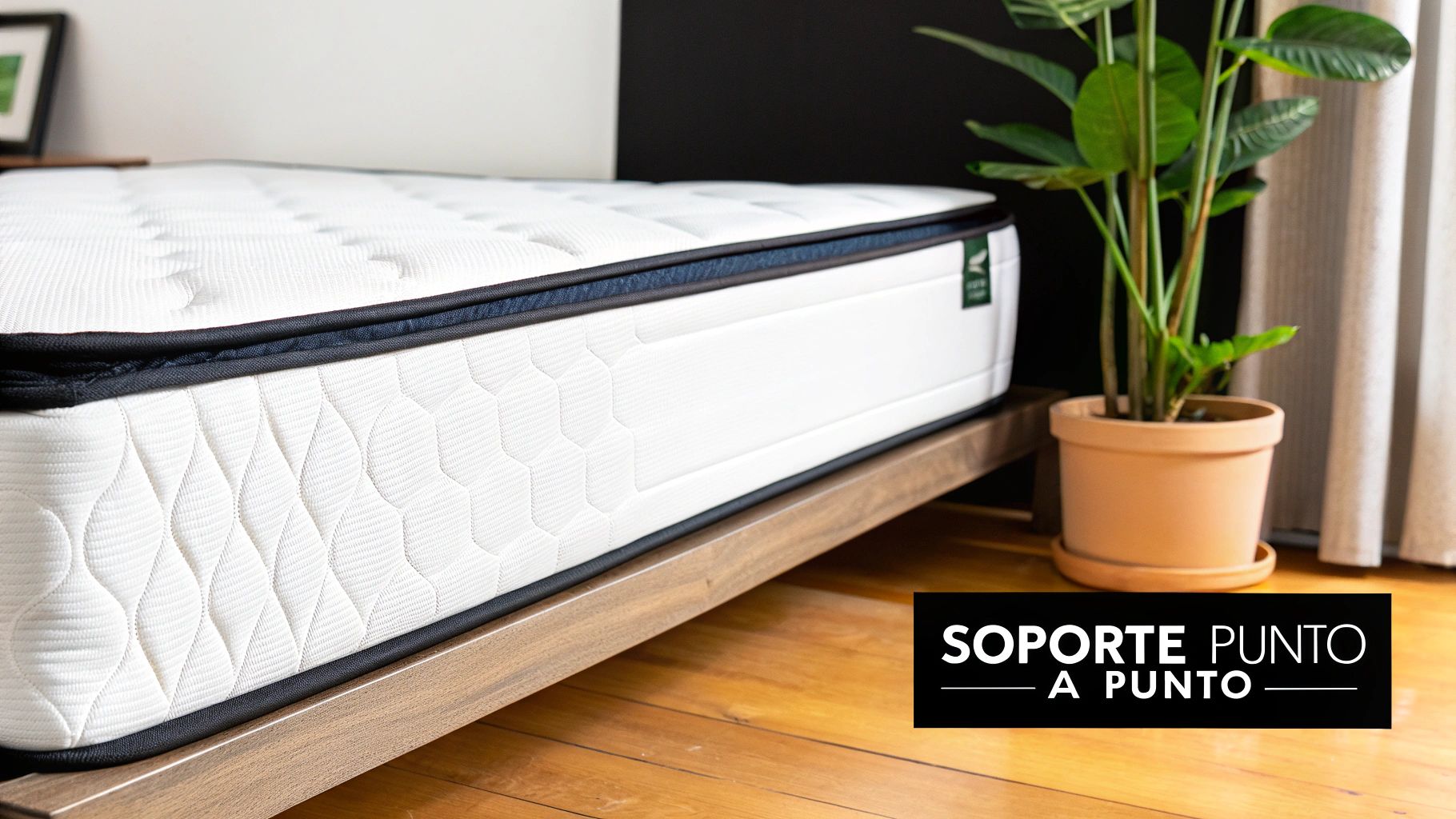
Para entender de verdad si te conviene un colchón de muelles ensacados o viscoelástica, lo primero es mirar qué hay en su interior, cómo está diseñado su soporte. Y no, los muelles ensacados no tienen nada que ver con esos viejos colchones de muelles que sonaban a la mínima. La tecnología ha avanzado un mundo.
Imagina cientos, a veces miles, de pequeños muelles individuales, cada uno metido en su propia bolsita de tela. Ahí está el secreto de su éxito: trabajan de forma independiente.
Cuando te tumbas, solo se comprimen los muelles que están justo debajo de tu cuerpo. El resto ni se inmuta. Esto crea una respuesta precisa, punto por punto, a la forma única de tu silueta.
La clave está en la independencia
Seguro que has oído hablar de la "independencia de lechos". Es, sin duda, el beneficio estrella de esta tecnología, y con toda la razón del mundo. Como cada muelle reacciona por su cuenta, el movimiento no se propaga de un lado a otro del colchón.
Esto significa que si tu pareja se mueve, se da la vuelta o se levanta a media noche, tú apenas lo vas a notar. Para quienes tienen el sueño ligero o duermen con alguien que parece entrenar para una maratón mientras duerme, esta característica es un antes y un después. El resultado es un descanso con menos interrupciones y, por tanto, de muchísima más calidad para ambos.
Un soporte activo y reactivo
A diferencia de esa sensación más envolvente de la viscoelástica, el soporte que te dan los muelles ensacados es reactivo y dinámico. ¿Qué quiere decir esto? Que el colchón no solo se amolda a ti, sino que también ofrece un ligero empuje de vuelta que te ayuda a cambiar de postura sin esfuerzo.
Esta cualidad es oro puro para los que se mueven mucho por la noche. No sentirás esa sensación de "quedarte atrapado" que a veces se asocia con las espumas muy densas. Podrás girarte y encontrar tu posición ideal sin tener que luchar contra el colchón.
Esa reactividad se traduce en una sensación de flotabilidad, de libertad de movimiento que muchísima gente encuentra increíblemente cómoda. Es un soporte que trabaja contigo, no contra ti.
- Alineación postural: Mantiene tu espalda en una posición natural, hundiéndose solo donde debe.
- Facilidad de movimiento: El rebote sutil de los muelles te ayuda a girar sin despertarte.
- Firmeza equilibrada: Consigue un soporte robusto sin la sensación de estar durmiendo sobre una tabla.
Modelos como el Morfeo Hybrid Original son el ejemplo perfecto de esta ingeniería, combinando un núcleo de muelles ensacados con capas de confort para dar con ese equilibrio ideal entre soporte y adaptabilidad.
Transpirabilidad superior para noches frescas
Por último, una de las grandes ventajas de su estructura es su excelente ventilación. El espacio que queda de forma natural entre cada saquito de muelles crea unos canales de aire que permiten que este circule sin parar.
Este flujo de aire constante ayuda a disipar el calor corporal y la humedad que se acumulan durante la noche. Para las personas calurosas, esto marca la diferencia entre dormir a gusto o pasarse la noche dando vueltas. Si quieres profundizar en este y otros puntos, echa un vistazo a las ventajas de los colchones de muelles ensacados en nuestro blog.
Y no es solo una cuestión de confort. Una buena transpirabilidad también crea un entorno de descanso más higiénico, ya que evita la proliferación de ácaros y bacterias.
La adaptabilidad de la espuma viscoelástica bajo la lupa
Si los muelles ensacados son la respuesta reactiva, la espuma viscoelástica es, sin duda, la maestra de la adaptabilidad. Su magia reside en una capacidad única para reaccionar tanto a la presión como a la temperatura de tu cuerpo, dibujando un molde casi perfecto de tu silueta. Aquí está el verdadero dilema al elegir entre colchones de muelles ensacados o viscoelásticos: ¿buscas un soporte dinámico o un confort que te abrace?
A diferencia de los muelles, la viscoelástica no empuja ni ofrece resistencia. Todo lo contrario: cede de forma progresiva justo donde lo necesitas, distribuyendo tu peso de manera increíblemente uniforme por toda la superficie.
Este mecanismo de adaptación lenta es el responsable de esa famosa sensación de "abrazo" o de estar flotando. El colchón te acoge, liberando toda la tensión que has acumulado durante el día.
El alivio de presión como objetivo principal
La gran fortaleza de la espuma viscoelástica es su impresionante capacidad para eliminar los puntos de presión. Zonas como los hombros, las caderas o los talones, que aguantan más peso al dormir, se hunden suavemente en el material. Esto libera esa tensión que a menudo se convierte en dolores y molestias.
Para personas con dolencias en las articulaciones, problemas de espalda o fibromialgia, esta cualidad puede marcar una diferencia abismal en la calidad del sueño. La espuma absorbe la presión en lugar de devolverla, permitiendo que los músculos se relajen por completo durante la noche.
La viscoelástica no busca alinear la columna con un soporte firme, sino liberar de presión cada vértebra y articulación para que el cuerpo encuentre su postura natural sin forzar nada. Es un enfoque de confort pasivo, de pura acogida.
Este efecto envolvente, además, es un gran aliado para dormir en pareja. Como la espuma absorbe el movimiento de forma localizada, impide que se transmita al resto de la cama. Se acabaron los despertares por los giros de tu acompañante.
El reto de la temperatura y el hundimiento
Si le preguntas a alguien sobre los contras de la viscoelástica, seguramente te hable del calor. Históricamente, su principal crítica era la tendencia a retener el calor corporal. Las primeras generaciones de espumas, de célula cerrada, atrapaban el aire caliente, lo que era una pesadilla para los más calurosos.
Además, una espuma de baja calidad o densidad podía generar una sensación excesiva de "hundimiento", como si estuvieras atrapado. Esto hacía que cambiar de postura por la noche fuera todo un esfuerzo.
Por suerte, la tecnología ha avanzado a pasos agigantados. En Morfeo, por ejemplo, hemos incorporado soluciones de última generación para dejar atrás esos viejos problemas:
- Viscoelástica de célula abierta: Su estructura permite que el aire circule libremente a través de la espuma, disipando el calor de forma mucho más eficaz. Se acabaron las noches de calor sofocante.
- Tecnología VisCool: Esta innovación va un paso más allá. Incorpora partículas termorreguladoras que gestionan activamente la temperatura para mantener una superficie de descanso fresca y agradable durante toda la noche.
- Densidades optimizadas: Usamos espumas de alta densidad que ofrecen esa adaptabilidad tan buscada, pero sin sacrificar el soporte. Así evitamos esa sensación de estar atrapado en el colchón.
Gracias a estos avances, hoy puedes disfrutar de todos los beneficios de la viscoelástica sin sufrir sus antiguos inconvenientes. Si quieres saber más sobre este material fascinante, puedes descubrir qué es un colchón viscoelástico en nuestra guía completa. La elección entre muelles ensacados o viscoelástica ya no es una cuestión de sacrificar frescura por confort.
Comparativa directa para elegir el colchón ideal
Llegados a este punto, la duda entre "muelles ensacados o viscoelástica" ya no es una cuestión de tecnologías que no conoces. Ahora se trata de una decisión personal, de sensaciones y, sobre todo, práctica. Para ayudarte a dar con la clave, vamos a poner cara a cara cada criterio importante, aplicándolo a situaciones que seguro te suenan de algo.
La elección no es la misma para alguien que duerme solo y pasa calor que para una pareja con pesos muy distintos donde uno sufre de lumbares. Por eso, vamos a desgranar cómo se comporta cada material en lo que de verdad importa noche tras noche.
Soporte de la espalda frente a alivio de la presión
Este es, quizás, el punto de mayor conflicto y el que más dudas genera. Por un lado, los muelles ensacados ofrecen un soporte estructural firme y reactivo. Su arquitectura permite que la columna vertebral mantenga una alineación natural, ya que cada muelle se ajusta al peso que soporta sin arrastrar a los de al lado.
Por otro lado, la viscoelástica se centra en el alivio de la presión. Se amolda a tu silueta para que hombros y caderas se hundan lo justo, liberando la tensión acumulada. Su enfoque es más pasivo, buscando el confort a través de una acogida total.
El veredicto práctico: Si tu principal problema es mantener una postura correcta y necesitas un soporte que corrija activamente la alineación de la espalda, los muelles ensacados son una base excelente. Si, en cambio, sufres de dolores articulares o musculares y buscas una sensación que te "abrace" para eliminar puntos de presión, la viscoelástica es tu mejor aliada.
Independencia de lechos: un análisis para parejas
Ambas tecnologías, en sus versiones de alta calidad, ofrecen una independencia de lechos sobresaliente. Y esto, cuando duermes en pareja, es fundamental para no acabar declarando la guerra en mitad de la noche.
La viscoelástica absorbe el movimiento de una forma casi mágica. La energía de un giro o de alguien que se levanta se disipa en la propia espuma, impidiendo que se propague al otro lado de la cama. Es una solución casi perfecta para este problema.
Los muelles ensacados, al funcionar cada uno por su cuenta, también son increíblemente eficaces. Cada muelle encapsula el movimiento, minimizando su transferencia. En colchones de calidad, la diferencia es prácticamente imperceptible.
- Ventaja de los muelles: Su reactividad facilita que la persona que se mueve lo haga sin esfuerzo. Esto puede traducirse en movimientos menos bruscos y, por tanto, menos perceptibles para el otro.
- Ventaja de la viscoelástica: Su capacidad de absorción es total. Es como si la superficie amortiguara cualquier perturbación antes de que llegue a ti.
Transpirabilidad y temperatura nocturna
Aquí la diferencia es clara y contundente. La estructura de los muelles ensacados crea canales naturales que permiten una circulación de aire constante. Este flujo de aire continuo disipa el calor corporal y la humedad, manteniendo la superficie del colchón fresca y seca.
La espuma viscoelástica, por su propia naturaleza densa, tiende a retener más el calor. Aunque las tecnologías modernas, como la célula abierta o geles tipo VisCool, han mejorado drásticamente su rendimiento térmico, los muelles ensacados siguen siendo, por diseño, superiores en este aspecto. Para las personas muy calurosas, esta puede ser la característica que incline la balanza.
Para que veas de forma sencilla cómo tus necesidades te guían en esta elección, hemos creado este árbol de decisión.

Como ves, el gráfico ilustra que la elección depende de si priorizas el soporte estructural para tu espalda o la adaptabilidad para aliviar esos molestos puntos de presión.
Durabilidad y sensación al dormir
La vida útil de un colchón, ya sea de muelles ensacados o viscoelástico, depende directamente de la calidad de sus materiales. Un acero de alta calidad en los muelles y una espuma de alta densidad en la viscoelástica son la mejor garantía de durabilidad. No hay un ganador claro por tecnología, sino por calidad de fabricación.
Finalmente, la sensación es lo más subjetivo de todo. Los muelles ensacados ofrecen una firmeza reactiva con una ligera sensación de flotabilidad que te permite moverte con facilidad. Por su parte, la viscoelástica proporciona una adaptabilidad envolvente que te acoge lentamente.
Esta diferenciación se refleja en las tendencias del mercado. La evolución del mercado español de colchones va en línea con las tendencias globales, donde los modelos de muelles ensacados, espuma viscoelástica e híbridos concentran cada vez más el valor añadido. A nivel mundial, el mercado de colchones se valoró en 54,75 mil millones de dólares en 2024 y se espera que alcance los 91,23 mil millones en 2032. En España, esta pauta se traduce en una mayor presencia de modelos que combinan núcleos de muelles ensacados con capas viscoelásticas, como los híbridos de Morfeo, que ofrecen firmeza media-alta, una gran independencia de lechos y una ventilación superior. Puedes leer más sobre las tendencias del mercado del colchón en esta completa investigación de Fortune Business Insights.
Cuándo elegir un colchón híbrido como solución definitiva

Llegados a este punto, si todavía dudas entre la firmeza de los muelles ensacados o la adaptabilidad de la viscoelástica, es muy probable que la solución no sea elegir, sino combinar. Y justo ahí es donde los colchones híbridos entran en escena, ofreciendo una respuesta inteligente que fusiona lo mejor de cada tecnología.
Un colchón híbrido no es una simple mezcla de capas. Es pura ingeniería del descanso, pensada para que las ventajas de un material compensen las debilidades del otro. Imagina tener el soporte reactivo y la frescura de los muelles, pero sin renunciar a la acogida suave y el alivio de presión que solo la viscoelástica puede dar. Eso, en esencia, es un híbrido.
La estructura de un híbrido de calidad
El secreto de un buen híbrido está en su construcción. La base, el corazón del colchón, es siempre un núcleo de muelles ensacados que garantiza un soporte robusto, una independencia de lechos fantástica y una circulación de aire que mantiene a raya el calor.
Justo encima de esa base se colocan una o varias capas de confort, normalmente de espumas viscoelásticas de alta densidad. Estas son las que se encargan de recibir tu cuerpo, amoldarse a tus curvas para eliminar puntos de presión y dar esa sensación de confort total.
Esta fusión crea un equilibrio casi perfecto: los muelles te dan el empuje necesario para que no te hundas, mientras que la viscoelástica te abraza con una comodidad que se siente premium.
El resultado es un colchón increíblemente versátil, capaz de satisfacer a un espectro muy amplio de durmientes. Desde parejas que necesitan que los movimientos del otro no les despierten, hasta personas con dolor de espalda que buscan soporte sin sentirse como si durmieran sobre una tabla.
¿Para quién es ideal un colchón híbrido?
Los colchones híbridos son, en pocas palabras, para quien no quiere renunciar a nada. Se convierten en la opción perfecta en situaciones muy concretas:
- Parejas con gustos distintos: Si uno busca firmeza y el otro prefiere una acogida suave, el híbrido es el punto de encuentro ideal.
- Personas calurosas que adoran la viscoelástica: Te permite disfrutar del confort de la espuma sin el problema del calor, gracias al núcleo de muelles que ventila constantemente.
- Durmientes que se mueven mucho: La reactividad de los muelles facilita los giros, mientras que la viscoelástica se adapta al instante a cada nueva postura, aliviando la presión.
- Quienes buscan una inversión a largo plazo: La combinación de materiales de alta calidad suele traducirse en un colchón más duradero y con un rendimiento que se mantiene en el tiempo.
Modelos como el Morfeo Nature o el Hybrid Original son un claro ejemplo de cómo esta tecnología se puede afinar para perfiles muy específicos. En Morfeo, vemos los híbridos como la respuesta a un durmiente cada vez más exigente, que busca beneficios reales para su salud. Si quieres profundizar, puedes aprender más sobre los colchones híbridos y cómo combinan lo mejor de ambos mundos en nuestro blog.
Esta tendencia se confirma en los hábitos de compra en España, donde los colchones híbridos y viscoelásticos ya se consideran una inversión clave en el bienestar del hogar. De hecho, el gasto medio en productos de descanso aumentó un 17 % en 2024, hasta los 427 euros por persona. Para marcas como Colchón Morfeo, que ofrecemos 100 noches de prueba, esto demuestra que la gente está dispuesta a invertir cuando entiende el valor de mejorar su descanso y aliviar sus dolores de espalda.
Preguntas frecuentes al comparar estos colchones
Incluso después de entender la teoría, es normal que queden dudas prácticas. Al fin y al cabo, decidir entre colchones de muelles ensacados o viscoelástica es pensar en tu día a día, en cómo duermes de verdad y en si compartes cama.
Para que no te quede ni una duda, vamos a resolver las preguntas más habituales que surgen justo en esta fase final. Son las cuestiones clave que conectan toda la información con tu situación personal.
¿Qué tipo de colchón es mejor si sudo mucho por la noche?
Aquí la respuesta es bastante directa: los colchones de muelles ensacados son, por lo general, la mejor opción para las personas calurosas. Su secreto está en la propia estructura. Imagina cientos de muelles individuales, cada uno en su saquito de tela, creando pequeños canales de aire por todo el interior.
Este diseño es como un sistema de ventilación natural. Permite que el aire circule libremente, llevándose el calor corporal y la humedad que generas al dormir. El resultado es una sensación de frescor que se mantiene toda la noche.
Es cierto que la viscoelástica ha avanzado mucho con geles como nuestro VisCool o diseños de célula abierta, pero la ventilación pura y dura de los muelles es difícil de superar. Si el calor es tu principal enemigo, un colchón con núcleo de muelles, sobre todo un híbrido, te dará esa frescura que necesitas sin renunciar a la adaptabilidad.
Si mi pareja y yo tenemos pesos muy diferentes, ¿qué opción nos conviene?
Esta es una de las grandes dudas al comprar un colchón para dos, y con razón. Tanto los muelles ensacados como una viscoelástica de calidad ofrecen una gran independencia de lechos, pero lo consiguen de maneras diferentes.
Los muelles ensacados brillan en este escenario. Como cada muelle funciona por su cuenta, cuando la persona de mayor peso se tumba, sus muelles se comprimen justo lo necesario, sin arrastrar ni afectar al otro lado de la cama. Esto evita el típico "efecto hamaca" donde uno acaba rodando hacia el centro.
La viscoelástica de alta densidad también es muy eficaz, ya que absorbe el movimiento localmente y se amolda a cada cuerpo. Sin embargo, si la diferencia de peso es muy grande, un núcleo de muelles ensacados aporta una base estructural más firme y robusta, asegurando que cada uno reciba el soporte correcto sin interferencias.
Nuestra recomendación: Para diferencias de peso notables, un colchón híbrido es la solución perfecta. Tienes el soporte individualizado de los muelles en la base y la adaptabilidad de la viscoelástica en la capa de confort. Lo mejor de ambos mundos para asegurar que los dos durmáis de maravilla.
¿Necesito una base o canapé específico para cada tipo de colchón?
Sí, totalmente. La base es el cimiento de tu descanso y puede potenciar o arruinar las propiedades de tu colchón. No todos los soportes valen para todos los colchones.
-
Para colchones de muelles ensacados: La clave es una superficie firme y completamente lisa. Esto garantiza que cada muelle tenga un apoyo uniforme. Las bases tapizadas rígidas, los canapés con tapa sin ranuras o los somieres de lamas muy anchas y juntas son ideales. Un somier de lamas estrechas y separadas es su peor enemigo, porque los muelles podrían deformarse al colarse por los huecos.
-
Para colchones viscoelásticos (100% espuma): Su prioridad es la transpiración. Necesitan una base que les permita "respirar" para que no se acumule humedad. Los somieres de lamas son perfectos para esto. Una base totalmente cerrada, como un canapé sin aireadores, podría hacer que el colchón retuviera humedad y calor.
Esta es otra de las ventajas de los colchones híbridos. Como su núcleo de muelles ya se ventila por sí mismo, se llevan genial tanto con bases rígidas como transpirables, dándote mucha más flexibilidad a la hora de elegir.
¿Cuál de los dos tipos de colchón dura más?
Aquí el debate no es "muelles vs. visco", sino "calidad vs. mala calidad". Un colchón premium, sea de la tecnología que sea, durará mucho más que uno básico de la tecnología contraria.
En un colchón de muelles ensacados, la durabilidad depende del acero de los muelles (su grosor y tratamiento para evitar la fatiga) y de la tela que los envuelve. Un buen acero aguantará años sin perder firmeza ni deformarse.
En uno de viscoelástica, el dato clave es la densidad de la espuma (kg/m³). Una espuma de alta densidad (por encima de 50 kg/m³) es mucho más resistente y mantendrá sus propiedades de soporte y adaptabilidad durante años. Las espumas de baja densidad, en cambio, tienden a hundirse y perder su "memoria" mucho antes.
Un buen indicador es siempre la garantía. Marcas que confían en sus materiales, como Morfeo con sus 10 años de garantía, te están diciendo que su producto está hecho para durar.
En Colchón Morfeo, sabemos que la elección ideal es algo muy personal. Por eso hemos creado una gama de colchones que une la mejor tecnología del descanso con materiales de altísima calidad. Descubre el modelo que va a cambiar tus noches y recuerda que tienes 100 noches de prueba sin compromiso en https://www.morfeo.com.