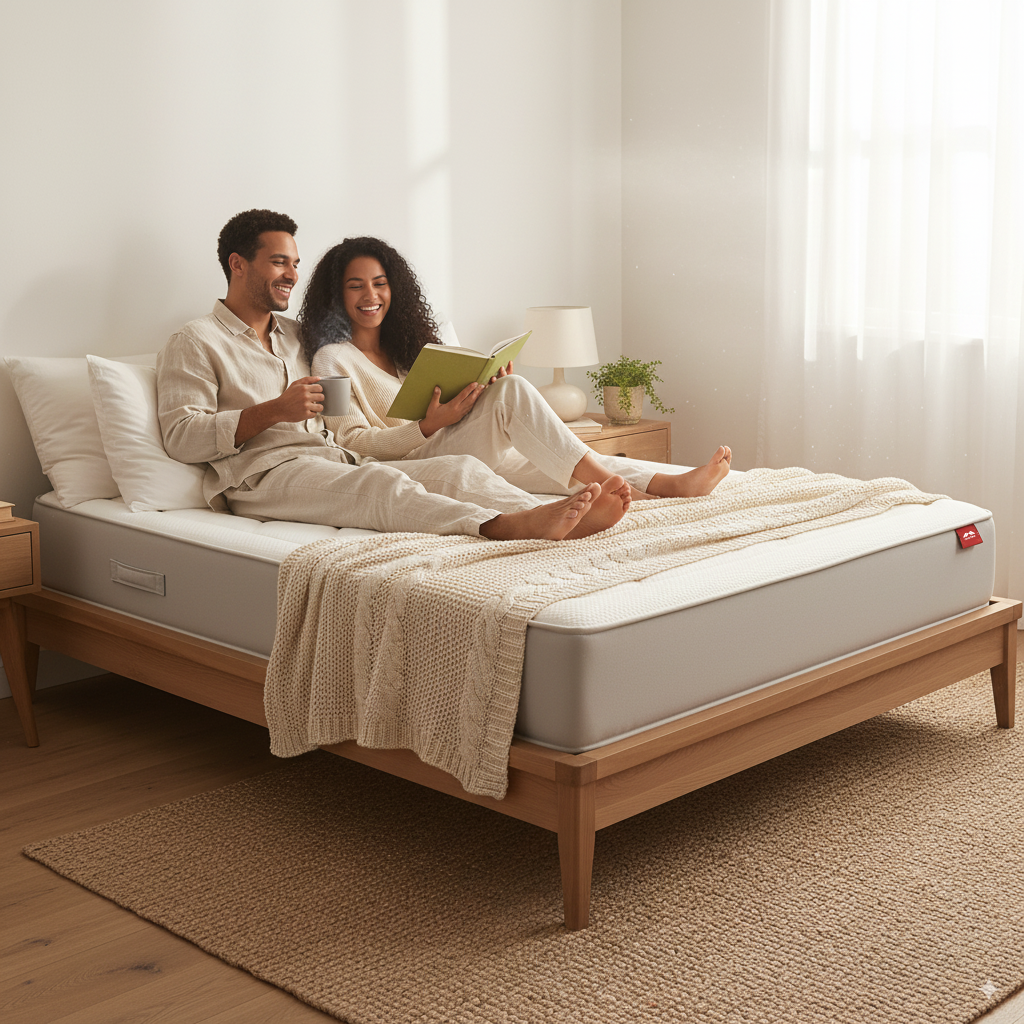

What's a Memory Foam Mattress and How It Can Transform Your Sleep
If you've ever wondered what exactly a memory foam mattress is, the simplest answer is that it's a sleeping surface that uses a super special, almost magical foam, known as "memory foam." Think of it like leaving a footprint in wet sand: it perfectly molds to your foot's shape, and when you lift it, the mark slowly fades away. That's exactly how memory foam works, but for your body.
Unlocking the secret to memory foam comfort
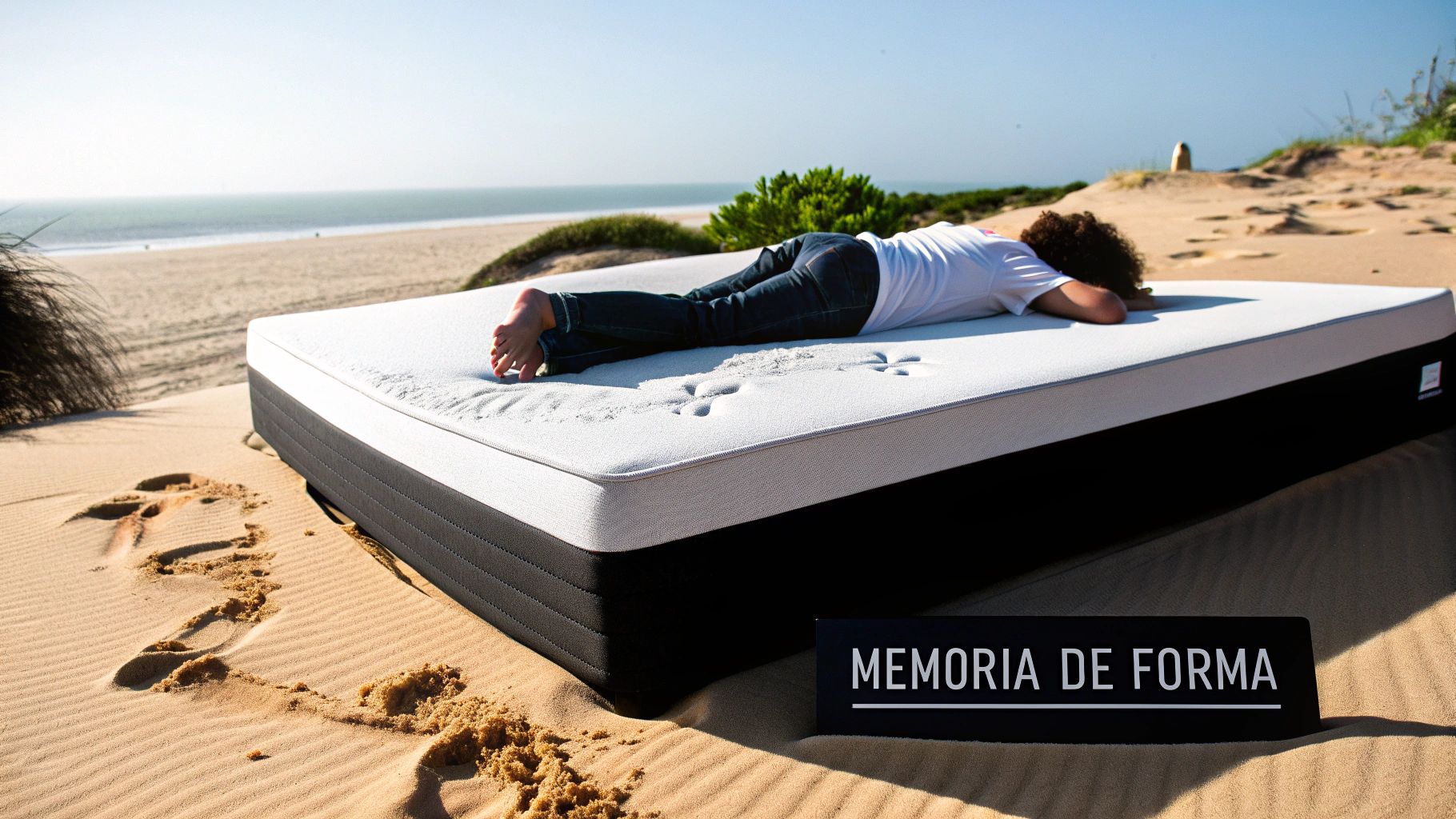
But of course, there's a lot more science behind this amazing feeling. We're not just talking about a simple block of foam; it's a sleep system designed to interact with your body in a way that traditional materials, like springs, simply can't. The secret to its incredible comfort comes down to three "superpowers" that make it stand out from the rest.
First up is its millimeter-perfect adaptability. Unlike a spring mattress that pushes back with the same force everywhere, memory foam gently yields and cradles every curve of your body. This creates an almost weightless feeling that relieves pressure exactly where you need it most: your shoulders, hips, and knees.
Pressure relief and motion isolation
That signature "hug" brings us right to its second big perk: the pressure relief. By spreading your weight evenly, your blood circulation gets better, and you'll find yourself moving around a lot less during the night. You'll spend less time tossing and turning to find that perfect spot, which means you'll get deeper, more restorative sleep. So long to waking up with aches and pains!
And last but not least, we have motion isolation. If you share your bed, this feature is going to be a total game-changer. Memory foam absorbs movement instead of transferring it. So, if your partner rolls over, gets up, or shifts around, you'll barely feel a thing. Say goodbye to that "wave" effect that used to wake you up in the middle of the night!
This technology, which was actually developed by NASA back in the 60s, made its way to Spain in the 90s and totally revolutionized the sleep industry. By the 2000s, memory foam mattresses already made up 28% of the national market. Studies from that era were crystal clear: 65% of people preferred them because they offered up to 50% more pressure relief than traditional spring mattresses.
A memory foam mattress doesn't make you adapt to it; it's the other way around – it adapts to you! Its thermosensitive foam reacts to the exact contours of your body, giving you personalized support that no other material can even come close to.
To help you see these differences even more clearly, we've put together a handy little table. Getting these key points is the first step to figuring out if this is the perfect mattress for you. If you're curious to dive deeper, we invite you to check out our complete guide on the different types of mattresses out there.
Quick Comparison of Sleep Technologies
Here's a simple comparison so you can quickly see how memory foam stacks up against other popular technologies in the areas that matter most for a great night's sleep.
| Feature | Memory Foam Mattress | Spring Mattress | Latex Mattress |
|---|---|---|---|
| Adaptability | Excellent. Molds perfectly to your body's shape. | Good. Responds to weight but doesn't contour to your shape. | Really good. Stretchy and adaptable. |
| Pressure relief | Excellent. Distributes weight evenly. | Okay. Might create pressure points. | Good. Offers some relief. |
| Motion Isolation | Excellent. Absorbs almost all movement. | Poor. Transfers movement from side to side. | Good. Absorbs movement well. |
As you can see, memory foam really shines when it comes to adaptability and making sure your partner's movements don't bother you – two key things for uninterrupted sleep.
The Journey of Memory Foam: From NASA to Your Bedroom
The story of memory foam is, to say the least, pretty amazing. It wasn't born in a mattress factory or a furniture designer's workshop, but in a much more unexpected place: NASA's labs during the 1960s space race. Its original purpose had nothing to do with sleep, but with pure survival.
Aerospace engineers faced a huge challenge. They needed a material that could cushion and protect astronauts from the brutal G-forces they experienced during liftoff and re-entry into the atmosphere. The solution was a polyurethane polymer with unique viscosity and elasticity properties, capable of absorbing incredible pressure and slowly returning to its original shape. Memory foam had just been born.
For decades, this technology remained a closely guarded secret, used almost exclusively in high-level aerospace and medical applications, like in incubators for newborns or prosthetics. Its jump to the consumer market wasn't immediate; the manufacturing process was complex and expensive, making it impractical for home use. However, the potential was definitely there, just waiting to be discovered.
The Sleep Revolution Arrives in Spain
The real transformation began when the sleep industry realized something: the same properties that protected an astronaut could offer unprecedented comfort to any of us. The idea was simple but incredibly powerful: if this material could distribute the pressure of a G-force, what couldn't it do for the weight of a sleeping person?
And this is where Spain plays a leading and unexpected role in the global history of sleep. In 1997, two young Spanish entrepreneurs, Miguel Lorenzo and Christian Magnusson, decided to bet everything on this almost unknown technology. They introduced Tempur brand mattresses to El Corte Inglés, making Spain the first country in the world to market memory foam to the general public.
It was a risky move that changed the game forever. In fact, according to industry data, this innovation would come to represent over 30% of premium mattress sales in Spain by 2011. You can find out more details about this business success story at Cesce.
The arrival of memory foam didn't just introduce a new product; it completely redefined expectations of what it meant to "sleep well".
This arrival forced the entire industry to evolve. Spanish consumers were among the first to experience a level of adaptability and pressure relief that traditional spring mattresses couldn't even dream of offering. This solidified the Spanish market as a benchmark in innovation, a legacy that we at Colchón Morfeo continue to drive today with our own advancements in materials and design.
The Secrets Hidden Inside a Memory Foam Mattress
To truly understand why a memory foam mattress feels so good, you need to look beyond the cover and discover what's inside. It's not just a simple block of foam, not by a long shot. Think of it more like a comfort lasagna, where each layer has a specific mission to help you get the best sleep ever.
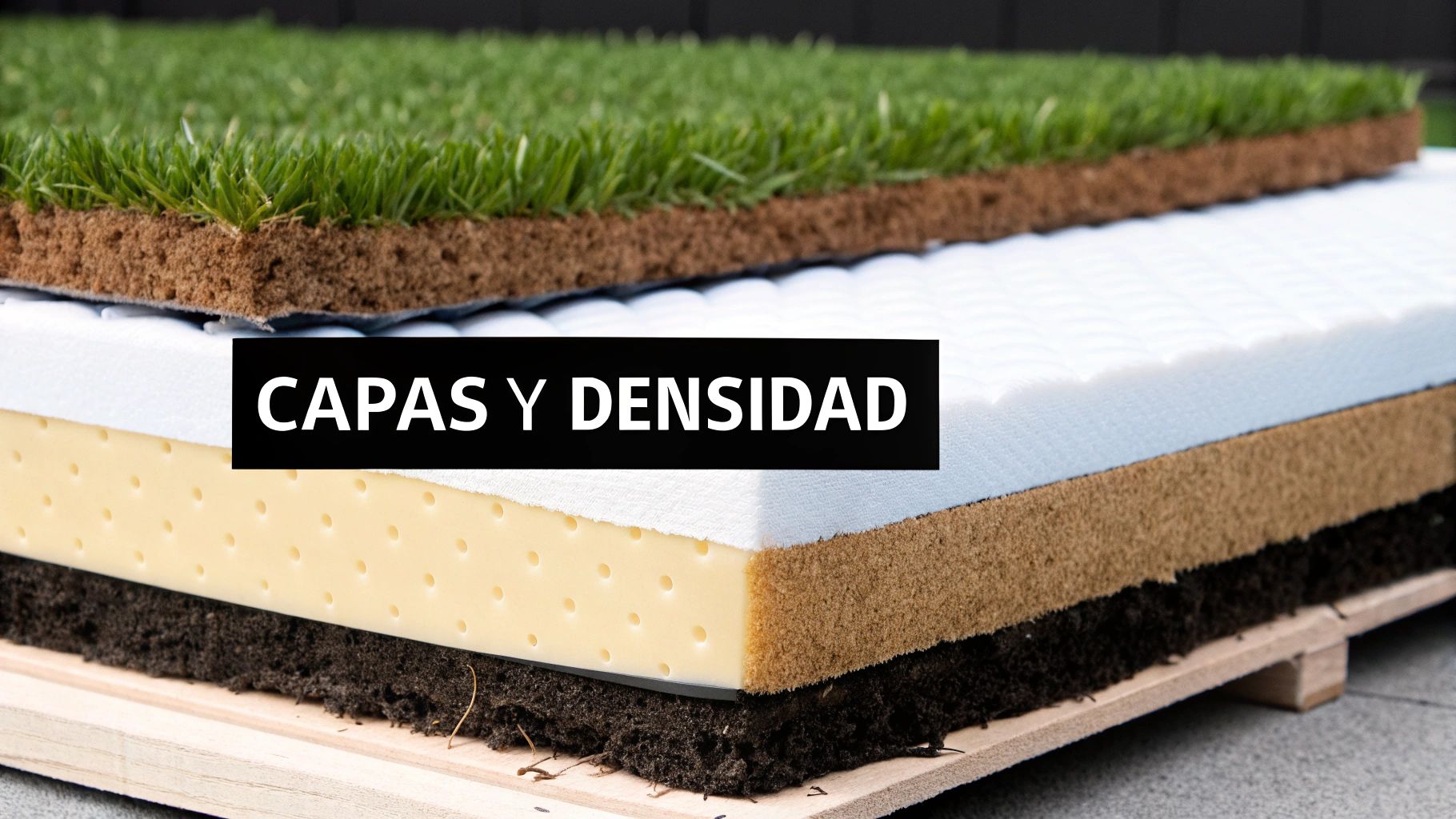
This layered architecture is the key to its success. It's what allows it to be adaptable while also giving you the support you need. If the entire mattress were pure memory foam, you'd sink in like quicksand. And if it only had a hard base, well, goodbye pressure relief! The magic, as almost always, is in the balance.
The HR Core: The Invisible Pillar of Your Sleep
The foundation of any good memory foam mattress is its core. Usually, this is a high-resilience foam, better known as HR (High Resilience) foam. Imagine this core as the foundation of your house: its job is to provide stability, structural support, and durability to the whole thing.
Without a quality HR core, the memory foam layers on top would flatten out in no time, losing all their charm. It's the silent hero that makes sure your mattress keeps its shape and gives your back the right support night after night, year after year.
On top of this sturdy base is where the comfort layers are added, and that's where memory foam technology kicks in to give you that signature hugging sensation.
Density and Firmness: The Duo You Shouldn't Mix Up
This is where a lot of people get confused. It's normal to think density and firmness are the same thing, but understanding the difference is key to choosing well and avoiding surprises.
- Firmness: This is the feeling you get when you lie down. Do you feel it's hard, soft, or somewhere in between? It's totally subjective.
- Density: Now, this is pure science. It's an objective measurement that tells us how much material is in a piece of foam (measured in kg/m³). The higher the density, the more material has been used, which directly translates to higher quality.
Here's a neat trick to understand it: grab two sponges of the same size. One is very light and porous (low density). The other is compact and weighs more (high density). When you squeeze them, you might feel a similar firmness, but the high-density one will hold up much better to use and time, offering more consistent support.
Density is the real tell-tale sign of a memory foam mattress's quality and lifespan. Higher density means it will recover its shape better and hold up without sinking.
At Colchón Morfeo, for example, we work with optimized density foams. We're not just aiming for top-notch comfort, but also durability that stands the test of time, which is why we back our mattresses with a 10-year warranty.
Memory Foam Density Guide
To make it super clear how density affects your sleep, we've put together this table. It's a perfect cheat sheet for deciphering the specs of any memory foam mattress and knowing what you're really buying.
| Density | Feel and Firmness | Ideal for | Durability |
|---|---|---|---|
| Baja (< 40 kg/m³) | Softer feel and quick bounce-back. The "hugging" effect is less noticeable. | Lighter individuals, children, or mattresses for guest rooms. | Lower. Tends to deform sooner with daily use. |
| Medium (40-60 kg/m³) | The perfect balance between adaptability and support. It cradles you without trapping you. | The vast majority of people, regardless of their sleeping position or weight. | Good. This is the quality standard for regular, long-lasting use. |
| High (> 60 kg/m³) | Very deep hug and slow recovery. Might feel a bit warmer. | Heavier individuals or those looking for the maximum possible adaptability. | Excellent. The most durable and long-lasting, typical of higher-end ranges. |
As you can see, it's not about just picking the highest density; it's about finding what works best for you. Usually, a medium density offers a great balance and is often the safest, most versatile bet. It brings together durability, amazing comfort, and good breathability, meeting most people's needs and making sure your sleep investment is totally worth it.
Real benefits for your health and daily life
Beyond that amazing comfy feeling you get when you lie down, a memory foam mattress is actually a tool that looks after you while you sleep. It's a direct investment in your well-being, designed to fix those specific issues that steal your sleep quality and, ultimately, your quality of life.
Think about this: what if your spine could stay perfectly aligned all night long, no matter if you sleep on your side or your back? That's one of the big promises memory foam delivers on. Its ability to mold perfectly to your body stops you from getting into awkward positions and evenly distributes your weight. This way, those pressure points that bother your shoulders, hips, and lower back just disappear.
You'll notice the difference when you wake up: you'll get out of bed feeling less stiff, without those morning aches you might have just accepted as "normal".
The ultimate solution for sleeping with a partner
If you share a bed, you definitely know what it's like to feel your partner running a marathon in their sleep! Traditional mattresses send every movement your way like a wave, constantly interrupting your rest. Memory foam, though, is a whole different story, thanks to its exceptional motion isolation.
This material absorbs the energy from movement instead of sending it across the bed. What that means in practice is if your partner rolls over, moves around, or even gets up in the middle of the night, you'll barely notice a thing. It's like you each have your own personal sleep zone, ensuring deep, uninterrupted sleep for both of you.
Your allergy shield
Another benefit that often gets overlooked is how it helps create a much more hygienic sleep environment. The dense, compact structure of memory foam makes it really tough for dust mites – one of the most common allergens that love to hang out in your bedroom – to thrive.
Since it doesn't have the internal gaps that spring mattresses do, dust mites simply can't find a good spot to nest. This makes memory foam mattresses a fantastic choice for people with allergies or asthma, helping you breathe cleaner air night after night.
These benefits aren't just a feeling; they're the result of evolving technology. Back in 2004, manufacturers like Pikolin were already launching innovations like Duosense, which combined materials to boost the sleep experience. In fact, around that time, industry studies in Spain showed that using memory foam mattresses with different densities reduced postural pain by 35%, which really made them take off in popularity.
Choosing a memory foam mattress isn't just about comfort; it's a health decision. Physiotherapists and sleep experts recommend it as a long-term investment to improve your back alignment and overall sleep quality.
Here at Colchón Morfeo, we totally get that connection between rest and health. That's why all our models are designed to give you optimal ergonomic support. And so you can try it out without any worries, we offer 100 nights to test it out and a 10-year warranty.
Besides a great mattress, there are other practices that add to your well-being. For example, discovering the benefits of a relaxing massage is another excellent way to take care of your body.
How to find the perfect memory foam mattress for you
Alright, we've broken down the science behind memory foam and why it's such a popular choice. Now for the fun part: how do you pick the ideal mattress for you? There's no magic formula, because the perfect mattress is one that molds to your nights, your body, and your unique way of resting.
The good news is, if you pay attention to a couple of key details, hitting the bullseye is easier than it looks. The first step is to think about yourself. It's not just about whether you prefer softer or firmer; it's about pure ergonomics. Each of us has a unique body and sleep habits that determine the support we need for truly restful sleep.
Check your sleep posture
The position you spend most of the night in is, without a doubt, the most crucial factor. The goal of a good mattress is to keep your spine aligned in a neutral posture. And the firmness you need to achieve that changes dramatically depending on how you sleep.
- If you sleep on your side: A medium firmness is your sweet spot. Imagine a mattress that's too firm: your shoulder and hip would push against it, creating uncomfortable pressure points. If it were too soft, your waist would sink without support. That middle ground is key to letting those areas sink just enough so your spine stays straight.
- If you sleep on your back: You'll need a medium-firmness here. This level of support prevents that classic lower back sinkage that often leads to back pain. It keeps your posture natural and healthy all night long.
- If you sleep on your stomach: Even though physical therapists aren't big fans of this position, if it's yours, you'll need a firm mattress. This will stop your pelvis from sinking and forcing your spine to curve, which helps minimize tension in your neck and lower back.
Consider your weight and whether you sleep alone or with a partner
Your weight directly affects how a mattress's firmness feels to you. Someone heavier puts more pressure on the mattress, so they'll need a firmer one to get the same support a lighter person would get from a medium-firm mattress. It's just pure physics!
If you share your bed, independent support is a total lifesaver! But you still need to find that sweet spot that works for both of you. A mattress with medium-high firmness and good density is usually your best bet, as it adapts nicely to different weights and sleeping positions without one person bothering the other.
The right choice isn't about what's "best" overall, but what's best for you. Looking at your sleep habits and physical traits will give you all the clues you need to invest in your well-being.
This decision tree helps you see how a memory foam mattress can tackle common issues like back pain, your partner's movements, or allergies.

As you can see in the infographic, each benefit directly links to a specific need, showing that choosing a mattress is really a health decision.
Don't forget about temperature and density!
Do you tend to get super hot at night? This point is super important! It's true that early memory foam mattresses had a reputation for trapping heat, but technology has come a long, long way since then.
Now, you'll want to look for mattresses with open-cell foams, cooling gel particles, or thermo-regulating fabrics. These cool advancements, which we've built into our Morfeo mattresses, are designed to whisk away heat so you can sleep nice and cool.
Finally, don't overlook density. As we've mentioned, it's not the same as firmness. Higher density means more material per cubic meter, which directly translates to better durability and support that really lasts. It's a true sign of quality, making sure your mattress won't sag or lose its shape in just a couple of years. If you want to dive deeper into this more technical topic, check out our complete guide on how to choose the right density for your mattress.
Common Myths and Important Things to Think About
When you're trying to figure out if a memory foam mattress is right for you, it's super important to look past the ads and talk honestly about the most common worries. Just like any popular technology, memory foam is surrounded by myths and half-truths that are definitely worth clearing up.
A straightforward look will help you separate fact from fiction and understand what you can truly expect from your sleep investment. Let's bust the three most common myths.
The Heat Myth
The biggest worry, hands down, is that memory foam mattresses "make you hot." And it's not just made up; the early models, with their super-closed cell foam, really did tend to trap body heat. But guess what? Technology has come a huge way since then!
Nowadays, most quality mattresses, like those from Colchón Morfeo, use open-cell foams. This structure is like a network of tiny channels that lets air flow freely, effectively whisking away heat and moisture. Plus, many models include cooling gel particles or thermo-regulating fabrics that actively manage temperature to keep the surface cool and comfy all night long.
So, long story short, the heat myth is pretty much a thing of the past. If you want to dive deeper, we recommend checking out our article on which mattress makes you hottest and how to avoid it.
Thanks to cool advancements in materials like open-cell foams and cooling gels, the heat retention problem has been solved, making modern memory foam mattresses a perfectly breathable option.
That New Mattress Smell or "Off-Gassing"
Another thing that often pops up is that "new mattress smell" you sometimes notice when you unbox it. This phenomenon, technically called off-gassing, is simply the release of volatile organic compounds (VOCs) that got trapped during manufacturing and vacuum-sealing.
It's good to know that this smell is temporary and, with quality products, totally harmless. Mattresses with certifications like CertiPUR-US® guarantee that the foam was made without harmful stuff like heavy metals or formaldehyde. Usually, the smell completely disappears in just a few hours or, at most, a couple of days if you air out the room well.
Thinking About the Price
Finally, let's chat about the cost. It's true that a good memory foam mattress might be a bigger upfront investment than a basic spring mattress. But the key is to see it not as an expense, but as a long-term investment in your health and well-being.
- Superior Durability: Thanks to its high-density materials, a good memory foam mattress keeps its properties intact for many more years. At Colchón Morfeo, for instance, we offer a 10-year warranty because we totally trust how tough it is.
- Health Benefits: Pressure relief and proper spinal alignment can reduce aches and pains and seriously boost your sleep quality. This has a direct impact on your energy and overall health.
If you weigh its lifespan against all the clear benefits it brings, the return on investment is pretty obvious. A quality mattress not only guarantees you nights of deep rest but also takes care of your body for the long haul.
Let's clear up your questions about memory foam mattresses
When you're about to invest in your sleep, it's totally normal to have a ton of questions. To make sure you're super clear on everything, we've gathered the most common questions we get about memory foam mattresses and we're answering them straight up.
Do I need to flip my mattress?
Forget those old habits of flipping your mattress like a pancake! Most memory foam mattresses today, including ours at Colchón Morfeo, are designed to be used on just one side. All the comfy tech is right there on top.
What *is* a good idea is to rotate it from head to foot every 3 to 6 months. This helps ensure even wear and tear, so it stays in perfect shape for much longer. But always double-check the recommendations for your specific model, just in case!
Is it really good for back pain?
Yes, absolutely! In fact, it's one of the top choices physiotherapists recommend, and that's no accident. The magic of memory foam lies in its ability to perfectly mold to your back's natural curve.
By doing this, it takes pressure off problem areas like your shoulders, lower back, and hips. The result? It can really help ease back, neck, and joint pain. Just remember, to get the most out out of it, it's super important to pick the right firmness for your weight and sleeping style.
Memory foam gives you custom support that keeps your spine aligned. This is key to fighting off and preventing chronic pain caused by poor posture.
So, how is it different from a hybrid mattress?
The big difference is in the mattress's heart – its core. That's what gives it its main support.
- A 100% memory foam mattress rests on a high-density foam base (what we call HR foam) which gives it all its stability.
- A hybrid mattress, on the other hand, combines memory foam comfort layers with a pocket spring core.
What will *you* notice? Hybrids tend to feel cooler and have that more classic bouncy feel. A pure memory foam mattress, however, offers superior adaptability and absorbs motion almost completely. That last bit is a huge plus if you sleep with a partner and don't want to feel every time they move!
Here at Colchón Morfeo, we've designed our mattresses to answer all these questions. We use cutting-edge materials that ensure you get the best adaptability, firm support, and a cool feeling all night long. Find out how our technology can totally transform your sleep at www.morfeo.com.
Article created using Outrank