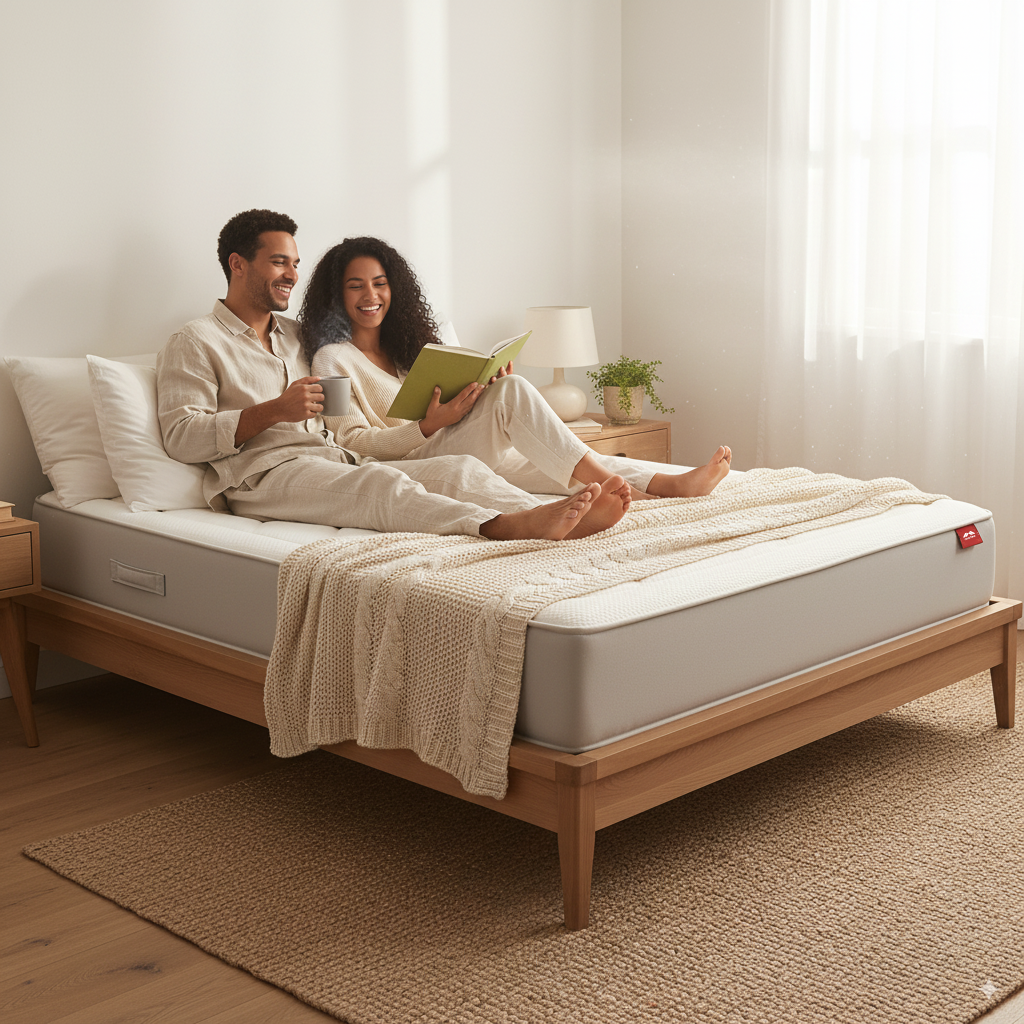

How to sleep with a herniated disc and wake up pain-free
If you're wondering how to sleep with a herniated disc, there's no magic formula, but there is a key principle: find positions that keep your spine aligned and use supports, such as pillows, to take pressure off those protesting nerves. The two best positions are usually on your side, with a pillow between your knees, or on your back with a cushion right under them. Both help relax the lower back.
Why your herniated disc hurts more at night

If you've noticed that your herniated disc pain becomes the main focus just when you try to sleep, you're not imagining it. It's very real. During the day, we move, our muscles are active and, without realizing it, help stabilize the spine. But when we lie down, that natural defense relaxes, and the herniated disc takes advantage to press on the nerve roots more freely.
Gravity also has a lot to say. When we are standing, the weight is distributed along the entire spine. When we lie down, especially if the mattress is not suitable, that weight can concentrate fully on the lumbar or cervical area, and that's when nerve compression worsens.
Rest is, ironically, the time when the intervertebral discs should recover. At night, they rehydrate and repair. If the pain constantly wakes you up, this regeneration process is interrupted, creating a vicious cycle of inflammation and discomfort that only gets worse.
The vicious cycle of pain and insomnia
The lack of restorative sleep not only leaves you exhausted the next day, but also makes you more sensitive to pain. When you don't sleep well, your body releases more cortisol (the stress hormone), which can increase inflammation around the damaged disc. It's the dog chasing its tail.
And no, you're not alone in this. Most people will suffer back pain at some point, and when the cause is a herniated disc, nighttime rest is usually particularly affected. This makes it clear that taking care of your rest is not a luxury, but an essential part of treatment. You can read more about the impact of these ailments in this report on back ailments.
Factors that worsen nighttime pain
There are several culprits that may be intensifying your pain at night:
- Staying still for too long: Remaining in the same position for hours causes stiffness and increases pressure on the disc.
- An unhelpful mattress: A surface that is too soft makes you sink, and one that is too firm creates pressure points. Both misalign the spine and strain the muscles.
- A bad sleeping position: Sleeping on your stomach is, for many, the worst option. It forces you to strain the lumbar curve and turn your neck unnaturally.
Understanding why it hurts is the first step to finding a solution. Now that we know the enemy, let's see what positions and small adjustments can help you break this cycle and, at last, get restorative rest.
Key positions to relieve pressure from a herniated disc
Finding the right position is your best bet for fighting nighttime pain. It's not just about lying down and that's it, but about positioning your body strategically so that the spine can rest in a neutral position, without adding more tension to the already suffering disc.
The goal is very clear: avoid any twisting or forced curve in the back. Imagine your spine is a straight line from your neck to your tailbone; well, that line must remain so all night. This is where pillows and cushions become your great allies, not as mere accessories, but as true therapeutic tools.
Master the modified fetal position
Sleeping on your side is usually the most recommended position when there is a herniated disc. But to do it right, you need to apply a small adjustment that changes everything. Lie on your side, with your knees slightly bent, as if you were in a very gentle fetal position, but without bringing them too close to your chest.
The ultimate trick is to place a firm pillow, but not too thick, between your knees. This simple gesture is key, because it prevents the top leg from falling forward, which would cause the pelvis to rotate and, consequently, the lower back to twist. By keeping your hips, pelvis, and spine aligned, you eliminate that direct tension on the herniated disc.
The technique for sleeping on your back
If you are one of those who prefer sleeping on your back, you can also adapt this position to relieve you. The main drawback here is that it can accentuate the natural curve of the lower back (lumbar lordosis) too much, creating tension right where you don't want it.
To fix this, simply put a pillow or a cylindrical cushion under your knees. By slightly elevating your legs, you relax the muscles on the back of your thighs and your hip flexors. This makes the lumbar curve flatten gently and reduces pressure on the discs.
The good news is that most herniated discs improve without surgery, with the treatment prescribed by your doctor or physical therapist. In the meantime, a good resting position helps you avoid overloading the area.
The position you should avoid at all costs
If there is one position you should ban forever from your nights, it is sleeping on your stomach. Although it may seem comfortable at first, it is the most harmful for anyone with back problems, especially if you have a herniated disc.
When you sleep on your stomach, you force your lumbar spine to arch unnaturally, which spikes pressure on the discs. But that's not all: to breathe, you have to turn your head to one side, keeping your neck rotated at maximum for hours. This not only wears out the cervical area, but also creates tension that spreads throughout the entire spine. If you want to better understand the biomechanics of rest, taking a look at the best and worst sleeping positions will clarify many things.
Comparison of sleeping positions with a herniated disc
So you can see everything at a glance, we have prepared this summary table. It is a quick way to compare the positions that will help you and those you should avoid like the plague.
| Position | Recommendation level | Main benefit | Practical tip |
|---|---|---|---|
| On your side (modified fetal) | Highly recommended | Aligns hips, pelvis, and spine, avoiding lumbar torsion. | Always use a firm pillow between your knees. |
| On your back | Recommended | Reduces lumbar tension by flattening the natural curve. | Place a good-sized cushion under your knees. |
| On your stomach | Not recommended | Increases lumbar pressure and forces neck rotation. | If you can't avoid it, put a thin pillow under your pelvis. |
As you can see, small changes can make a huge difference. It's not about finding a "perfect" position, but the one that best suits you and allows you to give your back the rest it needs to recover.
The ideal mattress: your great ally against pain
When you have a herniated disc, your mattress can be your best friend or your worst enemy. No joke. You spend a third of your life on that surface, and believe me, it can make the difference between waking up with a feeling of relief or starting the day with more stiffness and pain than the previous night.
A mattress that is not right for you only makes things worse, mainly in two ways. If it is too soft, your body sinks, especially in the hip area, and goodbye to the natural alignment of the spine. This creates constant tension right where you don't need it. On the other hand, one that is like a stone slab creates very uncomfortable pressure points on the shoulders and hips, preventing the back from resting in a neutral position.
To know how to sleep well with a herniated disc, the secret is balance. You need a surface that gives you support and, at the same time, adapts to you.
Firmness and adaptive support: the winning combination
For back problems, a mattress of medium-high firmness is usually recommended, such as the Altus Mattress. This level of firmness gives you just the right support so that the spine stays aligned, without sinking, but without the stiffness that causes pressure and discomfort.
Adaptive support is just as important. This is where materials like high-density memory foam shine. They mold to the curves of your body like a glove, distributing weight evenly and relieving pressure in the most critical areas, such as the hips and shoulders. Imagine it as a custom-made hug for your back that keeps it in the correct position.
A good mattress is not going to cure a herniated disc by magic, but it does create the perfect environment for your body to recover during the night. By minimizing tension and keeping the back aligned, it prevents the nighttime position from worsening the pain and helps you rest better.
Hybrid mattresses, which mix pocketed springs with memory foam layers, are a fantastic option. You get the best of both worlds: the firm support of the springs and the adaptable comfort of the foam. This combination is key to maintaining a correct position all night, regardless of whether you sleep on your side or on your back. If you want to delve deeper into what to look for, take a look at this guide on the best mattress for back pain.
The importance of breathability and the trial period
There is one detail that many people overlook: breathability. If you wake up in the middle of the night sweating, your sleep is interrupted and your muscles tense up, which can worsen the pain. Breathable materials, such as the linen outer fabric of the Altus Mattress or the thermoregulating fabric of the VisCool Mattress, help maintain a more pleasant temperature during the night.
And something fundamental: before making such an important investment, you have to be able to try the mattress at home. A trial period of 100 nights, like the one we offer, gives you the peace of mind of knowing you are making the right decision. It allows you to check for yourself, in your daily life, if it really relieves your pain and improves your rest in the long term.
This infographic shows you very clearly how to align the back to sleep, highlighting the positions that help you and those you should avoid at all costs.

As you can see, sleeping on your side or on your back, with the right cushions, is the best to keep the spine in a neutral position. Sleeping on your stomach, on the other hand, is the worst option for your back.
Morfeo's recommendation
With a herniated disc, the mattress doesn't cure but decides how you get up
The unloading position your physical therapist recommends only holds up if the mattress respects it. A support that sinks forces the spine to compensate for hours, and that shows when getting up more than any exercise from the previous day.


This information is for informational purposes and does not replace the judgment of a healthcare professional. If the pain persists, consult your doctor or physical therapist.
100-night trial · 10-year warranty · Delivery in 3-7 business days
Optimize your environment for restorative rest

Knowing how to sleep with a herniated disc is much more than finding the right position. Your bedroom has to be a true sanctuary of recovery, and every detail, no matter how small it seems, counts to achieve deep sleep and, above all, pain-free. If you already have the mattress and position under control, the next step is to fine-tune the environment that surrounds you every night.
The pillow, for example, is as crucial as the mattress itself. Its mission is to maintain the perfect alignment between the head, neck, and the rest of the spine. If you sleep on your side, you will need a medium-high pillow, one that fills the gap between the shoulder and the ear well. In contrast, if you prefer to be on your back, look for a lower one that simply supports the natural curve of the neck without pushing the head forward.
But it doesn't all end with the main pillow. Sometimes, small ergonomic aids make a huge difference. A lumbar cushion, for example, can provide that extra support in the lower back when you sleep on your side, and knee pillows are fantastic for keeping the pelvis aligned.
The pre-rest routine
Preparing the body and mind for sleep is essential. A relaxing routine before getting into bed can calm the muscle tension accumulated during the day and make the transition to rest much smoother. Try incorporating these habits:
- Gentle stretches: Slow and controlled movements, such as the child's pose or pelvic tilt, release the lumbar tension that bothers so much. Of course, make sure they are exercises approved by your physical therapist so as not to make things worse.
- Breathing techniques: Deep diaphragmatic breathing is wonderful. It calms the nervous system and helps relax the muscles surrounding the spine. Dedicate just five minutes to inhaling slowly through the nose and exhaling through the mouth before sleeping.
- Digital disconnection: The blue light from mobile and tablet screens is the enemy of melatonin, the sleep hormone. Turn off all devices at least one hour before going to bed. A good book will always be better company.
Creating a dark, quiet, and cool environment is key. Blackout curtains, earplugs, or a white noise machine can transform your room into the ideal refuge for your back.
If you combine all these elements, you will not only be relieving the pain, but you will improve the overall quality of your sleep. For more ideas, take a look at our post on how to create a restorative sleep environment.
When you need to consult a professional
Although adjusting your posture and optimizing your sleep setup are key steps to ease nighttime pain from a herniated disc, it is essential to know when these home remedies are not enough. There are signs you cannot ignore, as they could indicate that the problem is worsening.
Your body is wise and will send you warning signs if nerve compression is getting worse. Listening to it in time is crucial, because only an accurate diagnosis will allow you to design a treatment plan that truly works for you, preventing a manageable injury from becoming a chronic problem.
Warning signs you should not ignore
Not all back pain is the same. Pay very close attention if you experience any of the following situations, as they could be an indication that the herniated disc is significantly affecting the nerve roots:
- Persistent radiating pain: That sharp pain, like an electric shock, that goes down your leg (the famous sciatica) or arm and does not ease no matter how much you change your posture.
- Muscle weakness: Suddenly you find it difficult to lift your foot, objects fall from your hands, or you feel like a leg or arm "gives out" without warning.
- Numbness or tingling: A constant sensation of prickling, numbness, or as if your arms, legs, hands, or feet are "asleep."
- Loss of sphincter control: It is rare, but if you have trouble controlling your bladder or bowels, it is a medical emergency that requires immediate attention.
Visiting a specialist is not a sign of defeat, but an act of responsibility toward your health. A quality mattress and good postural hygiene are extremely important support tools, but they should never replace the diagnosis and follow-up of a qualified professional.
A doctor or physical therapist will not only confirm what is happening, but will also design a comprehensive treatment for you. This may include specific physical therapy, medication to control inflammation and pain, or exercise guidelines tailored to your condition.
Remember that the goal is to address the root of the problem. If you view all these tips as part of a comprehensive strategy, always under the supervision of an expert, you will have the best tools to regain your quality of life and, of course, your nights of pain-free rest.
We answer your questions: herniated disc and rest
When a herniated disc robs you of sleep, doubts invade your mind. This is normal. The fear of moving, not knowing how to position yourself, or which mattress to use can turn the night into a real nightmare. Let's clear up those questions once and for all, with direct and practical answers so you know what to do.
Rock-hard or cloud-soft mattress?
Neither one nor the other. Forget about extremes. The popular belief that a hard mattress is good for your back is a myth that can do more harm than good. An overly rigid surface creates unbearable pressure points on the shoulders and hips, completely misaligning the spine.
But beware, an excessively soft mattress is just as harmful. If you sink into it, your lumbar area is left without support, forcing an unnatural posture all night long. The key is a mattress of medium-high firmness, which keeps your spine in a neutral position and adapts to your curves without trapping you.
Should I wear a lumbar support belt to sleep?
Unless your doctor or physical therapist has specifically prescribed it for a very specific situation, the answer is a resounding no. At night, your muscles need to relax and recover. Using a support belt regularly can create a dangerous dependency, weakening your core muscles over time. And that is exactly the opposite of what you need.
It is much smarter and more effective to use positioning tools, such as cushions or pillows, to provide that extra support where you need it. This way, you passively align your body without preventing your muscles from doing their natural work of regeneration.
It is not about immobilization, but about alignment. Real support should come from a good mattress and correct posture, allowing your body to recover while you rest.
I sleep on my side, what pillow do I need?
If you sleep on your side, your pillow is your best ally… or your worst enemy. You need one with enough height to perfectly fill the gap between your ear and your shoulder. The goal is for your head and neck to follow the straight line of your spine, without falling or being forced upward.
And here comes the trick that many people overlook: you need a second, thinner pillow to place between your knees. This simple gesture is pure gold. It prevents your top leg from falling forward, which would cause a twist in the lumbar area that can trigger herniated disc pain. With this small adjustment, you keep your pelvis and hips aligned.
Heat or cold before going to bed?
Both can be great allies, but you need to know when to use each one.
- Heat: It is your best friend for your nighttime routine. Applying an electric heating pad or a hot water bag to the lumbar area for 15-20 minutes before going to bed is wonderful. It relaxes tight muscles and relieves the stiffness that builds up during the day.
- Cold: Save it for moments of acute pain and inflammation, especially in the first 48 hours after overexertion or injury. Its main function is to reduce inflammation.
Integrating a short session of gentle heat into your nighttime ritual can make a huge difference in falling asleep, preparing your body for a deeper rest.
A good foundation for rest is not an expense, it is the best investment for managing nighttime pain. At Morfeo, we have designed our sleep systems thinking precisely about that perfect balance between the ergonomic support your back needs and the comfort you deserve. Discover our back pain mattresses, with 100 nights to try at home.