
Colchón viscoelástico o muelles ensacados: cuál elegir para tu descanso
Elegir entre un colchón viscoelástico o de muelles ensacados se reduce a una preferencia muy personal: ¿buscas una adaptabilidad que te abrace o un soporte dinámico y fresco? Te adelanto que no hay una respuesta única. La decisión correcta depende de factores como si duermes solo o acompañado, tu postura habitual, si sueles pasar calor por la noche y, por supuesto, tus necesidades específicas de confort.
Desvelando la elección para tu descanso
Acertar con el colchón es una de las decisiones más importantes que tomarás para tu bienestar. No es una exageración. Esta elección influye directamente en la calidad de tu sueño, en tu energía del día a día y en tu salud postural a largo plazo. Un buen colchón es el primer paso para un descanso de verdad reparador, algo esencial para tu salud y para ayudarte a vencer el insomnio y la ansiedad.

Para simplificar esta decisión, es clave entender las diferencias reales entre estas dos tecnologías. No hablamos solo de materiales, sino de cómo cada sistema interactúa con tu cuerpo mientras descansas.
- Colchones viscoelásticos: Su punto fuerte es una adaptabilidad que se amolda al contorno de tu cuerpo, eliminando los puntos de presión y creando esa sensación tan característica de "abrazo".
- Colchones de muelles ensacados: Ofrecen un soporte punto por punto, una mayor independencia si duermes en pareja y una ventilación superior. Son un clásico que se ha reinventado.
Comparativa rápida: viscoelástico vs. muelles ensacados
Para darte una visión clara desde el principio, hemos preparado una tabla que resume los puntos clave que vamos a desgranar a lo largo de esta guía. Úsala como una primera referencia para orientarte antes de meternos en faena.
| Característica | Colchón viscoelástico | Colchón de muelles ensacados |
|---|---|---|
| Adaptabilidad | Muy alta, efecto "abrazo" | Alta, se adapta a cada punto del cuerpo |
| Transpirabilidad | Moderada (mejorada con geles y células abiertas) | Muy alta, excelente circulación de aire |
| Independencia de lechos | Excelente, absorbe el movimiento | Muy buena, los muelles independientes lo aíslan |
| Soporte | Uniforme y enfocado en aliviar la presión | Dinámico y reactivo, ideal para la columna |
| Sensación al tumbarse | Envolvente y de hundimiento lento | Firme, con una ligera sensación de flotabilidad |
| Ideal para... | Personas con dolores musculares o que duermen de lado | Parejas, personas calurosas o que se mueven mucho |
Esta tabla es solo el punto de partida. A continuación, vamos a explorar cada tecnología a fondo, analizando sus ventajas e inconvenientes según distintos perfiles de durmiente. El objetivo es guiarte para que tomes una decisión informada, asegurando que tu inversión se traduzca en noches de descanso profundo y reparador.
¿Cómo funciona un colchón viscoelástico?
Para saber si te conviene más un colchón viscoelástico o uno de muelles ensacados, primero hay que entender qué hace especial a la espuma viscoelástica. Curiosamente, este material nació en la NASA, que lo diseñó para amortiguar los asientos de los astronautas. En esencia, es una espuma de poliuretano de alta densidad que reacciona de una forma muy particular al calor y la presión de tu cuerpo.

La magia está en su termosensibilidad. Cuando te tumbas, la espuma se ablanda con tu temperatura corporal y se amolda con una precisión casi milimétrica al contorno de tu silueta. Esto crea esa famosa sensación de "abrazo" o ingravidez que distribuye tu peso de manera homogénea y elimina los puntos de presión en zonas clave como los hombros o las caderas.
Esta capacidad de adaptación lo ha convertido en una opción muy popular. De hecho, en España, la cuota de mercado de los colchones viscoelásticos no para de crecer y ya representa entre el 35% y el 45% de las ventas. El motivo de este auge es claro: la gente busca aliviar la presión, sobre todo si tiene molestias en la espalda, y cada vez hay más modelos híbridos de gran calidad. Si te interesa el tema, puedes leer más sobre las tendencias del mercado del descanso en este análisis de Hogarium.
Por qué la densidad lo es todo
No todas las espumas viscoelásticas son iguales, ni mucho menos. La densidad, que se mide en kilogramos por metro cúbico (kg/m³), es el factor que realmente marca la diferencia en la calidad y el rendimiento del colchón.
Y ojo, que una mayor densidad no significa que el colchón sea más duro, sino que tiene más material por volumen. ¿En qué se traduce esto?
- Mayor durabilidad: Un colchón de alta densidad aguantará mucho mejor el paso del tiempo sin deformarse.
- Mejor adaptabilidad: Se amoldará a tu cuerpo de forma más precisa y lenta, dándote un soporte mucho más efectivo.
- Menos efecto rebote: Absorberá los movimientos como ningún otro, garantizando una independencia de lechos perfecta si duermes en pareja.
Los colchones de baja densidad (menos de 40 kg/m³) suelen recuperar su forma más rápido y duran menos. En cambio, los modelos de alta densidad (más de 50 kg/m³) son los que ofrecen el máximo confort y un soporte ergonómico superior.
Desmontando el mito: ¿la viscoelástica da calor?
Uno de los prejuicios más comunes sobre la viscoelástica es que da calor. Y aunque es cierto que los primeros modelos podían retener la temperatura, la tecnología ha avanzado a pasos agigantados para solucionar este problema. Los colchones modernos, como los de la gama Morfeo, incorporan innovaciones que garantizan una regulación térmica perfecta.
La clave no está en el material en sí, sino en cómo está fabricado. Los colchones viscoelásticos de última generación están diseñados específicamente para ser transpirables y frescos durante toda la noche.
Veamos qué tecnologías lo hacen posible:
- Espumas de célula abierta: Su estructura interna es porosa, como una esponja, lo que permite que el aire circule libremente y disipe el calor y la humedad que se acumulan.
- Partículas de gel: Se inyectan micropartículas de gel en la espuma. Su función es absorber el exceso de calor corporal para mantener una superficie de descanso mucho más fresca.
- Infusiones de grafeno: El grafeno es un material con una conductividad térmica brutal. Al añadirlo a la viscoelástica, ayuda a alejar el calor de tu cuerpo de una manera increíblemente eficiente.
Gracias a estos avances, hoy puedes disfrutar de toda la adaptabilidad y el confort de la viscoelástica sin tener que preocuparte por pasar calor, consiguiendo un descanso profundo y de verdad reparador.
Analizando el núcleo de muelles ensacados
A diferencia de la viscoelástica, el corazón de un colchón de muelles ensacados es un sistema mecánico de alta precisión. Piensa en cientos, o incluso miles, de pequeños muelles de acero, cada uno metido en su propio saquito de tela. Esta estructura es la clave para entender por qué ofrece una experiencia de descanso tan distinta.
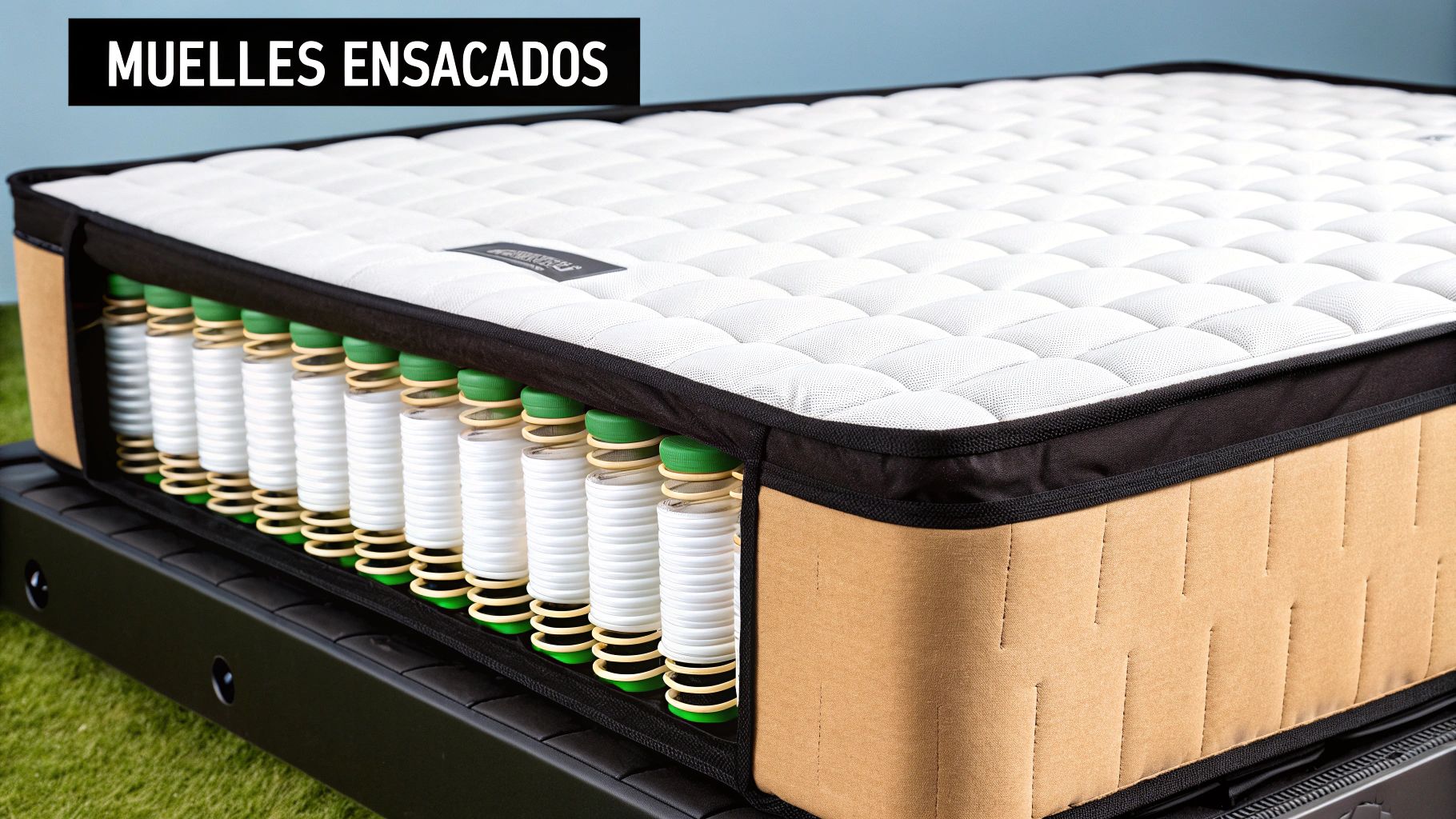
Cada muelle funciona por su cuenta, hundiéndose solo cuando aplicas presión directamente sobre él. Esto nos da dos beneficios que definen por completo su rendimiento: una independencia de lechos excepcional y un soporte dinámico que se adapta punto por punto a la forma de tu cuerpo.
Si duermes en pareja, esta independencia lo cambia todo. Cuando uno se mueve, los muelles que tiene debajo absorben el movimiento sin transmitirlo al resto de la cama. El resultado es un sueño profundo y sin interrupciones para los dos.
La importancia de la cantidad y el calibre
No todos los núcleos de muelles son iguales, ni mucho menos. Hay dos factores que marcan la diferencia en su firmeza, durabilidad y calidad: la cantidad de muelles y el grosor del alambre con el que se fabrican (el calibre).
- Cantidad de muelles: Cuantos más muelles, más puntos de apoyo individuales tendrá el colchón. Esto se traduce en un reparto del peso mucho más preciso y un soporte ergonómico que sigue la curvatura natural de tu columna.
- Calibre del alambre: Un calibre más bajo significa un alambre más grueso, y por tanto, muelles más firmes y resistentes. Es habitual que los fabricantes combinen distintos calibres para crear zonas de confort, dando un soporte más suave en los hombros y más firme en la zona lumbar.
Esta tecnología se ha hecho un hueco enorme en el mercado español, donde los modelos de muelles ensacados ya suponen entre el 30% y 40% de las ventas en la gama media y alta. Un buen colchón suele llevar entre 1.000 y 3.000 muelles para una medida de 150x190 cm, garantizando un soporte bien zonificado y una alineación perfecta de la espalda.
Transpirabilidad: su ventaja definitiva
Si hay un terreno donde los muelles ensacados ganan por goleada en la comparativa colchón viscoelástico o muelles ensacados, es en la transpirabilidad. La estructura de saquitos individuales deja un enorme espacio vacío dentro del colchón.
Esta arquitectura abierta permite que el aire circule con total libertad cada vez que te mueves. Este flujo constante de aire disipa el calor corporal y la humedad de forma muy eficaz, manteniendo la cama fresca y seca toda la noche.
Esta cualidad convierte a los colchones de muelles ensacados en la opción ideal para:
- Personas calurosas: Evitan esa sensación de agobio por el calor que te despierta a media noche.
- Climas cálidos: Ofrecen un confort térmico muy superior en lugares donde las noches son bochornosas.
- Quienes buscan higiene: La ventilación constante ayuda a prevenir la aparición de ácaros y moho, creando un entorno de descanso mucho más saludable.
Al entender cómo funcionan, queda claro que las ventajas de los colchones de muelles ensacados no se limitan a un soporte firme; ofrecen una solución completa para quienes valoran la frescura y la independencia de movimientos por encima de todo.
Cara a cara: ¿viscoelástico o muelles ensacados?
Ahora que ya sabemos cómo funciona cada tecnología, toca ponerlas frente a frente. La elección entre un colchón viscoelástico o uno de muelles ensacados no es cuestión de "cuál es mejor", sino de entender qué material responde mejor a lo que tú necesitas. Por eso, vamos a desglosar los criterios clave, punto por punto, para que tu decisión sea la acertada.
Adaptabilidad y alivio de la presión
Aquí hablamos de cómo el colchón se amolda a tu cuerpo para mantener la columna en una postura correcta. En este terreno, la viscoelástica es la campeona indiscutible. Gracias a su capacidad termosensible, crea una especie de molde de tu cuerpo, distribuyendo el peso de manera uniforme y aliviando la presión como ninguna otra tecnología.
Por su parte, los colchones de muelles ensacados modernos ofrecen una adaptabilidad "punto por punto" muy sofisticada. Cada muelle trabaja de forma independiente, respondiendo solo a la presión que recibe. Esto consigue un ajuste muy preciso a las curvas del cuerpo, sin que el colchón se hunda por completo.
La diferencia clave: La viscoelástica te da una sensación de "abrazo", como si el colchón te recogiera. Es ideal si buscas el máximo alivio de presión. Los muelles, en cambio, ofrecen un soporte más activo y dinámico, que se adapta a ti sin esa sensación de hundimiento.
Independencia de lechos
Este punto es crucial si duermes en pareja. Mide la capacidad del colchón para absorber el movimiento en un lado sin que se transmita al otro. ¿Tu pareja se mueve mucho? Esto te interesa.
Ambas tecnologías son excelentes en este aspecto, pero actúan de forma distinta:
- Viscoelástica: Su espuma de alta densidad es como una esponja que absorbe la energía del movimiento. Literalmente, amortigua cualquier vibración. Es casi imposible que te enteres de que tu pareja se ha dado la vuelta.
- Muelles ensacados: Cada muelle, al estar en su propio saquito, aísla el movimiento de forma activa. Los giros y cambios de postura se quedan confinados en su zona, sin efecto dominó.
Aunque los dos son fantásticos para dormir acompañado, la viscoelástica suele tener una ligera ventaja por esa capacidad de "anular" por completo el movimiento.
Transpirabilidad y regulación térmica
Aquí la cosa cambia y la balanza se inclina claramente hacia los muelles ensacados. Su estructura interna, con cientos de saquitos individuales, deja un enorme espacio por el que el aire circula libremente. Esto funciona como un sistema de ventilación natural que disipa el calor y la humedad de manera muy eficaz.
Históricamente, los colchones viscoelásticos tradicionales pecaban de retener más el calor. Sin embargo, los modelos de última generación, como los de Morfeo, han solucionado este problema con espumas de célula abierta e incorporando partículas de gel o grafeno que mejoran la transpirabilidad de forma espectacular.
Firmeza y soporte
La firmeza es algo muy personal, pero el tipo de soporte que ofrece cada colchón es objetivamente diferente. La viscoelástica proporciona un apoyo uniforme que se adapta de forma lenta y progresiva, perfecto para minimizar los puntos de presión.
Los muelles ensacados, por otro lado, brindan un soporte más reactivo, con un ligero "efecto rebote". Esto facilita mucho los movimientos durante la noche y da una sensación de flotabilidad que mucha gente prefiere, evitando sentirse "atrapado" en el colchón.
Durabilidad y vida útil
La durabilidad de ambos tipos de colchón depende, sobre todo, de la calidad de sus materiales. Un colchón viscoelástico con una espuma de alta densidad (superior a 50 kg/m³) puede durar perfectamente 10 años o más sin perder sus propiedades.
Los colchones de muelles ensacados también son muy resistentes, siempre que el acero de los muelles sea de buena calidad y esté bien tratado. Un buen núcleo puede aguantar una década sin problemas. En ambos casos, el mantenimiento es simple: basta con girarlo cada pocos meses.
Análisis comparativo por criterios clave
Para que puedas ver todas estas diferencias de un solo vistazo, hemos preparado una tabla resumen. Es una evaluación detallada de cada tecnología según los factores más importantes para tu descanso.
| Criterio de comparación | Colchón viscoelástico | Colchón de muelles ensacados | Recomendación situacional |
|---|---|---|---|
| Adaptabilidad | Envolvente, se amolda al calor corporal. | Dinámica, soporte punto por punto. | Viscoelástica para alivio de presión; muelles para soporte reactivo. |
| Independencia de lechos | Excelente, absorbe el movimiento por completo. | Muy buena, los muelles aíslan las vibraciones. | Ambas son opciones fantásticas para parejas. |
| Transpirabilidad | Moderada (mejorada con tecnologías de gel/célula abierta). | Muy alta, excelente circulación de aire. | Muelles ensacados para personas calurosas o climas húmedos. |
| Firmeza | Sensación más acogedora y de hundimiento lento. | Sensación de mayor flotabilidad y respuesta rápida. | Viscoelástica si te mueves poco; muelles si cambias mucho de postura. |
| Durabilidad | Alta si la densidad es superior a 50 kg/m³. | Alta con acero de calidad y buen calibre. | Ambas son inversiones a largo plazo si se elige un modelo de calidad. |
| Precio | Rango muy amplio, desde opciones económicas a premium. | Suelen situarse en la gama media-alta. | El precio depende más de la calidad de los materiales que de la tecnología. |
Con esta comparativa detallada, ya tienes todas las herramientas para identificar qué tecnología encaja mejor contigo y con tu forma de dormir.
Recomendaciones según tu perfil de durmiente
Ahora que ya conoces la tecnología que se esconde en cada tipo de colchón, toca llevarlo a la práctica. Porque la decisión entre un colchón viscoelástico o uno de muelles ensacados no va de cuál es mejor en términos absolutos, sino de cuál es el ideal para ti. Depende de quién eres, cómo duermes y si compartes o no la cama.
Vamos a analizar juntos los perfiles más habituales. Así te será mucho más fácil identificarte con uno y dar en el clavo con tu elección.
Si duermes en pareja
Aquí el factor clave, sin ninguna duda, es la independencia de lechos. Si tu pareja se mueve mucho por la noche, lo último que quieres es que sus giros te despierten. Necesitas un colchón que absorba ese movimiento como si nada.
Para esto, tanto la viscoelástica como los muelles ensacados son opciones fantásticas. No obstante, los muelles ensacados suelen tener una ligera ventaja. Su truco está en la respuesta individual: cada muelle reacciona por su cuenta, aislando el movimiento justo donde se produce.
La viscoelástica también es una campeona absorbiendo vibraciones, pero si uno de los dos es especialmente sensible, la estabilidad que ofrecen los muelles ensacados es difícil de superar.
Nuestra recomendación: Para parejas, un colchón de muelles ensacados o un modelo híbrido —que combine muelles con una capa de confort viscoelástica— es la solución perfecta para garantizar que ambos durmáis del tirón.
Si tienes dolor de espalda o molestias musculares
En este caso, la prioridad absoluta es aliviar los puntos de presión y mantener la columna vertebral bien alineada. La viscoelástica, de hecho, se diseñó pensando justo en esto.
Su capacidad para amoldarse al contorno exacto de tu cuerpo es lo que marca la diferencia. Distribuye tu peso de forma uniforme y elimina la tensión en zonas críticas como los hombros, la zona lumbar y las caderas. Ese "efecto abrazo" ayuda a que los músculos se relajen y la espalda mantenga una postura natural toda la noche.
No es un tema menor si pensamos que, según varios estudios, en España casi un tercio de la población (el 32%) se levanta con dolor de espalda.
Nuestra recomendación: Si sufres de dolores de espalda, musculares o articulares, un colchón viscoelástico de alta densidad te dará ese soporte ergonómico y alivio que tanto necesitas.
Este árbol de decisión te lo resume de una forma muy visual para que veas cómo tus circunstancias te guían hacia el colchón perfecto.
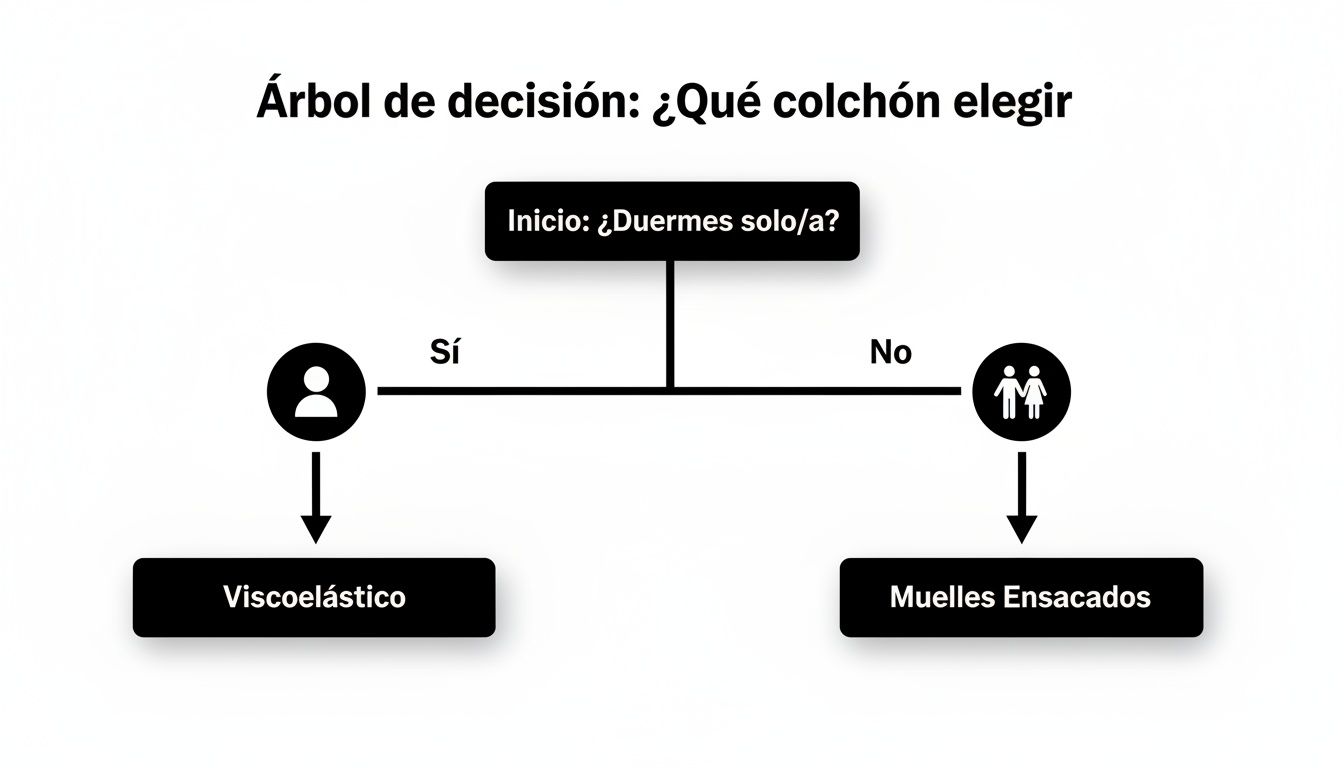
Como ves en la infografía, aunque hay matices, la independencia de lechos de los muelles ensacados es un factor decisivo para las parejas, mientras que la adaptabilidad de la viscoelástica es una maravilla para quien duerme solo.
Si eres una persona calurosa
Si eres de los que pasan calor por la noche, la transpirabilidad del colchón no es negociable. Y en este terreno, los muelles ensacados son los claros ganadores.
Su estructura interna, llena de canales de aire entre cada saquito, permite que el aire fluya constantemente. Cada vez que te mueves, el aire circula, llevándose el calor y la humedad acumulados. El resultado es una superficie de descanso fresca y seca toda la noche, algo fundamental si vives en un clima cálido o simplemente tu cuerpo genera más calor.
Si quieres profundizar en este y otros aspectos, te recomendamos leer nuestra guía completa sobre cómo elegir el colchón adecuado.
Nuestra recomendación: Para personas calurosas, un colchón de muelles ensacados es, sin duda alguna, la mejor opción para asegurar un confort térmico ideal.
Si te mueves mucho al dormir
Para quienes cambian de postura con frecuencia, moverse con facilidad es crucial. Un colchón demasiado envolvente puede hacerte sentir "atrapado", convirtiendo cada giro nocturno en un pequeño esfuerzo.
Los colchones de muelles ensacados tienen una mayor reactividad, un "efecto rebote" que te ayuda. Esta respuesta más dinámica facilita los cambios de postura sin que te cueste trabajo, permitiéndote encontrar una nueva posición cómoda sin que tu sueño se interrumpa. La viscoelástica, con su recuperación más lenta, puede ser menos cómoda para los durmientes más inquietos.
Nuestra recomendación: Si eres de los que no paran quietos, la respuesta dinámica de un colchón de muelles ensacados te dará más libertad de movimiento y un descanso mucho más fluido.
Colchones híbridos: la solución que une lo mejor de dos mundos
Hasta ahora, la elección parecía cosa de dos: o te quedabas con la adaptabilidad envolvente de la viscoelástica o apostabas por el soporte dinámico de los muelles ensacados. Pero, ¿y si te dijera que no tienes que renunciar a nada? Aquí es donde entran en juego los colchones híbridos, una solución que fusiona con mucha cabeza lo mejor de ambas tecnologías para ofrecer una experiencia de descanso superior y, sobre todo, equilibrada.
Un colchón híbrido es, en esencia, una estructura de varias capas diseñada con un propósito muy claro. Su corazón está formado por un sistema de muelles ensacados, que viene a ser el motor del colchón. Esta base proporciona un soporte robusto, una durabilidad a prueba de años y, lo más importante, esa transpirabilidad que mantiene la cama fresca durante toda la noche.
Justo encima de este núcleo se colocan una o varias capas de confort, normalmente de espuma viscoelástica de alta densidad. Estas capas superiores son las que se encargan de ofrecer el alivio de presión, la adaptabilidad y esa sensación tan acogedora que elimina la tensión en hombros y caderas.
La sinergia perfecta, capa a capa
La verdadera genialidad de un colchón híbrido no está en sus componentes por separado, sino en cómo trabajan juntos en perfecta sintonía. No se trata de apilar materiales sin más, sino de crear un sistema donde cada capa potencia las virtudes de la otra, consiguiendo un equilibrio casi perfecto entre soporte y confort.
- Núcleo de muelles ensacados: Aporta la firmeza necesaria para una correcta alineación de la columna y una independencia de lechos que se agradece muchísimo si duermes en pareja.
- Capas de transición: Suelen ser espumas de alta resiliencia que conectan el núcleo con las capas de arriba, suavizando la respuesta de los muelles para que no la notes.
- Capa de confort viscoelástica: Ofrece esa adaptabilidad milimétrica que se amolda a tu cuerpo, aliviando la presión sin esa sensación de "quedar atrapado" que a veces dan los colchones de viscoelástica pura.
Un colchón híbrido bien diseñado consigue que no tengas que decidir entre el soporte reactivo y la adaptabilidad envolvente. Te ofrece ambas cosas a la vez, eliminando los inconvenientes de cada tecnología por separado.
¿Para quién es ideal un colchón híbrido?
Gracias a su diseño tan equilibrado, el colchón híbrido es una opción increíblemente versátil que responde a las necesidades de la mayoría. Es la respuesta definitiva a la pregunta de si elegir un colchón viscoelástico o de muelles ensacados, ya que combina las fortalezas de los dos.
Es especialmente recomendable para:
- Parejas con diferentes gustos: Si uno busca firmeza y el otro prefiere algo más adaptable, el híbrido ofrece un punto medio perfecto que deja a ambos contentos.
- Personas calurosas que necesitan alivio de presión: Consigues la frescura de los muelles sin renunciar al confort ergonómico de la viscoelástica.
- Durmientes indecisos: Si valoras tanto el soporte como esa sensación acogedora, este diseño te ofrece un rendimiento completísimo sin tener que hacer concesiones.
La popularidad de estos modelos se debe, precisamente, a su capacidad para ofrecer una solución integral. Para entender mejor cómo se diferencian de otras opciones, puedes echarle un vistazo a nuestro artículo sobre la diferencia entre colchones de espuma y viscoelásticos híbridos. En definitiva, los colchones híbridos representan la evolución del descanso.
Preguntas frecuentes sobre tu nuevo colchón
Incluso con toda la información sobre la mesa, es totalmente normal que te queden algunas dudas de última hora antes de decidirte entre un colchón viscoelástico o uno de muelles ensacados. Vamos a resolver esas preguntas que seguro te rondan la cabeza para que tomes la decisión con total confianza.
¿Los colchones viscoelásticos modernos dan calor?
Esta es, sin duda, la pregunta del millón y uno de los mayores mitos que rodean a la viscoelástica, basado en los primeros modelos que salieron al mercado. La realidad es que hoy en día, los colchones viscoelásticos de calidad, como los de la gama Morfeo, están diseñados para ser increíblemente frescos.
¿El secreto? La tecnología ha avanzado una barbaridad:
- Espumas de célula abierta: Imagina una estructura llena de poros que permite que el aire circule libremente. Así es como se disipa el calor de forma natural, evitando esa sensación de agobio.
- Partículas de gel o grafeno: Estos materiales se integran directamente en la espuma y actúan como pequeños reguladores térmicos. Absorben el exceso de calor de tu cuerpo y mantienen una temperatura ideal para dormir toda la noche.
Así que la respuesta es un no rotundo. Un buen colchón viscoelástico actual no da calor; está optimizado para ofrecer un confort térmico excelente sin renunciar a su increíble adaptabilidad.
¿Qué tipo de colchón dura más?
Aquí la clave no está tanto en si es viscoelástico o de muelles, sino en la calidad de los materiales. Si eliges un modelo de gama media-alta y lo cuidas como es debido, ambos tipos de colchón te pueden ofrecer una vida útil de aproximadamente 10 años.
En un colchón viscoelástico, lo que tienes que mirar es la densidad de la espuma. Busca siempre que sea superior a 50 kg/m³ para asegurarte de que aguantará el tipo. En uno de muelles ensacados, la calidad del acero y el tratamiento térmico que hayan recibido los muelles son cruciales para que no se deformen con el paso del tiempo y el uso.
¿Qué base o somier necesita cada colchón?
Elegir la base correcta no es un detalle menor, es fundamental para que tu colchón rinda al máximo y dure lo que tiene que durar. De hecho, una mala elección podría incluso anular la garantía del fabricante.
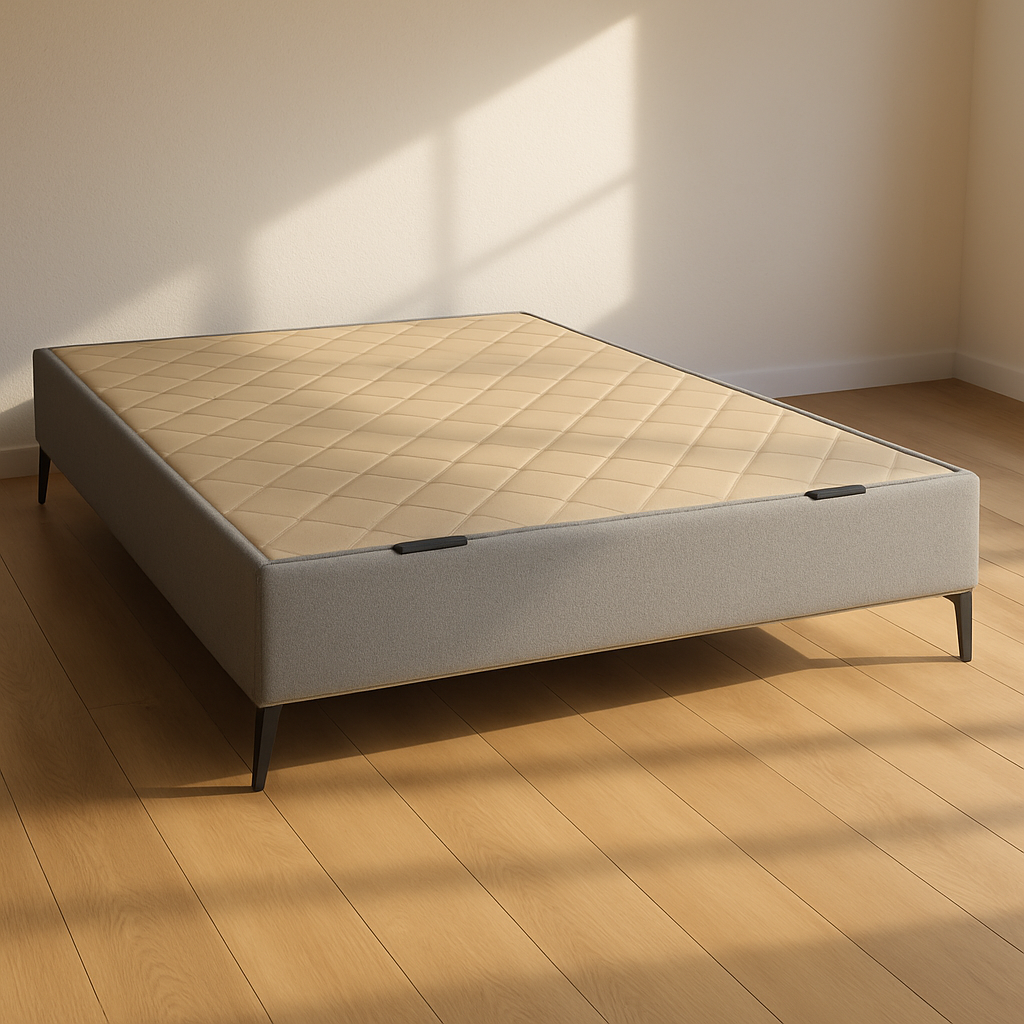
- Para un colchón de muelles ensacados: La recomendación es clara: necesita una base rígida y transpirable. Lo ideal es una base tapizada o un canapé abatible. Ni se te ocurra ponerlo sobre un somier de lamas, porque los muelles podrían hundirse en los huecos y acabar deformados.
- Para un colchón viscoelástico: Aquí tienes más flexibilidad. Funciona de maravilla tanto con una base tapizada como con un somier de lamas. Este último, de hecho, ayuda a que el colchón ventile todavía mejor.
Un pequeño truco de mantenimiento que funciona para ambos: gira el colchón de la cabeza a los pies cada tres meses. Con este simple gesto, el desgaste será mucho más uniforme y alargarás su vida útil de forma significativa.
En Morfeo, diseñamos colchones que combinan la mejor ciencia del descanso con materiales de primera calidad para ofrecerte noches de sueño profundo y reparador. Descubre el colchón perfecto para ti y aprovecha nuestras 100 noches de prueba.
Explora nuestros colchones en Morfeo
Article created using Outrank