
A Practical Guide to Staying Calm in a Chaotic World
Staying calm is a skill you can totally train. It's not about magically getting rid of stress, but learning how to handle it by mixing quick tricks for overwhelming moments with habits that, little by little, make you stronger on the inside. Think of it like a muscle: the more you work it, the better it responds.
Why is it so hard to stay calm these days?

If you feel like the world's spinning too fast, you're not imagining things. We're constantly bombarded with stimuli: your phone won't stop buzzing, notifications keep popping up relentlessly, and the pressure to be productive at work and home is constant. This flood of info and demands pushes us to the limit, making the simple act of staying calm feel like an almost impossible mission.
Feeling this way isn't your fault; it's a normal response to a relentless environment. The culture of immediacy has tricked us into believing that stopping means you're lazy, when in reality, rest is as basic a need as eating or breathing.
The toll on our mental health
And of course, this way of life takes its toll. Mental health has climbed to the top spot among health concerns in Spain. In fact, for 62% of people, it's the most important issue, almost 20 points higher than the global average.
This stat makes it clear: you're not alone in this. Dealing with stress is everyone's problem, and we need tools that actually work for everyday life.
Understanding what's happening to us and why is the first step to taking action. It's not about adding another thing to your "to-do" list, but about recognizing that what you're feeling is valid and that, yes, you can get back in control.
That's where rest comes in. The connection between stress and sleep quality is huge. When we're swamped, the first thing we cut back on is sleep, and that throws us into a terrible vicious cycle. Poor sleep directly affects how we handle emotions the next day, making us more irritable and quick to snap. If you want to dive deeper, you can read about how to improve our rest in uncertain times.
In this guide, we're going to give you realistic strategies to help you navigate this chaos.
Strategies that work in the moment to calm you down

When anxiety or stress hit you, there's no time for an hour-long meditation session. You need something that works right here, right now, whether it's five minutes before an important presentation or in the middle of a family argument.
The key is to have an emotional first-aid kit handy. These aren't magic tricks that make the problem disappear completely, but they do achieve something crucial: they deactivate your body's "fight or flight" response.
This gives you the mental space you need to think clearly and respond instead of just reacting on impulse.
The superpower of diaphragmatic breathing
Forget the typical "take a deep breath." Let's go for something much more powerful. Diaphragmatic, or abdominal, breathing is a physiological technique that directly stimulates the vagus nerve. Think of this nerve as a switch that tells your nervous system: "all good, you can relax." The result is that your heart rate and blood pressure go down.
To do it right, follow these steps:
- Place one hand on your chest and the other on your belly. The hand on your belly should be the one really moving, not the one on your chest.
- Breathe in slowly through your nose, counting to four. Feel your belly swell like a balloon, pushing your hand outwards.
- Hold your breath for a couple of seconds. Don't force it, just a short pause.
- Exhale slowly through your mouth, counting to six. Notice how your belly completely deflates.
Repeat this cycle for one or two minutes. It's incredible the physical change you can feel. Plus, it's a discreet and powerful tool you can use anywhere without anyone noticing.
Your breath is the anchor that connects you to the present. When your mind races with catastrophic thoughts, focusing on the simple act of inhaling and exhaling brings you back to the here and now.
Connect with reality using the 5-4-3-2-1 method
When your mind gets stuck in an anxiety loop, it's like it disconnects from reality. Grounding techniques help you come back down to earth, reconnect with your senses, and get out of your head. The 5-4-3-2-1 method is one of the simplest and most effective.
It's as simple as identifying things around you:
- Notice 5 things: Look for five objects around you. Name them in your head. "I see my laptop, a blue cup, a plant, the window frame, a lamp".
- Feel 4 things: Pay attention to four physical sensations. The texture of your clothes, the weight of your body in the chair, the cool air on your skin, your feet firm on the ground.
- Hear 3 things: Identify three distinct sounds. Maybe the hum of your computer, distant traffic, or a bird singing.
- Smell 2 things: Try to notice two smells. It could be the aroma of coffee, a perfume, or the clean scent of the room.
- Taste 1 thing: Focus on one taste. A sip of water, a candy you have, or just the taste in your mouth.
This technique forces your brain to shift its focus, instantly interrupting the whirlwind of anxious thoughts. Sometimes, to calm your body, it's helpful to turn to external sensations. If you're looking for extra stress relief, you can explore options like integrating a calming treatment into your daily routine that helps you through touch and aroma.
How to use your thoughts to create calm
Breathing and grounding techniques are fantastic for putting out a fire in the moment. They're your emergency extinguisher. But if you want to prevent those fires from starting, you need to go to the root of the problem: your thoughts.
Your mind can be your biggest source of stress or your best ally for staying calm. It all depends on the story you're telling yourself.
Often, it's not the situation itself that upsets us, but how we interpret it. This idea is the foundation of cognitive restructuring, a super powerful tool for identifying, questioning, and changing those negative thought patterns that fuel anxiety. It's not about forcing "positive thinking," but about finding a more realistic and helpful perspective.
The Urgent Email Scenario
Imagine this scene, you've probably been there. It's five in the afternoon and you get an email from your boss. Subject: "urgent meeting first thing tomorrow". What's the first thing that pops into your head?
For many, the automatic reaction is catastrophic: "I messed up," "They're going to fire me," "It must be a huge problem." This internal dialogue immediately activates your body's stress response.
The real problem isn't the email. It's the story you build around it. Cognitive restructuring invites you to pause and play detective with your own thoughts, looking for evidence that confirms or disproves that initial horror story.
How to Change the Narrative in Four Steps
Changing these automatic reactions takes practice, but it's totally possible. The good news is you don't have to accept the first thought that pops into your head as absolute truth.
Here's a simple method to start breaking down those stories and find a more balanced perspective:
- Identify the automatic thought. The first step is to catch the thought in the act. Following the example, it would be: "I'm going to have serious problems at work".
- Look for evidence against it. What real facts contradict that idea? "My last performance review was positive." "Just yesterday my boss congratulated me on a project." "Maybe the meeting is to discuss a new client and he wants my opinion."
- Find an alternative explanation. Try to come up with other possible, less dramatic reasons for the email. It could be a meeting to inform about company changes. Or maybe he wants you to lead a new project and prefers to tell you in person.
- Think about the consequences. What do you gain if you believe the negative thought? Most likely, an afternoon of anxiety and a night of bad sleep. And what do you gain if you consider the alternatives? It allows you to stay calm and arrive at the meeting with a clear mind.
This process creates vital space between the stimulus (the email) and your emotional response. Over time, it gives you back the power to choose how to react instead of being swept away by panic.
Practices like meditation can greatly strengthen this ability to observe your thoughts without them hijacking you. In fact, you can learn more about the benefits of meditation for peaceful sleep and how this directly influences your daily mood. The key is to train your mind to play on your team, not against you.
Get your space ready for truly restorative rest

Your ability to stay calm during the day is super connected to how you sleep at night. No exaggeration, it's just pure biology! Bad sleep shoots up your cortisol levels, that famous stress hormone, leaving you more irritable and with less patience to tackle daily challenges.
That's why it's super important for your bedroom to be a real sanctuary. A sacred space dedicated purely to rest, not an office branch or your personal movie theater. The goal is simple yet powerful: create an atmosphere that sends a clear signal to your brain: "this is where you come to switch off and recharge."
And this process, trust me, starts long before you even get into bed. It's all about building a little wind-down ritual that gets you ready, both physically and mentally, for the rest you deserve.
The holy trinity of restorative sleep
To turn your room into that calm oasis, you don't need a full renovation. Just focus on three key elements that directly impact your sleep quality and, in turn, your emotional balance the next day.
- Total darkness: Light, especially the blue light from screens, is melatonin's biggest enemy – that's the hormone that tells your body it's time to sleep. Some good blackout curtains or even a simple eye mask can make a huge difference.
- Cool temperature: To kick off and keep deep, restorative sleep going, your body needs to drop its temperature a bit. Ideally, your room should be between 18 and 21 degrees Celsius. A room that's too warm will just have you tossing and turning all night.
- Absolute silence: Unexpected noises, even if they don't fully wake you up, can pull you out of the most important sleep stages. If you live in a noisy area, earplugs or a white noise machine can be your best friends.
Your bed isn't the place to solve the world's problems. If you notice your mind racing right after you turn off the light, get up. Go to another room and jot down everything that's on your mind. Don't go back to bed until you feel sleep calling you again.
Your mattress and bedding: tools for calm
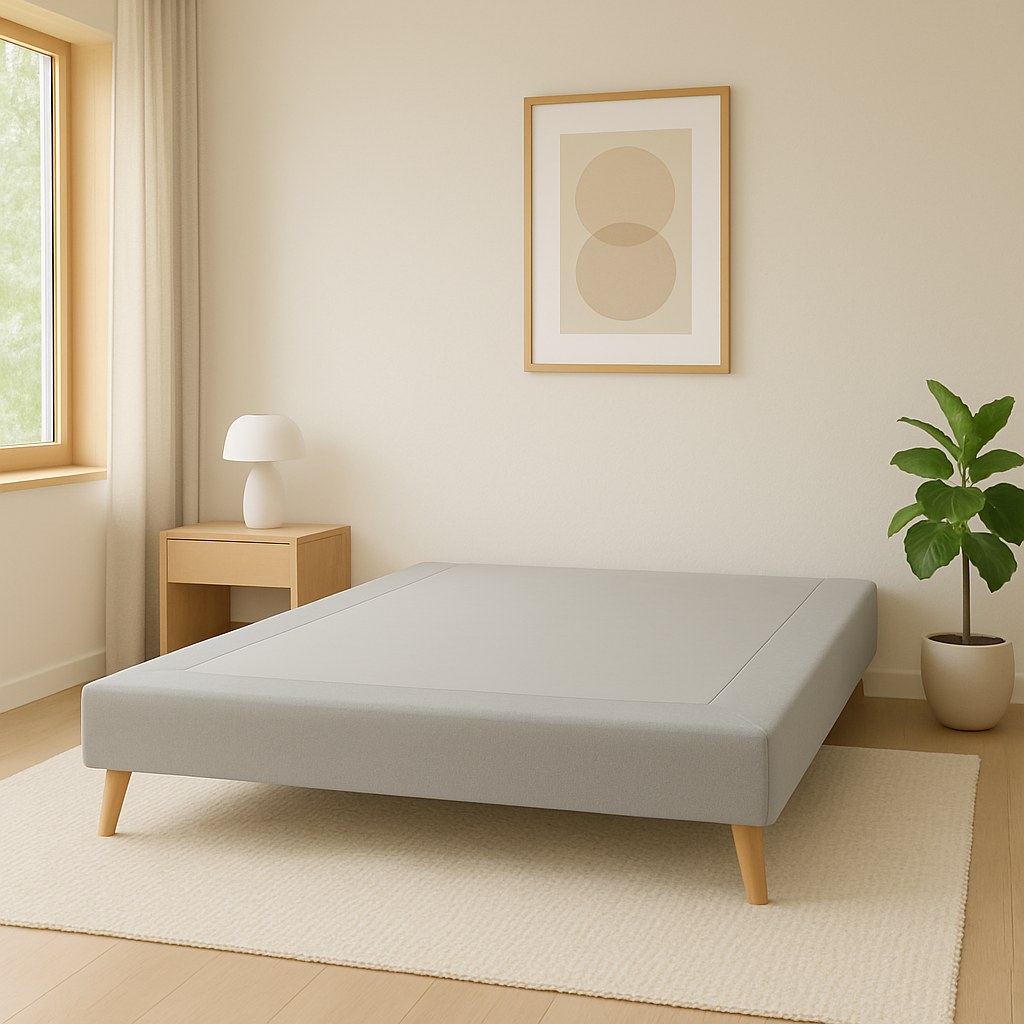
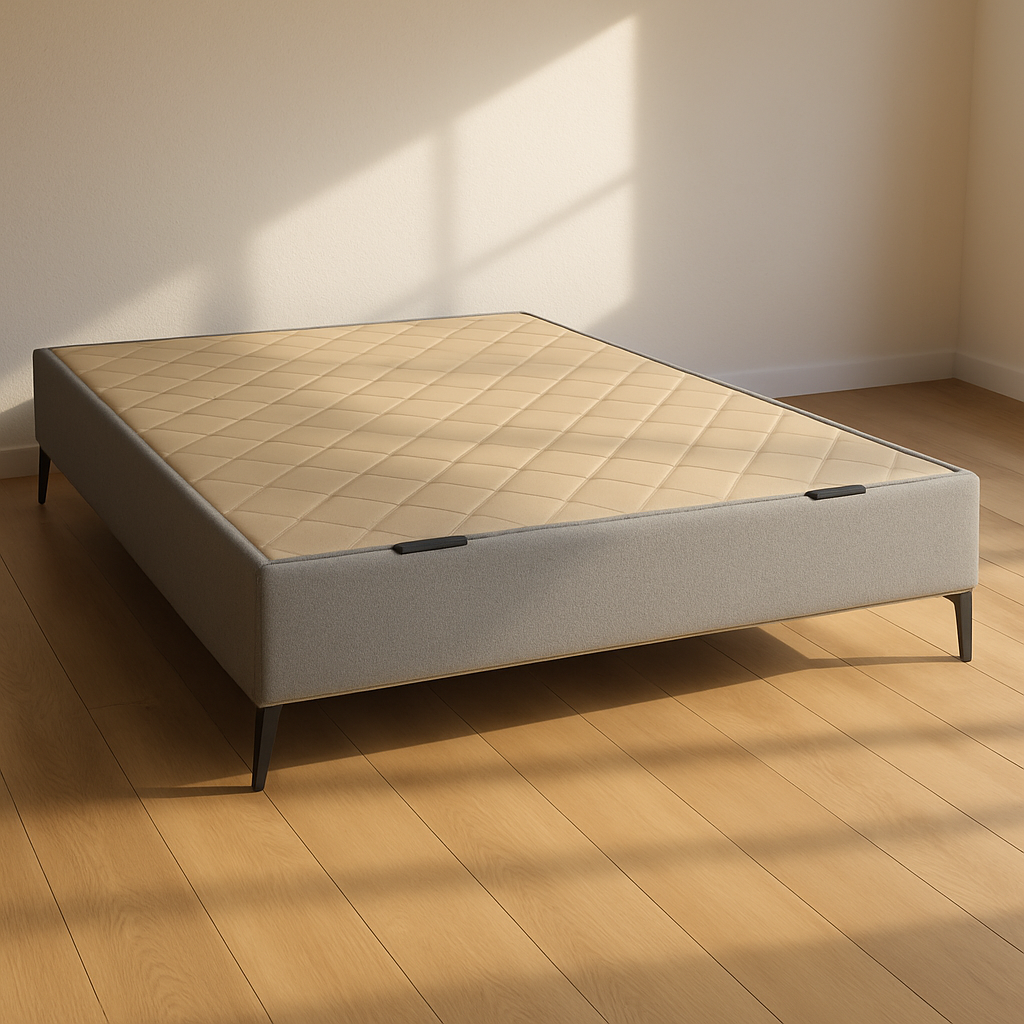
Physical comfort is a must-have. A mattress that doesn't give you the support you need or bedding that makes you sweat are silent saboteurs of your rest, causing micro-awakenings that steal your energy. Think of your bed as the foundation you build your emotional resilience on every single night.
A good mattress should mold to your body without letting you sink, always keeping your spine aligned. Likewise, bedding made with natural materials, like 100% certified cotton, promotes breathability and helps you regulate your body temperature all night long.
Investing in creating the perfect atmosphere is a direct investment in your well-being. If you want more ideas, check out our guide on how to create a restorative sleep environment and start building your own calm haven.
Grow lasting calm with long-term habits

The techniques we've covered are your first-aid kit, perfect for putting out fires. But true mastery in staying calm is something you build day by day. It's about creating a mental foundation so solid that even when storms hit, they won't be able to knock you down.
To do this, we'll lean on two mutually reinforcing pillars: training your mind to anchor itself in the present and moving your body to release tension. These are habits that, with consistency, become your best defense system.
Train your focus with mindfulness
The word "mindfulness" or "meditation" might sound super complex, but in practice, it's much simpler. Think of it like going to the gym, but for your brain. It's simply about training your ability to pay attention to what's happening right now, without judging it.
When you practice it, you learn to observe your thoughts and emotions from the outside, like they're clouds passing by in the sky. You don't try to make them leave or fight with them; you just let them be. This simple act gives you a superpower: the ability to not identify with every anxious thought that pops into your head.
You don't need to sit in a lotus position for an hour to get started.
- Start with just three minutes a day. Sit in a chair with your back straight and put all your attention on how air enters and leaves your body.
- Has your mind wandered off? Perfect! That's exactly what the exercise is about: noticing you've gotten distracted and, gently, bringing your attention back to your breath. Over and over again.
- Lean on apps. Apps like Calm or Headspace are great for beginners, as they guide you step-by-step.
This practice strengthens your brain's prefrontal cortex, the area responsible for regulating your emotions and making decisions. It's pure neuroscience.
Mindfulness won't make your problems disappear, but it will give you the mental space you need to respond to them calmly instead of reacting with panic. It's the difference between being in the eye of the hurricane and watching it from a safe shelter.
Move your body to calm your mind
Physical exercise is one of the most powerful —and often forgotten— tools for managing long-term stress. When you get moving, your body releases endorphins, which are like natural painkillers that boost your mood. Plus, you'll also reduce your levels of cortisol and adrenaline, those stress hormones.
You don't need to become an elite athlete. The key is consistency. A brisk 30-minute walk every day can have a tremendous impact on your mental resilience. The trick is to find an activity you truly enjoy so it doesn't feel like an obligation.
This habit is especially vital in high-pressure environments. Work-related stress, for example, is a widespread issue in Spain. In fact, 28% of Spanish workers admit to feeling stressed frequently, a figure that places us above the global average.
Of course, financial peace of mind is also key to our well-being. Securing the future of your loved ones with a life insurance policy that gives you peace of mind is another important step in building that inner strength. Ultimately, adopting these habits equips you with the necessary resources to stay calm in a much more authentic and sustainable way.
Common questions about how to stay calm
Here, we're tackling some of the most common questions we ask ourselves when trying to curb stress and anxiety. If you've ever wondered if what you're feeling is normal or if all this really works, you're in the right place.
What if breathing techniques make me more nervous?
Don't worry, it happens to more people than you think, and it's totally valid. If focusing on how air enters and leaves your body makes you more anxious instead of calming you down, it's simply a sign. Your nervous system is so activated that it interprets that inward focus as a threat.
Most importantly: don't force it. Instead of insisting, try grounding techniques that get you out of your head and connect you with the outside world, like the 5-4-3-2-1 method we saw earlier. The key is to find your own tool, not to force yourself into one that doesn't work for you.
How long until I notice these habits working?
This really depends a lot on each person and the technique. Some tools, like diaphragmatic breathing, are like a fire extinguisher: they offer almost immediate relief during a peak stress moment.
Others, like mindfulness or regular exercise, are more of a long game. You'll start noticing small positive changes in your overall mood within a few weeks. But the most powerful benefits, the ones that truly build your resilience, develop slowly and steadily with consistency over months.
Calm isn't a destination you arrive at, but a path you build over time. Be patient with yourself and celebrate every small step forward. Every step, no matter how tiny, adds up.
Is it realistic to think I can get rid of stress completely?
The goal should never be to eliminate stress. In fact, that would even be harmful. A little bit of stress is that natural and necessary spark that helps us react to challenges and stay alert. The problem arises when it becomes chronic and overwhelms us.
The real goal is to learn to manage it in a healthy way so that it doesn't control you. Think of it like learning to surf: you can't stop the waves, but you can learn to stay on the board. Staying calm means having the resources to navigate those waves without getting dragged under.
What if I can't stay calm on my own?
All these tools are fantastic support, but they're not a magic solution for everything. If you feel like stress or anxiety are overwhelming you constantly, if they're getting in the way of your work, your relationships, or simply stopping you from enjoying life, seeking professional help is the bravest and smartest step you can take.
A therapist or psychologist can give you personalized support and strategies specifically designed for you. Asking for help isn't a sign of weakness; quite the opposite: it's a sign of strength.
The challenges of taking care of emotional well-being are especially noticeable among young people. In Spain, for example, 25% of people between 18 and 24 years old report experiencing depressive states, and a staggering 70% suffer from stress. These figures, which you can see in detail in this study on youth mental health, demonstrate that the need for support at this stage of life is enormous and very real.
At Morfeo, we know that the foundation of a calm mind starts with truly restorative rest. A good mattress isn't just for your back; it gives you the deep sleep you need to process stress and face the day. Discover how our sleep science can help you wake up with more energy and serenity at https://www.morfeo.com.