
Memory Foam or Pocket Spring Mattress: Which One to Pick for Your Best Sleep
Choosing between a memory foam or pocket spring mattress really comes down to personal preference: are you looking for adaptive comfort that hugs you or dynamic, cool support? I'll tell you upfront, there's no single right answer. The best decision depends on things like whether you sleep alone or with a partner, your usual sleeping position, if you tend to get hot at night, and of course, your specific comfort needs.
Unlocking the Best Choice for Your Rest
Getting your mattress choice right is one of the most important decisions you'll make for your well-being. No exaggeration! This choice directly impacts your sleep quality, your daily energy levels, and your long-term postural health. A good mattress is the first step towards truly restorative rest, which is essential for your health and can help you beat insomnia and anxiety.

To make this decision easier, it's key to understand the real differences between these two technologies. We're not just talking about materials, but how each system interacts with your body while you rest.
- Memory Foam Mattresses: Their strong suit is how they adapt and mold to your body's contours, getting rid of pressure points and creating that signature 'hugging' sensation.
- Pocket Spring Mattresses: These offer point-by-point support, better motion isolation if you sleep with a partner, and superior ventilation. They're a classic that's been reinvented.
Quick Comparison: Memory Foam vs. Pocket Spring
To give you a clear overview right from the start, we've put together a table that summarizes the key points we'll be breaking down throughout this guide. Use it as a first reference to get your bearings before we dive in.
| Feature | Memory Foam Mattress | Pocket Spring Mattress |
|---|---|---|
| Adaptability | Very high, 'hugging' effect | High, adapts to every point of the body |
| Breathability | Moderate (enhanced with gels and open cells) | Very high, excellent air circulation |
| Motion Isolation | Excellent, absorbs motion | Very good, individual springs keep it isolated |
| Support | Uniform and focused on relieving pressure | Dynamic and responsive, great for your spine |
| Feel when lying down | Hugging and slow-sinking | Firm, with a slight floating sensation |
| Great for... | People with muscle pain or who sleep on their side | Couples, hot sleepers, or those who move around a lot |
This chart is just the starting point. Next, we're going to dive deep into each technology, looking at its pros and cons for different types of sleepers. Our goal is to guide you to make an informed decision, making sure your investment leads to nights of deep, restorative sleep.
How does a memory foam mattress work?
To figure out if a memory foam or pocket spring mattress is better for you, you first need to understand what makes memory foam special. Interestingly, this material was born at NASA, which designed it to cushion astronaut seats. Essentially, it's a high-density polyurethane foam that reacts in a very unique way to your body's heat and pressure.

The magic is in its thermosensitivity. When you lie down, the foam softens with your body temperature and molds with almost millimeter-perfect precision to the contours of your body. This creates that famous "hugging" or weightless sensation that evenly distributes your weight and eliminates pressure points in key areas like your shoulders or hips.
This adaptability has made it a super popular choice. In fact, in Spain, the market share for memory foam mattresses keeps growing and now accounts for between 35% and 45% of sales. The reason for this boom is clear: people are looking for pressure relief, especially if they have back pain, and there are more and more high-quality hybrid models available. If you're interested, you can read more about sleep market trends in this analysis by Hogarium.
Why Density is Everything
Not all memory foams are created equal, not by a long shot. Density, measured in kilograms per cubic meter (kg/m³), is the factor that truly makes a difference in a mattress's quality and performance.
And get this, higher density doesn't mean the mattress is harder; it just means it has more material per volume. So, what does this mean for you?
- Greater durability: A high-density mattress will hold up much better over time without deforming.
- Better adaptability: It will mold to your body more precisely and slowly, giving you much more effective support.
- Less bounce: It will absorb movements like no other, ensuring perfect motion isolation if you sleep with a partner.
Low-density mattresses (less than 40 kg/m³) tend to bounce back faster and don't last as long. On the other hand, high-density models (more than 50 kg/m³) are the ones that offer maximum comfort and superior ergonomic support.
Debunking the myth: does memory foam make you hot?
One of the most common misconceptions about memory foam is that it makes you hot. And while it's true that early models could retain heat, technology has come a long way to fix this issue. Modern mattresses, like those in the Morfeo range, include innovations that ensure perfect temperature regulation.
The secret isn't just the material itself, but how it's made. Latest-generation memory foam mattresses are specifically designed to be breathable and keep you cool all night long.
Let's check out the technologies that make this happen:
- Open-cell foams: Their internal structure is porous, just like a sponge, which lets air flow freely and dissipates any heat and moisture that builds up.
- Gel particles: Tiny gel particles are injected into the foam. Their job is to absorb excess body heat, keeping your sleeping surface much cooler.
- Graphene infusions: Graphene is a material with incredible thermal conductivity. When added to memory foam, it helps draw heat away from your body super efficiently.
Thanks to these advancements, you can now enjoy all the adaptability and comfort of memory foam without worrying about getting too hot, ensuring you get truly deep and restorative sleep.
Taking a look at the pocket spring core
Unlike memory foam, the heart of a pocket spring mattress is a high-precision mechanical system. Imagine hundreds, or even thousands, of tiny steel springs, each tucked into its own fabric pocket. This structure is key to understanding why it offers such a distinct sleeping experience.
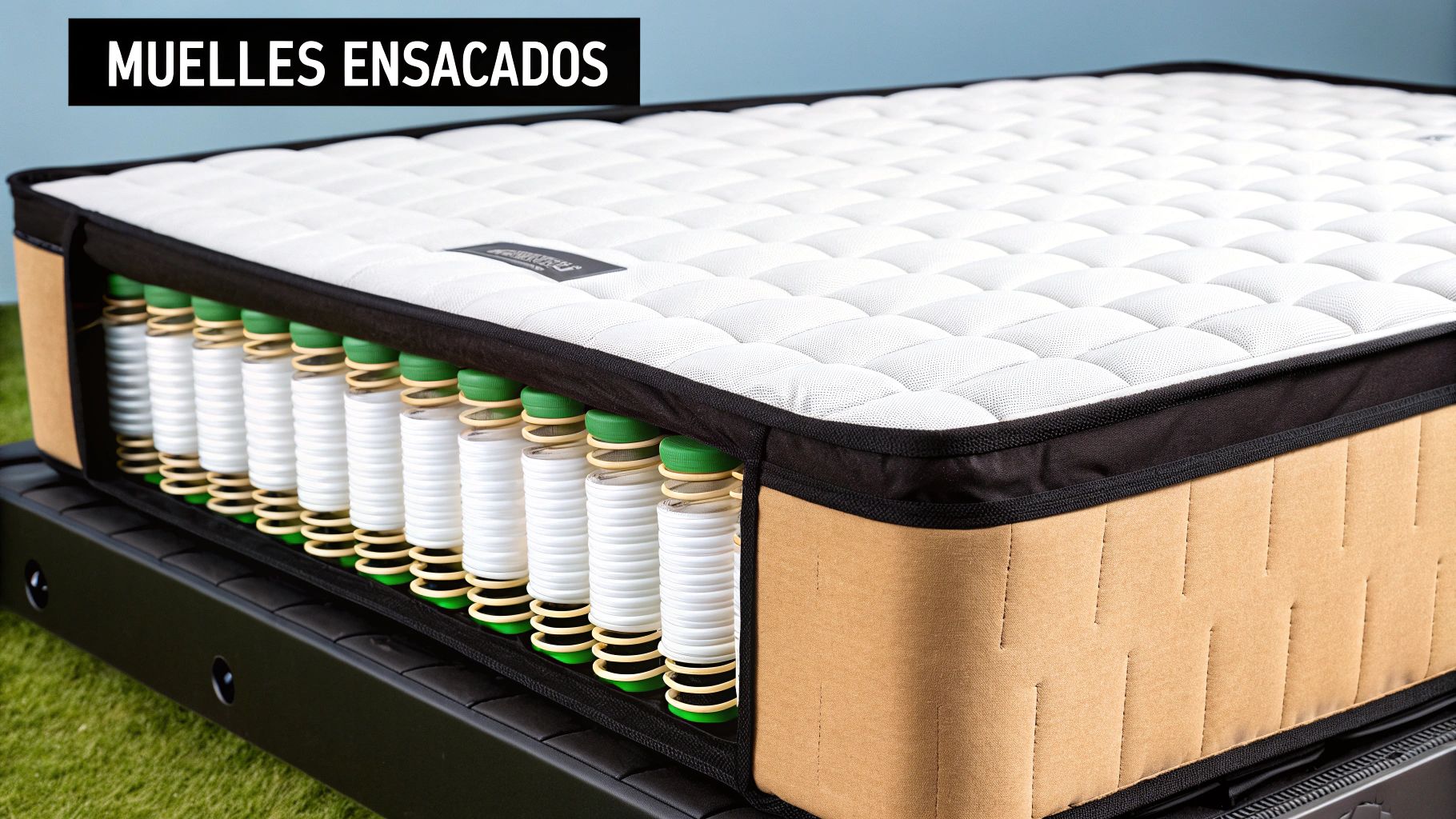
Each spring works independently, sinking only when you apply pressure directly to it. This gives us two benefits that totally define its performance: exceptional motion isolation and dynamic support that adapts point-by-point to your body's shape.
If you sleep with a partner, this independence changes everything. When one person moves, the springs underneath them absorb the motion without transferring it to the rest of the bed. The result is deep, uninterrupted sleep for both of you.
The importance of quantity and gauge
Not all spring cores are created equal, not by a long shot. Two factors make a big difference in their firmness, durability, and quality: the number of springs and the thickness of the wire they're made from (the gauge).
- Number of springs: The more springs, the more individual support points your mattress will have. This means much more precise weight distribution and ergonomic support that follows your spine's natural curve.
- Wire gauge: A lower gauge means a thicker wire, and therefore, firmer and more resilient springs. It's common for manufacturers to combine different gauges to create comfort zones, offering softer support for your shoulders and firmer support for your lower back.
This technology has really made its mark in the Spanish market, where pocket spring models now account for between 30% and 40% of sales in the mid-range and high-end categories. A good mattress typically has between 1,000 and 3,000 springs for a 150x190 cm size, ensuring well-zoned support and perfect back alignment.
Breathability: its ultimate advantage
If there's one area where pocket springs absolutely win big in the memory foam vs. pocket spring mattress comparison, it's breathability. The individual pocket structure leaves a huge empty space inside the mattress.
This open design allows air to circulate freely every time you move. This constant airflow effectively dissipates body heat and moisture, keeping your bed cool and dry all night long.
This quality makes pocket spring mattresses the ideal choice for:
- People who sleep hot: They help you avoid that stuffy, hot feeling that wakes you up in the middle of the night.
- Warm climates: They offer much better thermal comfort in places where nights can be sweltering.
- Those seeking hygiene: Constant ventilation helps prevent dust mites and mold from appearing, creating a much healthier sleeping environment.
Once you get how they work, it's clear that the benefits of pocket spring mattresses aren't just about firm support; they offer a complete solution for anyone who values coolness and independent movement above all else.
Face-off: Memory Foam or Pocket Springs?
Now that we know how each technology works, it's time to put them head-to-head. Choosing between a memory foam or pocket spring mattress isn't about 'which one is better,' but about understanding which material best suits your needs. That's why we're going to break down the key criteria, point by point, so you can make the right decision.
Adaptability and Pressure Relief
Here, we're talking about how the mattress molds to your body to keep your spine in the correct posture. In this area, memory foam is the undisputed champion. Thanks to its thermo-sensitive ability, it creates a kind of mold of your body, distributing weight evenly and relieving pressure like no other technology.
Modern pocket spring mattresses, on the other hand, offer a very sophisticated 'point-by-point' adaptability. Each spring works independently, responding only to the pressure it receives. This achieves a very precise fit to your body's curves, without the mattress sinking completely.
The key difference: Memory foam gives you a 'hug' feeling, like the mattress is cradling you. It's ideal if you're looking for maximum pressure relief. Springs, however, offer a more active and dynamic support that adapts to you without that sinking feeling.
Motion Isolation
This point is crucial if you sleep with a partner. It measures the mattress's ability to absorb movement on one side without it transferring to the other. Does your partner move around a lot? Then this is for you.
Both technologies are excellent in this regard, but they work differently:
- Memory Foam: Its high-density foam is like a sponge that absorbs movement energy. It literally dampens any vibration. It's almost impossible for you to notice your partner turning over.
- Pocket Springs: Each spring, being in its own little pocket, actively isolates movement. Turns and changes in posture stay confined to their area, with no domino effect.
While both are fantastic for sleeping with a partner, memory foam usually has a slight edge due to its ability to completely 'cancel out' movement.
Breathability and Temperature Regulation
Here, things change, and the scale clearly tips towards pocket springs. Their internal structure, with hundreds of individual pockets, leaves a huge space for air to circulate freely. This works like a natural ventilation system that dissipates heat and humidity very effectively.
Historically, traditional memory foam mattresses tended to retain more heat. However, the latest generation models, like Morfeo's, have solved this problem with open-cell foams and by incorporating gel or graphene particles that dramatically improve breathability.
Firmness and Support
Firmness is super personal, but the type of support each mattress offers is objectively different. Memory foam provides uniform support that adapts slowly and progressively, perfect for minimizing pressure points.
Pocket springs, on the other hand, offer more reactive support with a slight 'bounce effect'. This makes moving around at night much easier and gives a floating sensation that many people prefer, avoiding that 'stuck' feeling in the mattress.
Durability and Lifespan
The durability of both types of mattresses mainly depends on the quality of their materials. A memory foam mattress with high-density foam (over 50 kg/m³) can easily last 10 years or more without losing its properties.
Pocket spring mattresses are also very durable, as long as the steel in the springs is good quality and well-treated. A good core can easily last a decade. In both cases, maintenance is simple: just rotate it every few months.
Comparative Analysis by Key Criteria
So you can see all these differences at a glance, we've put together a summary table. It's a detailed evaluation of each technology based on the most important factors for your sleep.
| Comparison Criteria | Memory Foam Mattress | Pocket Spring Mattress | Best For |
|---|---|---|---|
| Adaptability | It's super cozy, molding to your body heat. | It's dynamic, offering point-by-point support. | Memory foam for pressure relief, and springs for responsive support. |
| Motion Isolation | It's excellent at absorbing all movement. | Pretty good, the springs really isolate vibrations. | Both are fantastic options for couples. |
| Breathability | Moderate (and even better with gel or open-cell technologies). | Super high, with excellent air circulation. | Pocket springs are great for hot sleepers or humid climates. |
| Firmness | A cozier, slow-sinking feel. | A more buoyant feel with a quick response. | Memory foam if you don't move much; springs if you toss and turn a lot. |
| Durability | High if the density is over 50 kg/m³. | High, especially with quality steel and a good gauge. | Both are long-term investments if you pick a quality model. |
| Price | A super wide range, from budget-friendly to premium options. | They usually fall into the mid-to-high range. | The price depends more on the quality of the materials than the technology itself. |
With this detailed comparison, you've got all the tools you need to figure out which technology best suits you and your sleep style.
Recommendations based on your sleeper profile
Now that you know the tech behind each type of mattress, it's time to put that knowledge to good use! Because deciding between a memory foam mattress or a pocket spring mattress isn't about which one is absolutely better, but which one is perfect for you. It all depends on who you are, how you sleep, and if you share your bed.
Let's break down the most common sleeper profiles together. This way, it'll be super easy for you to find your match and nail your choice!
If you sleep with a partner
When it comes to sharing a bed, the absolute key is motion isolation. If your partner tosses and turns a lot at night, the last thing you want is to be woken up by their movements. You need a mattress that just soaks up all that motion like it's nothing.
For this, both memory foam and pocket springs are fantastic choices. However, pocket springs usually have a slight advantage. Their secret lies in individual response: each spring reacts on its own, isolating movement right where it happens.
Memory foam is also a champ at soaking up vibrations, but if one of you is particularly sensitive, the stability that pocket springs offer is tough to beat.
Our recommendation: For couples, a pocket spring mattress or a hybrid model —which combines springs with a memory foam comfort layer— is the perfect solution to make sure both of you sleep soundly through the night.
If you have back pain or muscle aches
In this situation, the absolute priority is to relieve pressure points and keep your spine nicely aligned. Memory foam, in fact, was designed with exactly this in mind.
Its ability to mold to your body's exact contours is what makes all the difference. It distributes your weight evenly and takes the tension off critical areas like your shoulders, lower back, and hips. That "hugging effect" helps your muscles relax and keeps your back in a natural posture all night long.
This is no small matter when you consider that, according to several studies, almost a third of the population in Spain (32%) wakes up with back pain.
Our recommendation: If you're dealing with back, muscle, or joint pain, a high-density memory foam mattress will give you that ergonomic support and much-needed relief.
This decision tree sums it all up visually, so you can easily see how your specific needs guide you to the perfect mattress.
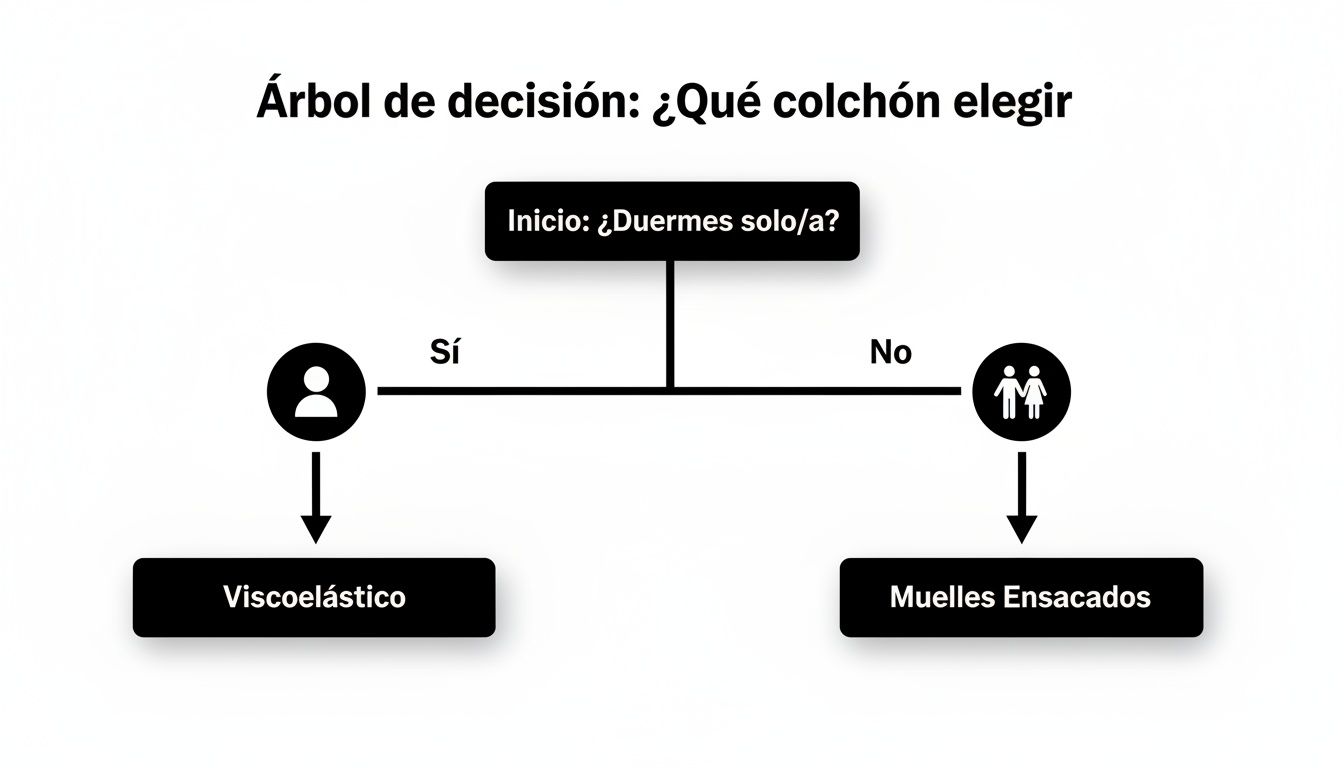
As you can see in the infographic, while there are nuances, the motion isolation of pocket springs is a game-changer for couples, whereas the adaptability of memory foam is fantastic for solo sleepers.
If you tend to sleep hot
If you're someone who gets hot at night, mattress breathability is non-negotiable. And in this department, pocket springs are the clear winners.
Their internal structure, packed with air channels between each individual pocket, allows air to flow constantly. Every time you move, the air circulates, whisking away accumulated heat and humidity. The result is a cool and dry sleeping surface all night long, which is super important if you live in a warm climate or just tend to generate more body heat.
If you want to dive deeper into this and other topics, we recommend checking out our complete guide on how to choose the right mattress.
Our recommendation: For hot sleepers, a pocket spring mattress is, without a doubt, the best option to ensure ideal thermal comfort.
If you toss and turn a lot while you sleep
For those who change positions frequently, being able to move easily is super important. A mattress that's too 'hugging' can make you feel 'stuck,' turning every nighttime roll into a bit of an effort.
Pocket spring mattresses offer more responsiveness, giving you a helpful 'bounce effect.' This more dynamic response makes it easier to change positions without a struggle, letting you find a new comfy spot without interrupting your sleep. Memory foam, with its slower recovery, might feel less comfortable for those who are more restless.
Our recommendation: If you're someone who can't stay still, the dynamic response of a pocket spring mattress will give you more freedom to move and a much smoother night's sleep.
Hybrid Mattresses: The Best of Both Worlds, All in One Solution
Up until now, choosing a mattress felt like a two-way street: either you went for the body-hugging adaptability of memory foam or the dynamic support of pocket springs. But what if we told you that you don't have to give up anything? That's where hybrid mattresses come in! They're a clever solution that blends the best of both technologies to give you a superior and, most importantly, balanced sleep experience.
At its core, a hybrid mattress is a multi-layered structure designed with a very clear purpose. Its heart is made up of a pocket spring system, which acts as the engine of the mattress. This base provides robust support, durability that stands the test of time, and most importantly, that amazing breathability that keeps your bed cool all night long.
Right on top of this core, you'll find one or more comfort layers, usually made of high-density memory foam. These top layers are what deliver that fantastic pressure relief, adaptability, and that super cozy feeling that melts away tension in your shoulders and hips.
Perfect synergy, layer by layer
The real genius of a hybrid mattress isn't about its individual parts, but how they all work together in perfect harmony. It's not just about stacking materials; it's about creating a system where each layer boosts the strengths of the others, giving you an almost perfect balance of support and comfort.
- Pocket spring core: This gives you the firmness you need for proper spinal alignment and amazing motion isolation, which is super nice if you share your bed.
- Transition layers: These are usually high-resilience foams that connect the core to the top layers, softening the feel of the springs so you don't even notice them.
- Memory foam comfort layer: This provides that super precise adaptability that molds to your body, relieving pressure without that 'stuck' feeling you sometimes get with pure memory foam mattresses.
A well-designed hybrid mattress means you don't have to choose between responsive support and contouring adaptability. It gives you both at the same time, getting rid of the downsides of each technology on its own.
Who's a Hybrid Mattress Perfect For?
Thanks to its super balanced design, a hybrid mattress is an incredibly versatile option that meets most people's needs. It's the ultimate answer to the question of whether to pick a memory foam or pocket spring mattress, because it combines the best of both worlds.
It's especially great for:
- Couples with different preferences: If one of you likes firmness and the other prefers something more adaptable, a hybrid offers a perfect middle ground that keeps both of you happy.
- Hot sleepers who need pressure relief: You get the coolness of springs without giving up the ergonomic comfort of memory foam.
- Undecided sleepers: If you value both support and that cozy feeling, this design gives you a super complete performance without having to make any compromises.
The popularity of these models is precisely because they offer a complete solution. To better understand how they differ from other options, you can check out our article on the difference between foam and hybrid memory foam mattresses. Basically, hybrid mattresses represent the evolution of sleep.
FAQs about your new mattress
Even with all the info laid out, it's totally normal to have some last-minute questions before you decide between a memory foam or a pocket spring mattress. Let's clear up those questions probably buzzing in your head so you can make your decision with total confidence.
Do modern memory foam mattresses sleep hot?
This is, without a doubt, the million-dollar question and one of the biggest myths surrounding memory foam, based on the first models that came out. The truth is, today's quality memory foam mattresses, like those in the Morfeo range, are designed to be incredibly cool.
The secret? Technology has come a long, long way:
- Open-cell foams: Imagine a structure full of tiny pores that lets air flow freely. That's how heat naturally dissipates, preventing that stuffy feeling.
- Gel or graphene particles: These materials are integrated directly into the foam and act like tiny thermal regulators. They absorb excess body heat and maintain an ideal sleeping temperature all night long.
So, the answer is a definite no. A good modern memory foam mattress won't make you hot; it's optimized to offer excellent thermal comfort without sacrificing its amazing adaptability.
Which type of mattress lasts longer?
Here, the key isn't so much whether it's memory foam or springs, but the quality of the materials. If you pick a mid-to-high-range model and take good care of it, both types of mattresses can give you a lifespan of around 10 years.
For a memory foam mattress, what you need to look at is the foam's density. Always make sure it's higher than 50 kg/m³ to ensure it'll hold up well. For a pocket spring mattress, the quality of the steel and the heat treatment the springs have received are crucial so they don't deform over time and with use.
What kind of base or bed frame does each mattress need?
Choosing the right base isn't a small detail; it's essential for your mattress to perform its best and last as long as it should. In fact, a wrong choice could even void the manufacturer's warranty.
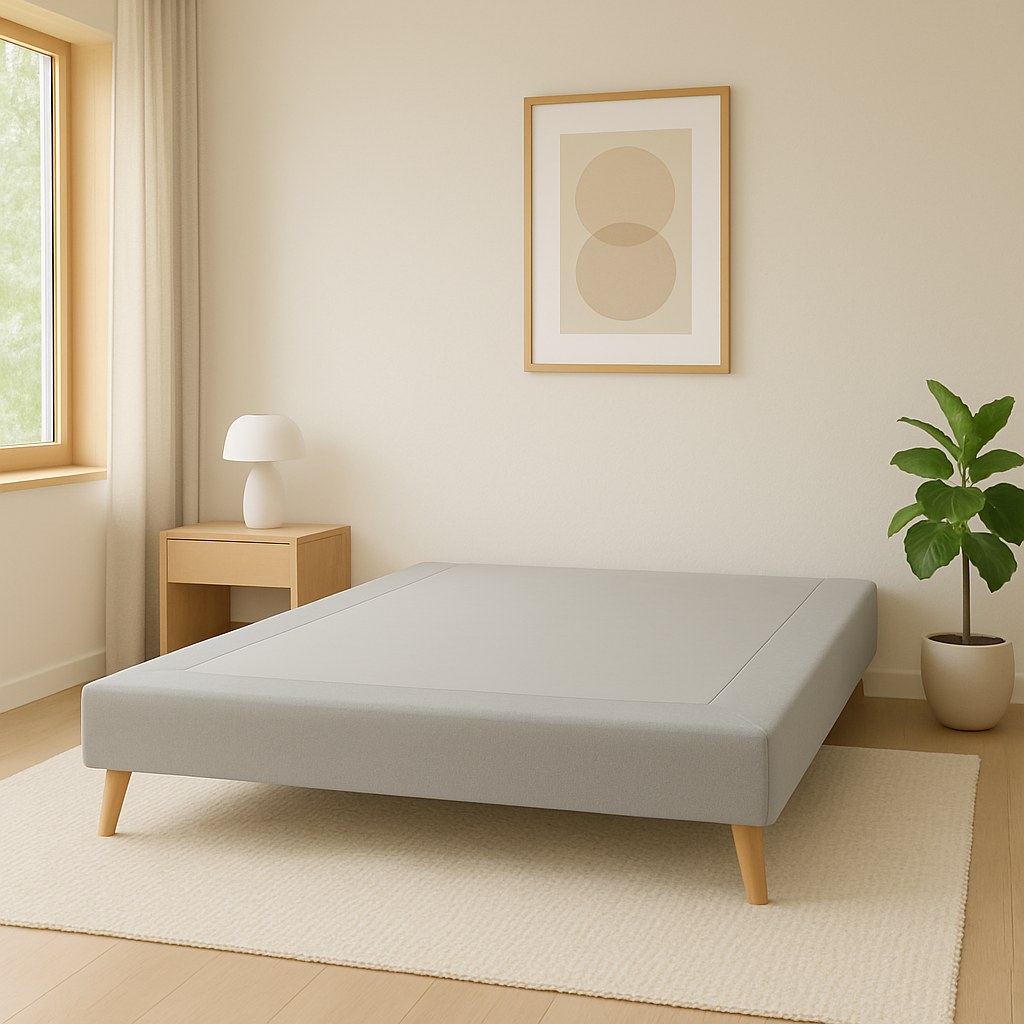
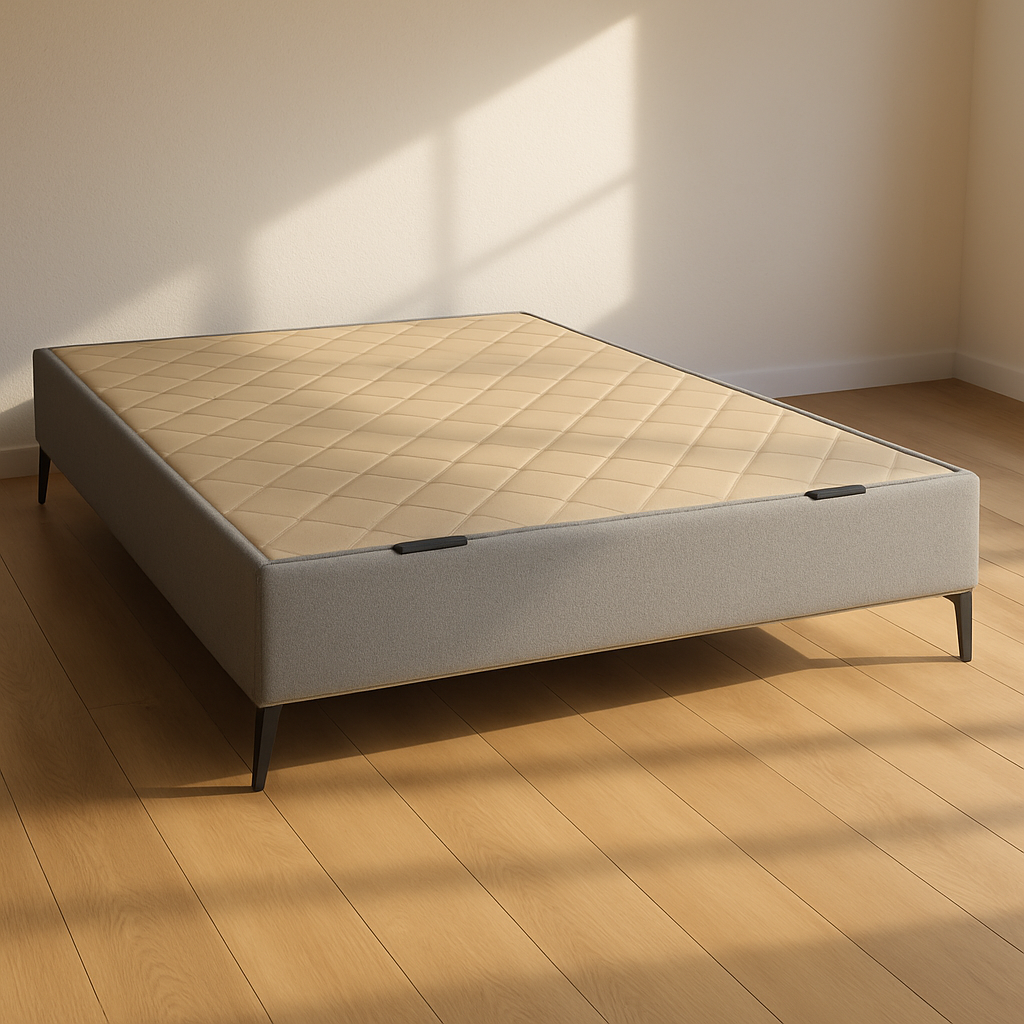
- For a pocket spring mattress: The recommendation is clear: you need a firm and breathable base. Ideally, go for an upholstered base or a storage divan bed. Don't even think about putting it on a slatted bed base, because the springs could sink into the gaps and end up getting damaged.
- For a memory foam mattress: You've got more flexibility here. It works wonderfully with both an upholstered base and a slatted bed base. In fact, the slatted base even helps the mattress breathe better.
Here's a little maintenance trick that works for both: rotate your mattress from head to foot every three months. With this simple step, wear and tear will be much more even, and you'll significantly extend its lifespan.
Here at Morfeo, we design mattresses that blend the best sleep science with top-quality materials to give you nights of deep, restorative sleep. Discover the perfect mattress for you and take advantage of our 100-night trial.
Explore our mattresses at Morfeo
Article created using Outrank