
Pocket Spring or Memory Foam Mattresses for Your Back
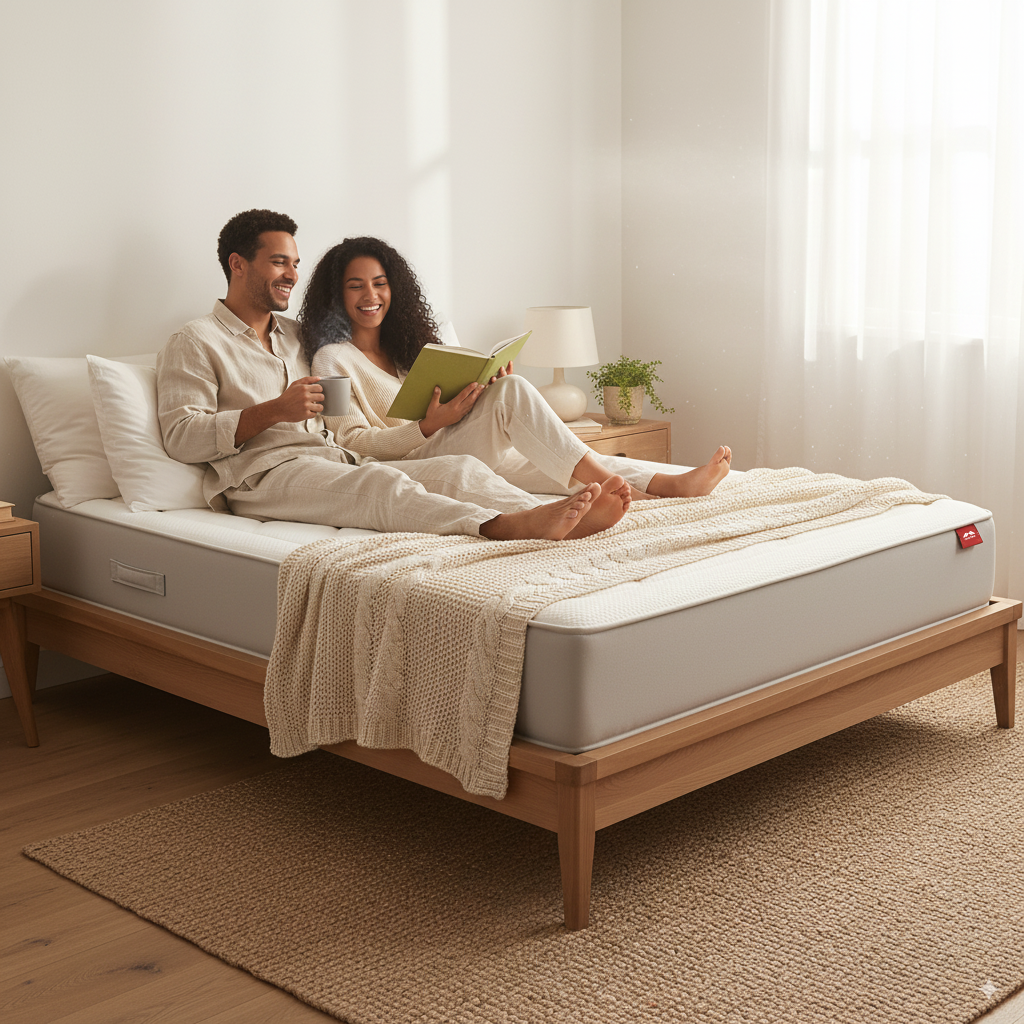
Deciding between a pocket spring mattress or a memory foam one really comes down to a very personal feeling: do you prefer support that responds to your movements or a cozy hug that cradles you and relieves pressure? Pocket springs offer dynamic firmness, almost like you're floating, which is perfect for those who move around a lot. Memory foam, on the other hand, molds to your body for precise comfort.
There's no single answer or clear winner here. But truly understanding how each technology works is the first step to completely transforming your sleep.
Decoding the Technologies: What's Happening Under the Sheets?
When you dive into the world of sleep, two materials pretty much steal the show: pocket springs and memory foam. Each one offers a different philosophy for achieving restful sleep, and the right choice depends on your habits, how you sleep, and even if you share your bed. Understanding how they work is key to truly investing in your postural health and well-being.
A Quick Look at the Key Differences
The big difference is how they handle weight and adapt to you. Pocket spring mattresses work like an army of tiny, independent pistons. Each one reacts only where pressure is applied, which ensures super natural spinal alignment and fantastic motion isolation.
On the other hand, memory foam plays with your body's temperature and weight to mold itself to your shape. Its mission is to eliminate pressure points, creating that famous 'hugging' sensation that distributes weight evenly. It's a real treat, especially for those who suffer from joint pain.
The Starting Point: Think of springs as active support, gently boosting you and making movement easy. Memory foam is passive comfort that cradles you and molds to your shape. This difference completely defines how you feel when you lie down and move around during the night.
To help you see these differences at a glance, we've put together a table that summarizes the key concepts. It'll give you a clear idea right from the start before we dive into the details.
Quick Comparison: Pocket Springs vs. Memory Foam
This table summarizes the fundamental differences to give you a clear overview from the start and help you understand the key concepts we'll be looking at.
| Decision Criteria | Pocket Spring Mattresses | Memory foam mattresses |
|---|---|---|
| Support & Firmness | Reactive firmness and point-by-point support. Actively keeps your spine aligned. | Progressive adaptability. Relieves pressure and molds to your body's contours. |
| Breathability | Excellent. The space between the springs allows for constant air circulation. Perfect for hot sleepers. | Variable. Depends on density and technology (open-cell). Can retain heat. |
| Motion Isolation | Very High. Each spring absorbs movement individually, minimizing transfer. | Excellent. The foam absorbs movement, preventing it from transferring to the other side of the bed. |
| Sleeping Sensation | You'll feel like you're floating and can move around easily. No more feeling "stuck"! | It gives you a "hug" or enveloping feeling. The mattress slowly molds to your body. |
| Durability | High, especially with high-quality steel. Less likely to get permanent dents or sag. | Depends on the foam's density. Lower quality foams might lose their bounce over time. |
This chart is just the beginning! Now, let's dive deeper into how each technology actually works so you can understand not just what they do, but how they do it and what that means for your everyday sleep.
How Pocket Spring Support Works
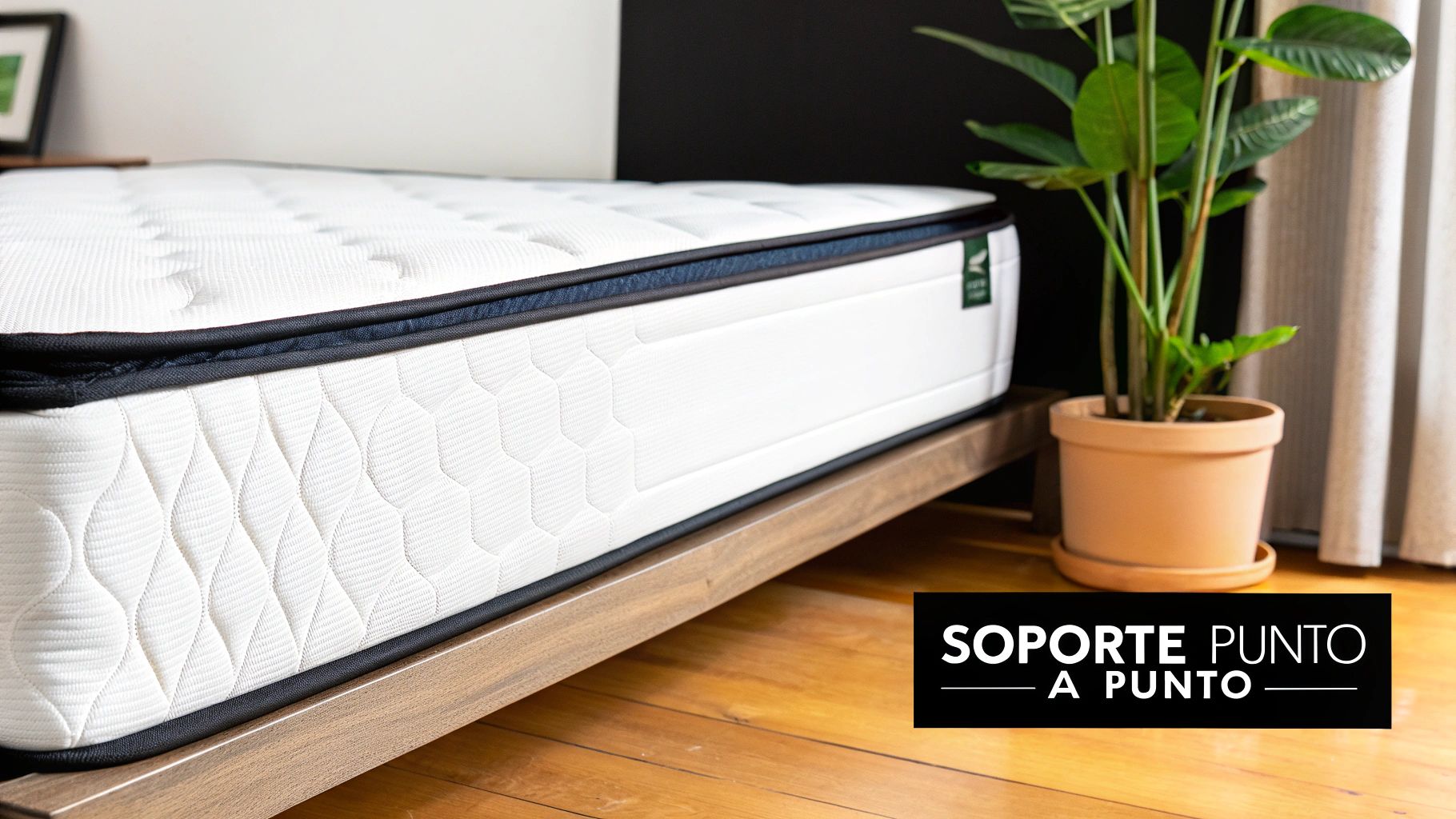
To really figure out if a pocket spring or memory foam mattress is right for you, the first thing to do is peek inside and see how its support is designed. And no, pocket springs are nothing like those old, squeaky spring mattresses! Technology has come a long, long way.
Imagine hundreds, sometimes thousands, of tiny individual springs, each tucked into its own fabric pocket. That's the secret to their success: they work completely independently.
When you lie down, only the springs directly beneath your body compress. The rest don't even budge! This creates a super precise, point-by-point response to your unique body shape.
Independence is Key
You've probably heard about 'motion isolation'. It's definitely the star benefit of this technology, and for good reason! Since each spring reacts on its own, movement doesn't spread from one side of the mattress to the other.
This means if your partner moves, rolls over, or gets up in the middle of the night, you'll barely notice a thing. For light sleepers or anyone sharing a bed with someone who seems to be training for a marathon in their sleep, this feature is a total game-changer. The result? Way fewer interruptions and much better quality sleep for both of you.
Active and Reactive Support
Unlike the more enveloping feel of memory foam, the support you get from pocket springs is reactive and dynamic. What does that mean? It means the mattress doesn't just conform to you; it also offers a slight push-back that helps you change positions effortlessly.
This quality is pure gold for those who toss and turn a lot at night. You won't get that 'stuck' feeling sometimes associated with very dense foams. You'll be able to roll over and find your ideal position without having to wrestle with your mattress.
That responsiveness translates into a feeling of buoyancy and freedom of movement that tons of people find incredibly comfy. It's support that works with you, not against you.
- Postural Alignment: Keeps your spine in a natural position, sinking only where it needs to.
- Easy Movement: The subtle bounce from the springs helps you turn over without waking up.
- Balanced Firmness: Gives you robust support without feeling like you're sleeping on a board.
Models like the Morfeo Hybrid Original are a perfect example of this engineering, combining a pocket spring core with comfort layers to hit that ideal balance between support and adaptability.
Superior Breathability for Cool Nights
Finally, one of the big perks of its structure is its excellent ventilation. The natural space between each spring pocket creates air channels that allow air to circulate continuously.
This constant airflow helps whisk away body heat and moisture that build up overnight. For hot sleepers, this makes all the difference between sleeping soundly and tossing and turning all night. If you want to dive deeper into this and other points, check out the advantages of pocket spring mattresses on our blog.
And it's not just about comfort! Good breathability also creates a more hygienic sleep environment, stopping dust mites and bacteria from multiplying.
Memory Foam Adaptability: A Closer Look
If pocket springs are all about that reactive feel, then memory foam is definitely the king of adaptability. Its magic comes from a unique ability to react to both your body's pressure and temperature, creating an almost perfect mold of your shape. So, here's the real question when choosing between pocket spring or memory foam mattresses: do you want dynamic support or a comfort that truly hugs you?
Unlike springs, memory foam doesn't push back or resist you. It's actually the opposite: it gently gives way exactly where you need it, spreading your weight incredibly evenly across the whole surface.
This slow-adapting magic is what gives you that famous 'hugged' or 'floating' feeling. Your mattress cradles you, melting away all the tension you've built up throughout the day.
Pressure Relief: The Main Goal
Memory foam's biggest strength is its amazing ability to get rid of pressure points. Areas like your shoulders, hips, or heels, which carry more weight when you sleep, gently sink into the material. This helps release that tension that often turns into aches and pains.
For anyone dealing with joint pain, back issues, or fibromyalgia, this feature can make a huge difference in how well you sleep. The foam soaks up pressure instead of pushing back, letting your muscles totally relax all night long.
Memory foam isn't about firmly aligning your spine; it's about taking the pressure off each vertebra and joint so your body can find its natural position without any strain. It's all about passive comfort, a pure embrace.
This cradling effect is also a fantastic perk if you share your bed. Since the foam absorbs movement locally, it stops it from spreading across the rest of the mattress. Say goodbye to waking up every time your partner tosses and turns!
Dealing with Temperature and That Sinking Feeling
If you ask anyone about the downsides of memory foam, they'll probably mention heat. Historically, the biggest complaint was its tendency to trap body heat. Early versions, with their closed-cell foams, would hold onto warm air, which was a real nightmare for anyone who sleeps hot.
Plus, a low-quality or low-density foam could make you feel like you were sinking too much, almost like being trapped. This made changing positions during the night a real struggle.
Luckily, technology has come a long, long way! At Morfeo, for instance, we've brought in the latest solutions to leave those old problems in the past:
- Open-cell memory foam: Its structure lets air flow freely through the foam, getting rid of heat much more effectively. Say goodbye to those sweltering hot nights!
- VisCool Technology: This innovation takes things up a notch! It includes thermoregulating particles that actively manage temperature to keep your sleep surface cool and comfy all night long.
- Optimized densities: We use high-density foams that give you that amazing adaptability everyone loves, but without skimping on support. This way, you won't feel like you're getting stuck in your mattress.
Thanks to these awesome advancements, you can now enjoy all the perks of memory foam without any of its old downsides. If you're curious to learn more about this fascinating material, you can check out what a memory foam mattress is in our full guide. The choice between pocket springs or memory foam is no longer about trading coolness for comfort!
Comparing to Find Your Ideal Mattress
So, by now, the whole 'pocket springs or memory foam' debate isn't about confusing tech you don't understand. It's really about your personal preference, how it feels, and most importantly, what's practical for you. To help you figure it out, let's compare each important factor head-to-head, looking at situations that probably sound familiar.
The best choice isn't the same for someone who sleeps alone and gets hot as it is for a couple with very different weights where one person has lower back pain. That's why we're going to break down how each material performs when it really counts, night after night.
Back Support vs. Pressure Relief
This is probably where most people get stuck and have the most questions. On one hand, pocket springs give you firm, responsive structural support. Their design helps your spine stay naturally aligned because each spring adjusts to the weight it's holding without affecting the ones next to it.
On the other hand, memory foam is all about pressure relief. It molds to your body shape, letting your shoulders and hips sink in just right, which releases built-up tension. It's a more passive approach, aiming for comfort by totally cradling you.
The practical verdict: If your main concern is keeping good posture and you need support that actively helps align your back, pocket springs are a fantastic choice. But if you're dealing with joint or muscle pain and want that 'hugging' feeling to get rid of pressure points, then memory foam is definitely your best friend.
Motion Isolation: A Look for Couples
Both technologies, in their high-quality versions, offer outstanding motion isolation. And when you're sleeping with a partner, that's super important so you don't end up declaring war in the middle of the night!
Memory foam pretty much magically soaks up movement. The energy from a toss, turn, or someone getting up just disappears into the foam itself, stopping it from spreading to the other side of the bed. It's a nearly perfect fix for this issue!
Pocket springs are also super effective because each one works on its own. Every spring traps movement, minimizing its transfer. With quality mattresses, you'll hardly notice a thing!
- Springs' Perk: They're super responsive, making it easy for you to move around without much effort. This can mean fewer sudden movements, which means your partner will barely notice a thing.
- Memory Foam's Perk: It totally absorbs everything! It's like the surface cushions any disturbance before it even reaches you.
Breathability & Nighttime Temperature
Here's where the difference is super clear. The structure of pocket springs creates natural channels that allow constant air circulation. This continuous airflow whisks away body heat and moisture, keeping your mattress surface nice and cool and dry.
Memory foam, being dense, tends to hold onto more heat. Even though modern tech, like open-cell designs or VisCool gels, has seriously upped its cooling game, pocket springs are still, by design, better in this area. For hot sleepers, this might just be the feature that tips the scale.
To make it super easy to see how your needs can guide your choice, we've put together this handy decision tree.

As you can see, the chart shows that your choice really depends on whether you're looking for solid back support or more adaptability to ease those annoying pressure points.
Durability & How It Feels to Sleep
How long a mattress lasts, whether it's pocket spring or memory foam, totally depends on the quality of its materials. High-quality steel for the springs and high-density foam for the memory foam are your best bet for durability. So, it's not about which tech is better, but how well it's made!
Finally, how a mattress feels is super subjective. Pocket springs give you a responsive firmness with a slight floating feel, making it easy to move around. Memory foam, on the other hand, offers an enveloping adaptability that slowly cradles you.
This difference totally shows up in market trends. The Spanish mattress market is following global patterns, with pocket spring, memory foam, and hybrid models grabbing more and more of the added value. Worldwide, the mattress market was worth a whopping $54.75 billion in 2024 and is expected to hit $91.23 billion by 2032! Here in Spain, this means we're seeing more mattresses that mix pocket spring cores with memory foam layers, like Morfeo's hybrids. These offer medium-high firmness, awesome motion isolation, and top-notch ventilation. Want to dive deeper into mattress market trends? Check out this full report from Fortune Business Insights.
When a Hybrid Mattress is Your Ultimate Solution

So, if you're still torn between the firmness of pocket springs or the contouring comfort of memory foam, chances are the answer isn't to pick one, but to combine them! And that's exactly where hybrid mattresses shine, offering a smart solution that blends the best of both technologies.
A hybrid mattress isn't just a random mix of layers. It's pure sleep engineering, designed so that the strengths of one material balance out the weaknesses of the other. Imagine getting the responsive support and cool feel of springs, but without missing out on the soft hug and pressure relief that only memory foam can give. That, in a nutshell, is a hybrid!
The Anatomy of a Quality Hybrid
The secret to a great hybrid is all in how it's built. The base, which is the heart of the mattress, is always a pocket spring core. This gives you super sturdy support, fantastic motion isolation, and airflow that keeps the heat away.
Right on top of that base, you'll find one or more comfort layers, usually made of high-density memory foams. These are the ones that cradle your body, mold to your curves to get rid of pressure points, and give you that totally comfy feeling.
This combo creates an almost perfect balance: the springs give you the support you need so you don't sink in, while the memory foam hugs you with a comfort that feels totally premium.
The result? An incredibly versatile mattress that can make a huge range of sleepers happy. We're talking about couples who need their partner's movements not to wake them up, all the way to folks with back pain looking for support without feeling like they're sleeping on a plank.
Who's a Hybrid Mattress Perfect For?
Hybrid mattresses are, in a nutshell, for those who don't want to give anything up. They become the perfect choice in very specific situations:
- Couples with different preferences: If one of you likes a firm feel and the other prefers something softer, a hybrid is the ideal middle ground.
- Hot sleepers who love memory foam: It lets you enjoy the comfort of foam without the heat problem, thanks to the spring core that ventilates constantly.
- Sleepers who toss and turn a lot: The responsiveness of the springs makes it easy to change positions, while the memory foam instantly adapts to every new posture, relieving pressure.
- Those looking for a long-term investment: The combination of high-quality materials usually means a more durable mattress that maintains its performance over time.
Models like the Morfeo Nature or the Hybrid Original are clear examples of how this technology can be fine-tuned for very specific needs. At Morfeo, we see hybrids as the answer for increasingly demanding sleepers who are looking for real health benefits. If you want to dive deeper, you can learn more about hybrid mattresses and how they combine the best of both worlds on our blog.
This trend is confirmed by shopping habits in Spain, where hybrid and memory foam mattresses are already considered a key investment in home well-being. In fact, the average spending on sleep products increased by 17% in 2024, reaching 427 euros per person. For brands like Colchón Morfeo, which offer 100-night trials, this shows that people are willing to invest when they understand the value of improving their sleep and easing their back pain.
Frequently Asked Questions when comparing these mattresses
Even after understanding the theory, it's normal to have some practical questions. After all, deciding between pocket spring or memory foam mattresses means thinking about your daily life, how you really sleep, and if you share your bed.
To make sure you don't have a single doubt left, let's clear up the most common questions that come up right at this final stage. These are the key issues that connect all the information to your personal situation.
Which type of mattress is best if I sweat a lot at night?
The answer here is pretty straightforward: pocket spring mattresses are generally the best option for hot sleepers. Their secret lies in their very structure. Imagine hundreds of individual springs, each in its own fabric pocket, creating small air channels throughout the interior.
This design acts like a natural ventilation system. It allows air to circulate freely, carrying away body heat and moisture you generate while sleeping. The result is a fresh feeling that lasts all night long.
It's true that memory foam has come a long way with gels like our VisCool or open-cell designs, but the pure ventilation of springs is hard to beat. If heat is your main enemy, a mattress with a spring core, especially a hybrid, will give you the coolness you need without sacrificing adaptability.
If my partner and I have very different weights, which option is best for us?
This is one of the big questions when buying a mattress for two, and for good reason. Both pocket springs and quality memory foam offer great motion isolation, but they achieve it in different ways.
Pocket springs really shine in this scenario. Since each spring works independently, when the heavier person lies down, their springs compress just enough without dragging or affecting the other side of the bed. This avoids the typical "hammock effect" where one person ends up rolling towards the middle.
High-density memory foam is also very effective, as it absorbs movement locally and molds to each body. However, if the weight difference is very large, a pocket spring core provides a firmer and more robust structural base, ensuring that each person receives the correct support without interference.
Our recommendation: For noticeable weight differences, a hybrid mattress is the perfect solution. You get the individualized support of springs in the base and the adaptability of memory foam in the comfort layer. It's the best of both worlds to make sure you both sleep wonderfully.
Do I need a specific base or bed frame for each type of mattress?
Yes, absolutely! Your bed base is the foundation of your sleep and can either enhance or ruin your mattress's properties. Not all bases work for all mattresses.
-
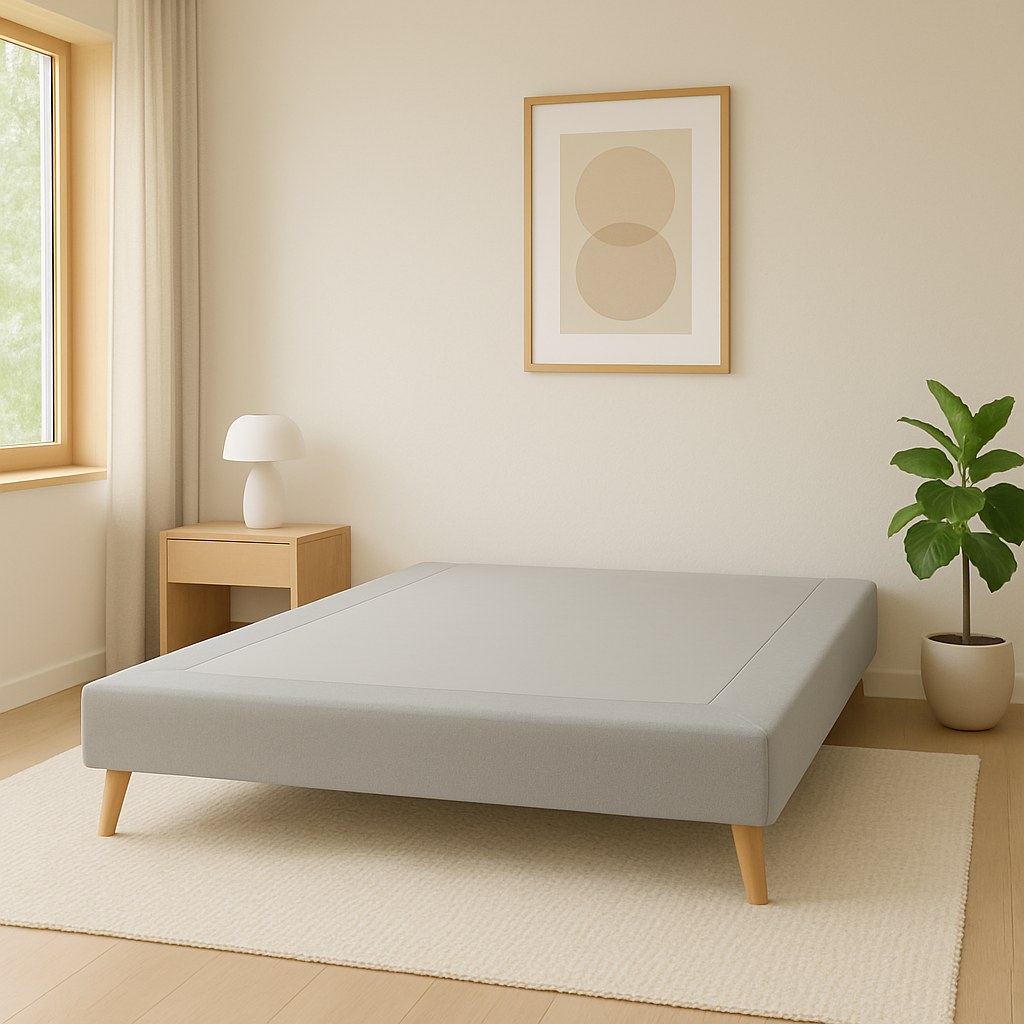
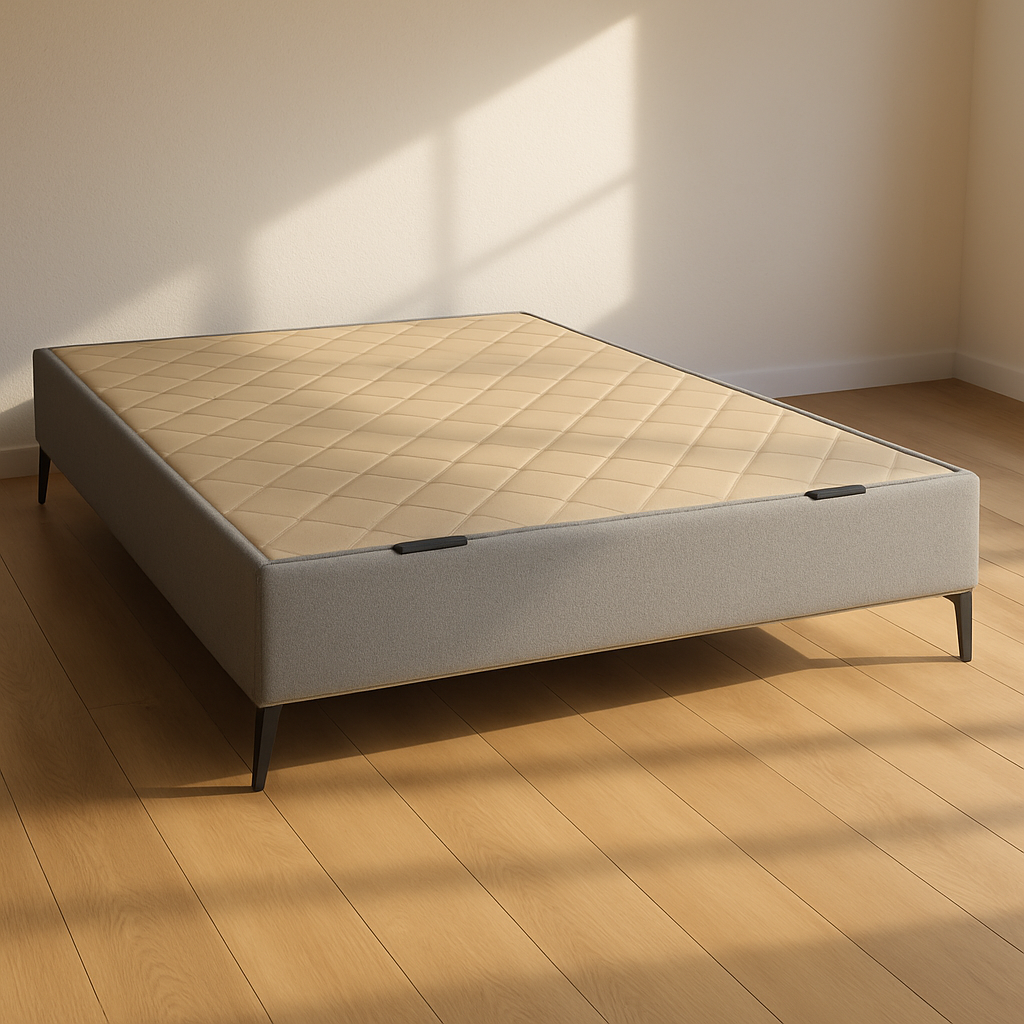
For pocket spring mattresses: The key is a firm and completely flat surface. This ensures that each spring has uniform support. Rigid upholstered bases, bed frames with solid tops (no gaps), or slatted bases with very wide, close-set slats are ideal. A slatted base with narrow, spaced-out slats is its worst enemy, because the springs could deform by slipping through the gaps.
-
For memory foam mattresses (100% foam): Their priority is breathability. They need a base that allows them to "breathe" so moisture doesn't build up. Slatted bases are perfect for this. A completely closed base, like a bed frame without vents, could cause the mattress to retain moisture and heat.
This is another advantage of hybrid mattresses. Since their spring core already ventilates itself, they get along great with both rigid and breathable bases, giving you much more flexibility when choosing.
Which of the two types of mattresses lasts longer?
The debate here isn't "springs vs. memory foam", but rather "quality vs. poor quality". A premium mattress, no matter the technology, will last much longer than a basic one, even if it uses the other technology.
For a pocket spring mattress, durability depends on the steel in the springs (its thickness and treatment to prevent fatigue) and the fabric covering them. Good quality steel will hold up for years without losing firmness or getting out of shape.
With a memory foam mattress, the key factor is the foam density (kg/m³). High-density foam (over 50 kg/m³) is much more durable and will keep its support and adaptability properties for years. Low-density foams, on the other hand, tend to sag and lose their 'memory' much sooner.
A good indicator is always the warranty. Brands that trust their materials, like Morfeo with its 10-year warranty, are basically telling you their product is built to last.
Here at Colchón Morfeo, we know finding the perfect mattress is super personal. That's why we've created a range of mattresses that combine the best sleep technology with top-notch materials. Discover the model that's going to transform your nights, and remember you get 100 nights to try it out, no strings attached, at https://www.morfeo.com.