

How to disinfect a mattress: step by step, without damaging it
In short
To disinfect a mattress at home: wash the bedding at 60 °C, vacuum the mattress thoroughly, sprinkle it with bicarbonate of soda and leave it for 4-6 hours, vacuum it up and, if needed, mist it very lightly with one part white vinegar to two parts water. Never use bleach or ammonia, never soak it and dry it without heat. What keeps a mattress hygienic for longest is a washable waterproof protector.
By Elena Fernández, Morfeo · mattresses made in Spain · updated 2 November 2026
Knowing how to disinfect a mattress is much more than a cleaning chore; it is an essential way of looking after your health. Proper disinfection gets rid of dust mites, bacteria and allergens, protecting you from respiratory and skin problems so that your sleep is truly restorative.
Why disinfecting your mattress is not optional
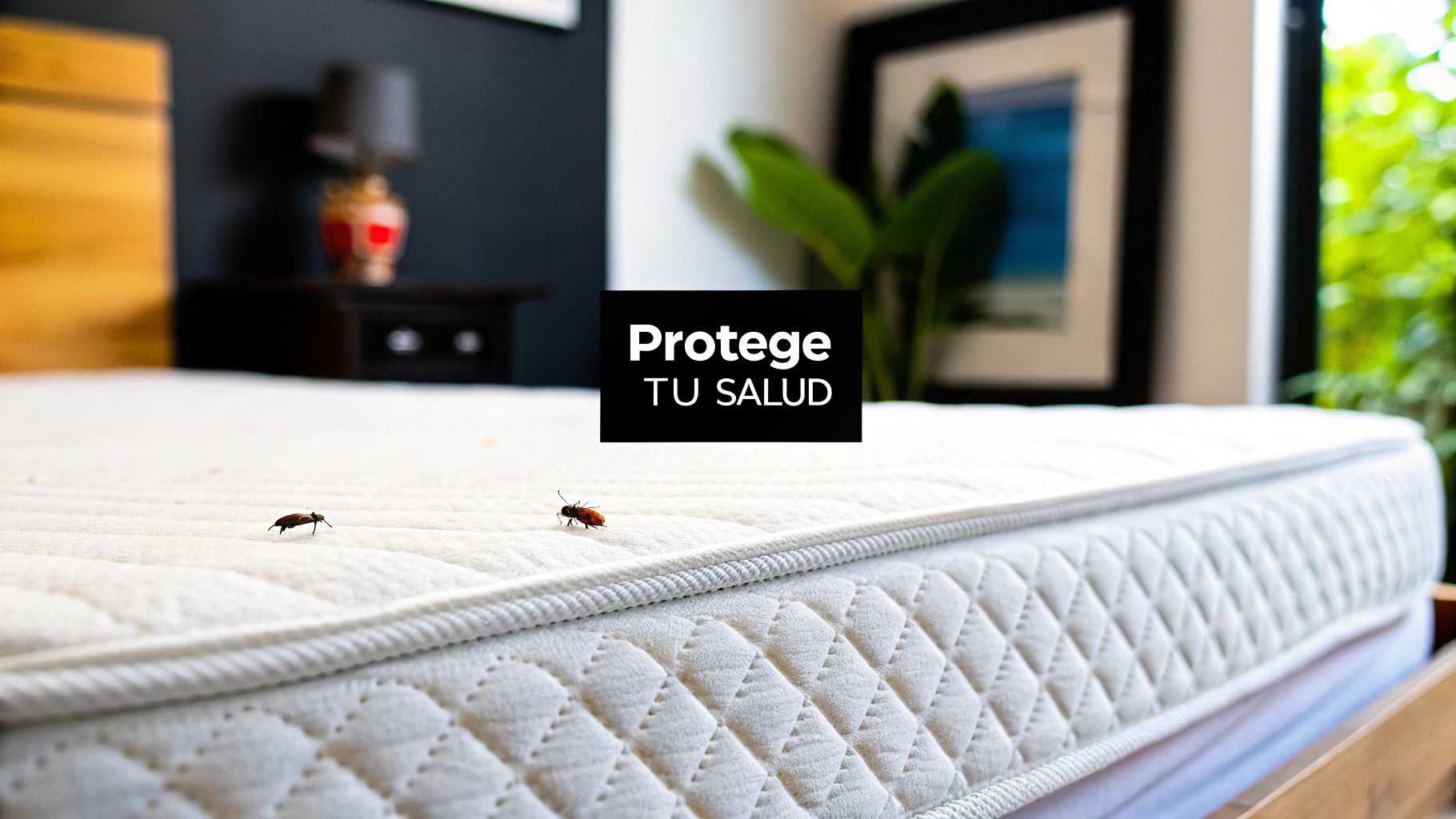
Think of your mattress not as an object but as a small ecosystem. Every night, without realising it, you leave behind sweat, body oils and millions of dead skin cells. This mix is the perfect breeding ground for microscopic life that can directly affect your wellbeing.
This warm, humid environment is paradise for dust mites. These tiny creatures produce waste that is one of the main triggers of allergies. If you wake up with a blocked nose, sneezing or itchy eyes, your mattress very likely has something to do with it.
The direct impact on your health and sleep
A mattress with poor hygiene can be the hidden cause of health problems we often blame on other things. Being exposed to allergens for eight hours of sleep can make existing problems worse or even create new sensitivities.
- Breathing problems: dust mite allergens and mould can worsen the symptoms of asthma and allergic rhinitis, making it harder to breathe well at night.
- Skin irritation: direct, prolonged contact with bacteria and fungi can cause or aggravate eczema, acne or folliculitis.
- A weakened immune system: poor-quality sleep, broken by allergies or discomfort, makes your body work twice as hard, which can wear down your defences over time.
A mattress can be home to hundreds of thousands of dust mites. Keeping up a disinfection routine is not an obsession but a necessity to protect your health and the quality of your sleep.
The invisible threat of pests
Beyond dust mites, a neglected mattress can become the perfect hiding place for more visible and troublesome pests, such as bed bugs. With so much travel, it is an increasingly common problem.
These pests do not just cause very annoying bites; they create stress that completely ruins sleep quality. If you want to understand better how these organisms build up, we recommend reading our article on how to get rid of dust mites in your mattress.
Protect your investment in the long term
As well as looking after your health, disinfecting your mattress regularly is the best way to protect your investment. A build-up of moisture, sweat and body oils speeds up the deterioration of materials, especially in premium mattresses such as memory foam or hybrid models.
Regular cleaning not only prevents stains and bad smells but, most importantly, helps keep the foams and fibres intact. By removing moisture and acidic residues, you make sure your mattress keeps its support and comfort throughout its life, giving you optimal nights of sleep for many years.
Prepare your space for effective cleaning
Before you start disinfecting the mattress, you need to prepare the ground. Good preparation is not a mere formality; it is the foundation that makes sure all your later effort gives the best results. Skipping this step is like painting over a dirty wall: the result will never be what you hoped for.
The first step is to clear the surface completely. Remove all the bedding: sheets, duvet covers, protectors and pillows. And do not just put them to one side; take them straight to the washing machine.
A hot wash, your first filter
Washing all the bedding on a hot cycle, at 60 °C or higher, is essential. This simple step kills dust mites, bacteria and other allergens that build up with daily use. That temperature is high enough to disinfect the fibres thoroughly without resorting to harsh chemicals. That way, when your mattress is ready, you will dress it with truly hygienic textiles.
If you have sheets made of more delicate materials, such as silk or certain synthetic blends, check the label and choose the highest safe temperature it allows.
Deep vacuuming, a non-negotiable step
With the mattress stripped, it is time for the key step: vacuuming. And we do not mean a quick once-over, but a methodical, thorough clean. Use your vacuum’s upholstery attachment, which is designed precisely for treating fabric surfaces without damaging them.
Go over every centimetre of the surface, on top and along the sides. Pay special attention to the areas where dust and mites love to hide:
- Seams and piping: run the nozzle slowly along all the edges.
- Folds and buttons: go over these areas several times; they are real dirt magnets.
- Sides and edges: vacuum these too; and if your mattress is double-sided, repeat on the other side. Morfeo mattresses are single-sided, so the top surface and sides are enough.
This vacuuming routine has a direct impact on the air quality in your home. In fact, it is recommended to vacuum the mattress at least once a month to keep on top of the residue that builds up on the surface. If you can, use a vacuum cleaner with a HEPA filter to capture even the smallest allergens.
And while you are at it, do not forget the base. Vacuuming the bed base or storage bed is just as important. If you want to go a step further, you may like to read how to clean and maintain an ottoman storage bed in perfect condition.
Finally, make sure the room is well ventilated before, during and after the whole process. Open the windows to create a draught that helps clear the dust you stir up and speeds up the drying of any product you apply afterwards.
Home methods to refresh your mattress
You do not need an arsenal of expensive chemicals to know how to disinfect a mattress and leave it like new. In fact, you very likely already have the most effective and safest ingredients in your cupboard to bring back that feeling of total freshness and cleanliness to your bed. These tried-and-tested solutions are cheap and look after both your mattress materials and your health.
Let us look at three of the most effective techniques, from classic bicarbonate of soda to the power of steam, so you can choose the one that best suits your needs and the type of mattress you have at home.
But before you start cleaning, a good starting point is key to success. This simple diagram sums up the first steps you should never skip.
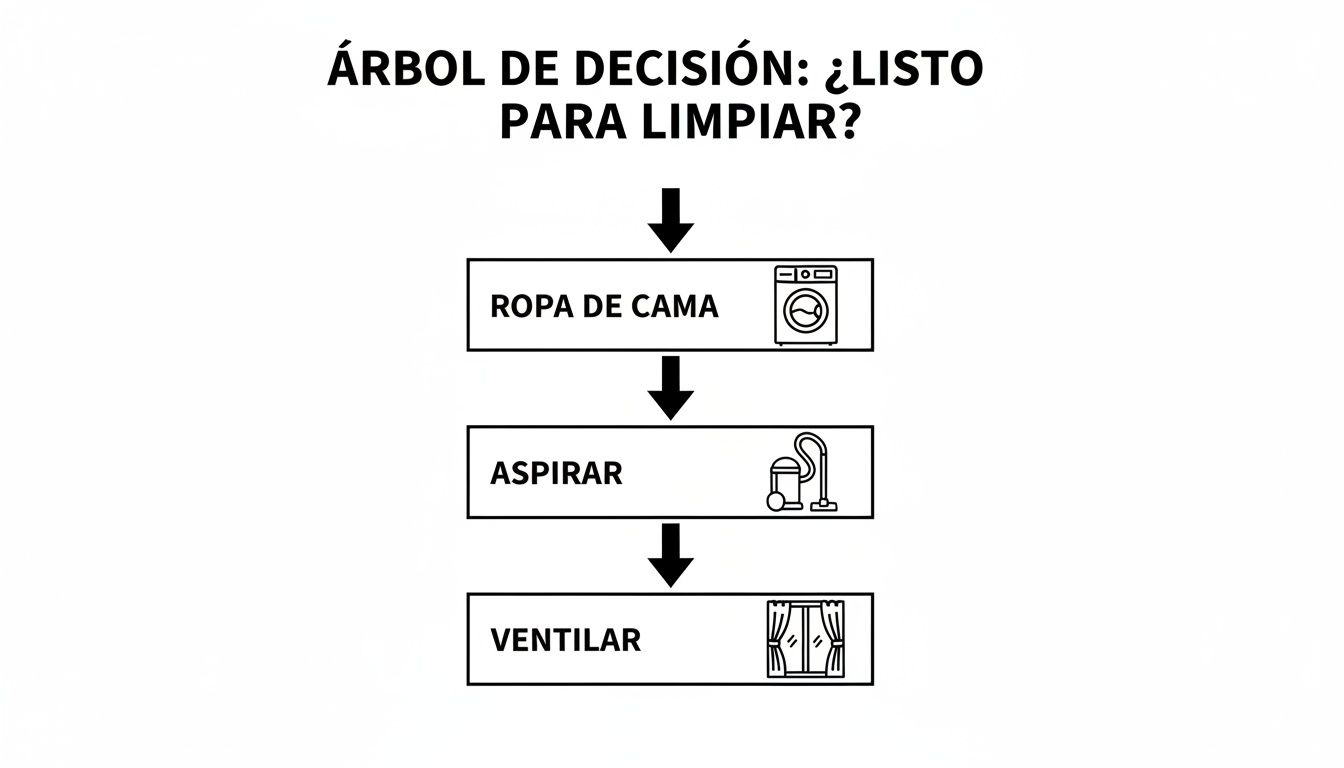
As you can see, the road to a disinfected mattress always starts with washing the bedding, a good vacuum and a well-ventilated room.
Bicarbonate of soda: the natural deodoriser par excellence
Bicarbonate of soda is the king of home cleaning, and for good reason. Its great strength lies in its incredible ability to absorb moisture and neutralise the acids that cause bad smells. It is ideal for regular maintenance or for freshening up a mattress that smells a little musty.
It could not be easier to use. Take a sieve and sprinkle a thin, even layer over the whole surface. Do not overdo it; you do not need a thick layer, a light dusting is enough.
Now comes the most important part: patience. You need to let the bicarbonate work its magic for several hours. The longer, the better. Ideally leave it for at least four to six hours, although if you can leave it all day while you are out, the result will be even better.
Once the time is up, all that is left is to vacuum it all up. Use the upholstery attachment and go slowly over the whole surface so there is no trace left. The result? A visibly fresher, odour-free mattress.
An expert tip: to boost the disinfecting effect and add a relaxing scent, mix a few drops of lavender or tea tree essential oil into the bicarbonate before sprinkling it. Both oils have natural antibacterial and antifungal properties.
Liquid solutions for a deeper clean
Sometimes bicarbonate is not enough, especially if there are stubborn stains or you need extra disinfection. In these cases, you can turn to mild liquid solutions, but always with one golden rule: less is more. The aim is to clean, not to soak the mattress.
One of the safest and most effective mixtures is white vinegar and water. Vinegar is a fantastic natural disinfectant thanks to its acetic acid, which makes short work of bacteria and mould.
- How do you make it? Mix one part white vinegar with two parts warm water in a spray bottle.
- How do you apply it? Lightly spray the surface of the mattress. Do not saturate the fabric; a fine mist is more than enough.
- Leave it to work: wait a few minutes for the solution to take effect.
- Remove the excess: with a clean, barely damp microfibre cloth, gently rub the treated areas in circular motions.
The smell of vinegar disappears completely as the mattress dries, taking any other unpleasant odours with it. It is vital to ventilate the room very well during and after the process.
For trickier stains, such as sweat or urine, hydrogen peroxide (3%) can be a great ally. Be careful, though, as it can bleach some fabrics. Always do a small test on a hidden area first. Apply it directly to the stain, let it fizz for a few minutes and then blot the excess with a clean cloth.
Steam cleaning: powerful but delicate
Using a steam cleaner is one of the most effective methods for real disinfection. The heat of the steam, which can exceed 120 °C, is lethal to dust mites, bacteria and even bed bugs, without using a single drop of chemicals.
This method penetrates the surface layers of the mattress, which other techniques cannot reach. To use it properly, move the nozzle slowly over the whole surface, keeping it moving steadily so as not to overheat any one spot.
But be careful: this technique calls for caution. The main risk is excess moisture. If you put too much water into the mattress and it does not dry completely, you will be creating the perfect paradise for mould.
Warning! Steam cleaning is not for every mattress. In mattresses with memory foam or latex layers, such as Morfeo’s, intense heat and moisture can damage the foam structure, spoiling its comfort and durability. Always check the manufacturer’s instructions before switching on the steam cleaner.
After steam cleaning, drying is absolutely crucial. Natural ventilation is your best friend. Open the windows and, if you can, place the mattress in indirect sunlight to speed up the process and take advantage of the disinfecting power of UV rays.
To make it clearer which method to use in each case, we have put together this comparison table.
Comparison of home disinfection methods
This table compares the effectiveness, safety and materials needed for the most common home disinfection methods, to help you choose the right one for the type of stain and mattress.
| Method | Best for | Effectiveness | Precautions | Suitable for memory foam/hybrid |
|---|---|---|---|---|
| Bicarbonate of soda | Freshening, removing odours and absorbing surface moisture. | Moderate (deodorises and absorbs) | None, it is very safe. | Yes, fully suitable. |
| Vinegar and water | General disinfection, light stains and odour removal. | High (antibacterial) | Do not soak the mattress. The vinegar smell disappears as it dries. | Yes, with a light mist. |
| Hydrogen peroxide (3%) | Difficult organic stains (sweat, urine, blood). | Very high (for specific stains) | Can bleach fabrics. Always test on a hidden area first. | Yes, applied only to the stain. |
| Steam | Deep disinfection, killing dust mites and bed bugs. | Very high on the surface | Risk of mould from excess moisture. Not recommended for sensitive foams. | Not recommended for memory foam or latex. Check with the manufacturer. |
As you can see, each method has its time and place. Bicarbonate is perfect for regular maintenance, while liquid solutions and steam are for deeper cleans when the situation calls for it. The key is to know your mattress and use common sense.
Drying it properly: a step you cannot skip
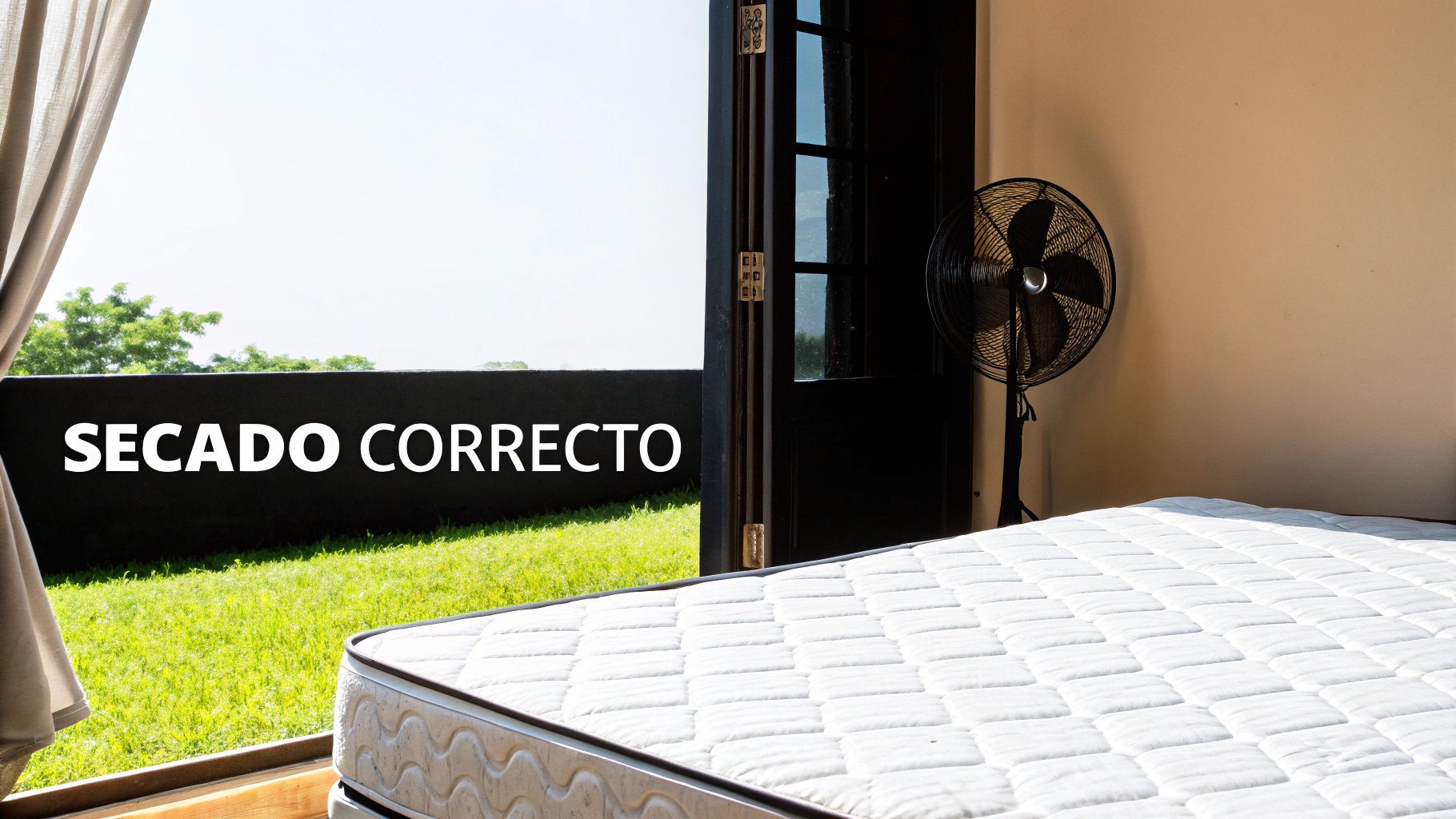
You have vacuumed, dealt with the stains and disinfected the whole surface. You might think the hardest part is over, but you are actually at a crucial moment. Poor drying can undo all your work, creating the perfect damp environment for mould and bacteria to appear, which is exactly what you were trying to get rid of.
At this stage, patience is your best ally. A mattress, especially one with high-density foams like Morfeo’s, can take much longer to dry inside than it seems from the outside. Touching the surface and finding it dry is a very common mistake that, over time, leads to bad smells and damp stains.
Natural ventilation, your best strategy
The safest, most effective and, let us be honest, cheapest method is good old-fashioned ventilation. You do not need anything special, just fresh air and time. Ideally, open doors and windows to create a draught that circulates around the whole room.
If you can, stand the mattress upright, leaning it against a wall or between a couple of chairs. That way, air flows over both sides and greatly speeds up evaporation. The idea is to expose as much of the surface as possible to the air.
An expert tip: indirect sunlight is a very powerful natural disinfectant. Its UV rays help kill any stubborn bacteria or mould spores that may remain. Place the mattress near a window where it gets light, but avoid strong direct sun, which could damage the more sensitive fibres and foams.
Practical alternatives for difficult days
Let us be realistic: it is not always sunny, and moving a heavy mattress is not always easy, especially if you live in a flat with little ventilation. For those grey days, or to speed up the process a little safely, you have a few options.
- Fans: point one or more directly at the mattress. Move them every couple of hours so the air reaches every area equally.
- Dehumidifier: this appliance works wonders, especially in coastal areas or humid climates. Put it in the room and let it get to work. It absorbs moisture from the air, which helps the water in the mattress evaporate much sooner.
- Cool air from a hairdryer: for a small stain you have just treated, you can use a hairdryer on the cool setting. Keep it at a sensible distance and keep it moving so you do not concentrate the air on one spot.
The mistake you must never make
Haste makes waste, and the temptation to use heat to speed things up can be strong. Do not even think about it! Never use a hairdryer on hot, a fan heater or any other source of direct heat. Memory foams and other modern materials are very sensitive to high temperatures.
If you apply heat, you can permanently deform the internal structure of the foam and say goodbye to its comfort and support. You also risk damaging the cover and fabrics. Drying is a process that needs care; forcing it with heat is the quickest way to ruin your mattress.
Bear in mind that complete drying can take between 8 and 24 hours, depending on how much moisture it has absorbed and the conditions in the room. Do not rush it!
How to keep your mattress clean for longer
After putting time and effort into making your mattress like new, the last thing you want is to repeat the whole process in a few weeks, right? The good news is that you do not have to. With a few very simple habits, you can greatly extend the time between deep cleans.
The key is not to clean more, but to prevent more intelligently. Think of it like servicing a car: you do not wait for the engine to break down before changing the oil. It is exactly the same with your mattress. Small everyday habits prevent bigger problems and keep your bed far more hygienic and healthy.
The first line of defence: a good protector
If I had to choose just one thing to protect a mattress’s lifespan and hygiene, it would without doubt be a quality protector. And I do not mean a simple fabric cover, but a technical barrier designed to look after your sleep. A good protector must meet two essential requirements: it must be waterproof and breathable at the same time.
- Waterproof: it is a complete shield against spills, sweat and other body fluids, which are the number one cause of stains and bacterial growth.
- Breathable: it lets air circulate, preventing heat and moisture from building up. This is vital to prevent mould and keep the microclimate in your bed fresh and pleasant.
An effective protector is actually the simplest way to make the job of how to disinfect a mattress easier. Why? Because most of the dirt stays on a layer you can put straight in the washing machine. To find out more, read why a waterproof protector is the best option in our article. At Morfeo we have two: the Tencel® protector, waterproof and breathable, and the FreshCool®, with a temperature-regulating fabric for hot sleepers. Both can be washed at up to 30 °C.
Daily habits that make a difference
Beyond the protector, there are small routines that have a huge impact. Adopting them costs nothing and the benefits show straight away.
The first and most important habit is to air the bed every morning. Before making it, pull back the duvet and let the mattress breathe for at least 15 to 20 minutes. During the night, our bodies release a surprising amount of moisture. If it stays trapped under the sheets, you create the perfect paradise for dust mites.
Something as simple as opening the window and leaving the bed unmade for a while lets that moisture evaporate, making your mattress a much less inviting place for micro-organisms.
Another practical tip is to rotate the mattress. Most manufacturers, including Morfeo, recommend turning it head to foot every three to six months. This not only ensures even wear and prevents uncomfortable dips from forming, but also improves airflow to every area. Always check the instructions for your specific model, though.
Creating an environment that is less prone to dirt
Finally, some habits may seem obvious, but their impact on mattress hygiene is undeniable. Avoiding eating or drinking in bed cuts the risk of spills and crumbs, a real feast for bacteria, to zero. If you share your bed with pets, it is a good idea for them to have their own place to sleep and to wash their blankets often.
In the end, keeping your mattress clean is a combination of regular disinfection and, above all, constant prevention. It is these small everyday habits that will truly guarantee healthier sleep and protect your investment in the long term.
Your questions about mattress cleaning answered
However clear the guide, once you get down to cleaning your mattress, questions always come up. That is normal. Let us answer the most common ones so you avoid mistakes and your effort pays off in much healthier sleep.
How often should I deep-disinfect my mattress?
As a general rule, a deep disinfection every six months is more than enough for most people. This interval lets you keep the build-up of dust mites, sweat and bacteria in check without it becoming a burden.
That said, it is not set in stone. There are situations where it is worth doing it more often:
- If you have allergies or asthma: in your case, cleaning every three or four months will make a big difference, keeping the allergens that trigger your symptoms in check.
- If your pets sleep with you: however clean they are, our four-legged friends bring hair, allergens and dirt into the bed. Cleaning the mattress every three months is highly recommended.
- If you live in a hot, humid climate: heat and humidity are paradise for mould and bacteria. In these areas, disinfecting every four months is ideal to prevent problems.
Remember, though, that light maintenance, such as a good monthly vacuum and airing the bed every day, is what will let you space out these deeper cleans without any problem.
Can I use bleach or ammonia on a memory foam mattress?
The short, direct answer is: no, never. Using chemicals as harsh as bleach or ammonia is one of the worst mistakes you can make, especially on mattresses made with technical foams such as memory foam or Morfeo’s hybrids.
These products are corrosive and literally eat away at the cell structure of the foams. The result is a mattress that permanently loses its comfort, support and ability to adapt. On top of that, they leave toxic residues that you would be breathing in all night, which is very bad for your health.
Always opt for gentle and safe. Bicarbonate of soda, well-diluted white vinegar or enzymatic upholstery cleaners are your best allies. And do not forget the golden rule: test any product on an inconspicuous corner before applying it to the whole surface.
What should I do if I used too much water and the mattress is very wet?
Do not panic! The key here is to act fast so the moisture does not turn into a breeding ground for mould.
First, take clean, dry towels and press down firmly on the soaked area. Press, do not rub, as you could spread the moisture and damage the fabric. The aim is for the towels to absorb as much liquid as possible. Repeat with dry towels until almost no more water comes out.
Next, ventilation is your top priority. Open windows and doors to create a draught. If you have fans, point them straight at the mattress. And if you have a dehumidifier, run it at full power in the room. Even indirect sunlight helps enormously.
Be patient and make sure the mattress is 100% dry before you make the bed again, even if it takes a day or two. It is the best insurance against mould and bad smells.
When should I call in a professional cleaning service?
Home methods are great for everyday care, but some battles are best not fought alone. Seriously consider calling a professional if you are dealing with:
- A bed bug infestation: getting rid of them requires very specific heat or chemical treatments that only experts can apply safely and effectively.
- Widespread mould: if the mould has penetrated deep, a surface clean will not help. Professionals use extraction equipment and powerful fungicides to remove it at the root.
- A flooded or completely soaked mattress: if the mattress has been soaked by a flood or a serious accident, specialist companies have extraction machines and drying chambers that can save it.
It is also a good idea to turn to them for premium mattresses if you do not feel confident with home methods. Sometimes it is better to invest a little to protect a big investment.
What can be washed on each Morfeo mattress
Before disinfecting, check whether your mattress has a removable cover: that is what makes hygiene easiest.
| Mattress | Cover | How to care for it |
|---|---|---|
| Original Hybrid | Removable and washable | Machine wash at 30 °C on a delicate cycle |
| Juvenil Lite | Removable and washable | Machine washable, with an all-round zip; follow the label |
| VisCool | Removable | Not machine washable: vacuum and dry clean |
| Nature, Altus and XL | Not removable | A protector from day one; vacuuming and the methods in this guide |
No small print
Trial, guarantee and delivery
- 100-night trial. No minimum number of nights: if you are not convinced, you can return it from day one and we collect it at our expense.
- 10-year guarantee on mattresses. It covers manufacturing defects.
- Free delivery to mainland Spain and mainland Portugal, in 3-7 working days in mainland Spain.
- Made in Spain, to order, in our factory in Yecla (Murcia).
All Morfeo mattresses arrive rolled in a box. It is ready to sleep on in 48 hours; if you can wait, 72 hours is ideal.


